Technology · Dev
SK Hynix Commits $38 Billion to Two New Memory Fabs in South Korea
The chipmaker will build a second Yongin facility and expand NAND capacity in Cheongju as AI applications fuel demand for advanced memory
KEY TAKEAWAYS
- ·SK hynix approved 54 trillion won ($38.1 billion) for two new fabs: 35.2 trillion won for Y2 in Yongin and 19.1 trillion won for M17 in Cheongju.
- ·The investments target high-bandwidth memory and NAND flash capacity, both driven by artificial intelligence infrastructure demand.
- ·The projects reinforce South Korea's position as the center of global memory production, with execution timelines spanning multiple years.
Board Approval and Capital Allocation
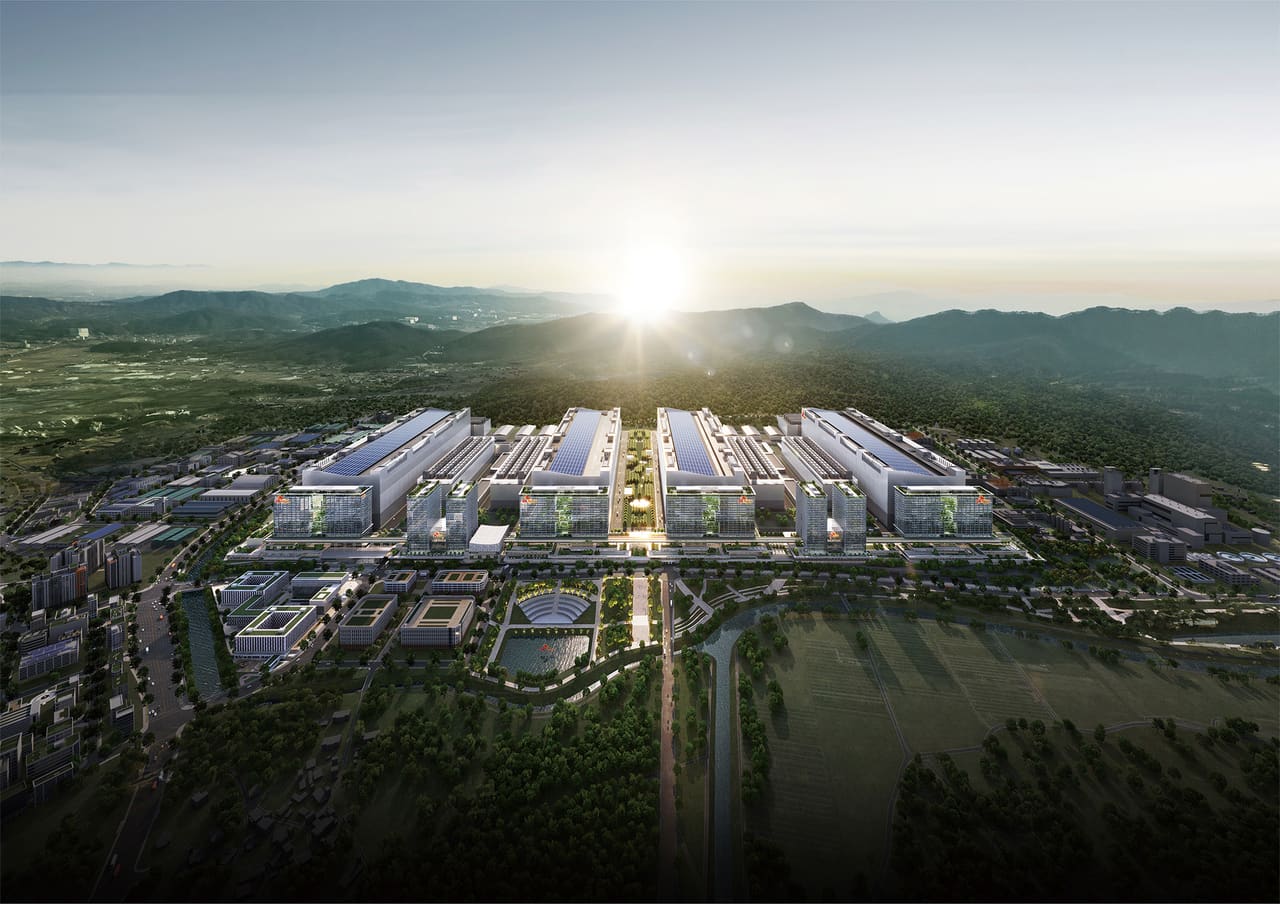
SK hynix has committed 54 trillion won ($38.1 billion) to construct two major semiconductor fabrication facilities in South Korea, the company announced Friday. The board approved 35.2 trillion won for Y2, a second fab at the Yongin Semiconductor Cluster in Gyeonggi Province, alongside 19.1 trillion won for M17, a dedicated NAND flash production line in Cheongju, North Chungcheong Province.
The twin investments represent one of the largest single capital deployment decisions by a Korean chipmaker in recent years. Both facilities will support the company's push to scale production of high-bandwidth memory and NAND flash, two categories experiencing rapid growth as artificial intelligence workloads demand faster, denser storage and processing.
Yongin Expansion
The Y2 fab will sit adjacent to SK hynix's existing Yongin site, which the company has positioned as a strategic hub for next-generation memory technology. Gyeonggi Province has emerged as a focal point for semiconductor investment in South Korea, benefiting from proximity to Seoul, established supply chains, and government incentives aimed at consolidating the nation's chip ecosystem.
Construction timelines and production start dates were not disclosed in Friday's announcement, though industry observers expect multi-year buildouts for projects of this scale. The Yongin cluster is designed to house multiple fabrication lines, with Y2 marking the second phase of a broader campus plan.
NAND Flash in Cheongju
The M17 facility in Cheongju will focus on NAND flash, the non-volatile memory used in solid-state drives, smartphones, and data center storage arrays. SK hynix has maintained significant NAND operations in Cheongju, and the new line will add capacity to meet growing enterprise and consumer demand.
NAND pricing has shown signs of stabilization after a prolonged downturn, with analysts pointing to tighter supply-demand balance and stronger orders from cloud infrastructure providers. The M17 investment signals SK hynix's confidence that the recovery will hold through the late 2020s.
AI as the Demand Driver
Artificial intelligence applications have reshaped memory demand patterns. Training large language models and running inference workloads require massive amounts of high-bandwidth memory, a segment where SK hynix competes directly with Samsung Electronics and Micron Technology. The company has already shipped HBM3E products to major AI accelerator customers and is developing HBM4 for next-generation platforms.
NAND flash also benefits from AI infrastructure build-outs, as data centers expand storage capacity to handle training datasets, model checkpoints, and user-generated content. The dual investment in HBM-capable fabs and NAND lines positions SK hynix to capture revenue across the AI stack.
South Korea's Semiconductor Strategy
The investments align with South Korea's national semiconductor strategy, which includes tax incentives, infrastructure support, and coordinated site development to maintain the country's position as a global chip production leader. The government has prioritized memory and foundry capacity, viewing both as critical to economic security and technological sovereignty.
SK hynix, Samsung, and smaller players have collectively announced hundreds of billions of dollars in planned investment over the next decade. The Yongin and Cheongju projects add to that pipeline, reinforcing the concentration of cutting-edge memory production in the Seoul metropolitan area and surrounding provinces.
What Comes Next
Execution risk remains a variable. Semiconductor fabs require years to build, billions in equipment procurement, and stable demand to justify their cost. Memory markets are cyclical, and any softening in AI infrastructure spending or enterprise IT budgets could pressure utilization rates once the new lines come online.
Still, SK hynix's willingness to commit capital at this scale reflects a view that the current AI wave is structural rather than transient. The company will need to balance construction schedules, equipment lead times, and workforce availability to bring Y2 and M17 online without delays. If demand holds, the two fabs will cement South Korea's role as the anchor of global memory supply well into the 2030s.
RELATED STORIES
Seoul Rejects Profit-Sharing Pressure on Samsung and SK Hynix
Cheng Wei-Lun · 3 min
SK Hynix Eyes Stake Sale in $3 Billion China Packaging Facility
Cheng Wei-Lun · 2 min
LG Uplus Hits Record Quarterly Profit as AI Data Centers Offset Revenue Dip
Cheng Wei-Lun · 3 min
South Korea Mobilizes Conglomerates for Humanoid Robot Push
Cheng Wei-Lun · 3 min
Spot something wrong? Email editor@briefasia.com. We log every correction publicly.