Technology · AI
LG Uplus Hits Record Quarterly Profit as AI Data Centers Offset Revenue Dip
South Korea's third-largest carrier posts 13% operating profit jump despite falling revenue, signaling infrastructure pivot amid saturated mobile market
KEY TAKEAWAYS
- ·LG Uplus reported operating profit of 344.5 billion won in Q2 2026, up 13.1 percent year-on-year, marking a record quarterly result for the carrier.
- ·AI data center services and cost-cutting measures drove profitability despite a 3.9 percent decline in total revenue to 3.69 trillion won.
- ·The results highlight a strategic shift among Asian telecom operators toward enterprise infrastructure as consumer mobile markets saturate and pricing pressure intensifies.
Infrastructure Bets Pay Off
LG Uplus, South Korea's third-largest mobile carrier, delivered its strongest quarterly operating profit on record in the three months ended June 2026, propelled by rapid expansion in artificial intelligence infrastructure services. The company announced Thursday that operating profit climbed 13.1 percent year-on-year to 344.5 billion won (USD 243.4 million), even as consolidated revenue slipped 3.9 percent to 3.69 trillion won.
The divergence between profit and revenue growth underscores a strategic shift taking place across Asia's telecom sector. Traditional consumer mobile services continue to face pricing pressure and market saturation, but operators are finding fresh margins in enterprise cloud infrastructure and AI workloads. LG Uplus has been building out GPU-equipped data center capacity in the Seoul metropolitan area and positioning itself as a local alternative to hyperscale cloud providers for latency-sensitive AI training and inference tasks.
Service revenue, which strips out volatile handset sales, rose 2 percent to 3.08 trillion won. Net profit edged up 0.3 percent to 217.7 billion won, reflecting interest expenses and one-time items that weighed on the bottom line despite operational improvements.
Cost Discipline Amid Market Headwinds
The profit expansion came during a quarter when overall telecom spending in South Korea remained soft. Subscriber growth has stalled across the industry as penetration rates exceed 140 percent, and regulatory oversight continues to limit price increases on mobile plans. Against that backdrop, LG Uplus has focused on operational efficiency, trimming network maintenance costs and renegotiating vendor contracts.
Management has also reduced marketing expenditure tied to handset subsidies, a perennial cash drain in South Korea's fiercely competitive carrier market. The company's subscriber base remains stable at around 15 million mobile customers, and average revenue per user in the wireless segment has held steady, suggesting the cost cuts have not yet triggered churn.
AI Infrastructure as Growth Engine
The standout performer in the quarter was LG Uplus's enterprise and cloud division, which houses its AI data center operations. Demand for GPU compute capacity has surged as South Korean AI startups, gaming studios, and research institutes seek domestic hosting options to avoid data sovereignty concerns and latency issues associated with overseas clouds.
LG Uplus operates several colocation facilities in Pangyo and Gasan Digital Complex, both hubs for Korea's tech sector, and has been adding Nvidia H100 and A100 clusters to meet customer demand. The company has not broken out data center revenue separately, but executives have indicated in recent earnings calls that the segment is growing at a double-digit pace and commanding premium pricing compared to legacy hosting services.
The carrier is also exploring partnerships with domestic semiconductor firms and AI model developers to offer integrated solutions that bundle connectivity, compute, and managed services. These bundled offerings carry higher margins than commoditized mobile plans and help diversify revenue streams.
Competitive Landscape
LG Uplus trails SK Telecom and KT Corporation in market share, but its data center push has drawn attention from investors looking for exposure to AI infrastructure outside the hyperscaler universe. The company's stock has outperformed the broader KOSPI index year-to-date, reflecting optimism that enterprise and cloud revenue can offset declines in legacy telecom.
Rivals are pursuing similar strategies. SK Telecom has announced plans to invest heavily in AI data centers and edge computing, while KT is expanding its cloud footprint and developing proprietary large language models. The race to capture enterprise AI spending is intensifying, and scale advantages in power procurement and real estate will likely determine long-term winners.
Outlook and Capital Allocation
LG Uplus has signaled it will continue investing in data center capacity through 2026 and 2027, even as it maintains dividend payouts to shareholders. The company is also exploring sale-and-leaseback arrangements for some network assets to free up capital for infrastructure expansion without stretching the balance sheet.
Analysts expect the telecom sector's bifurcation to deepen, with consumer mobile becoming a low-growth, high-cash-flow business and enterprise infrastructure emerging as the primary growth vector. For LG Uplus, the Q2 results validate the pivot and suggest that disciplined execution can unlock value even in a mature market. The company's ability to sustain margin expansion while scaling AI infrastructure will be closely watched in the quarters ahead.
RELATED STORIES
SK Hynix Eyes Stake Sale in $3 Billion China Packaging Facility
Cheng Wei-Lun · 2 min
South Korea Mobilizes Conglomerates for Humanoid Robot Push
Cheng Wei-Lun · 3 min
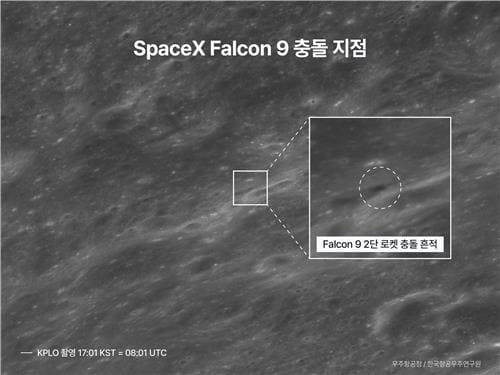
South Korea's Danuri Orbiter Photographs SpaceX Rocket Impact on Moon's Far Side
Cheng Wei-Lun · 4 min
Posco Future M Lands 190,000-Ton LFP Cathode Contract in Energy Storage Push
Jun-ho Seo · 3 min
Spot something wrong? Email editor@briefasia.com. We log every correction publicly.