Technology · Policy
Chinese Optical Module Makers Face $19 Billion Wipeout on FCC Restriction Rumors
Speculation that US regulators may block China-made data center components has sparked a sharp sell-off among suppliers critical to AI infrastructure.

KEY TAKEAWAYS
- ·Chinese optical transceiver suppliers lost US$19.1 billion in market capitalization after reports emerged that the FCC may restrict China-made data center components.
- ·Optical modules are critical to AI infrastructure, connecting GPU clusters and storage in hyperscale facilities, with Chinese firms holding significant market share.
- ·Any FCC restrictions would likely target new installations, prompting suppliers to explore manufacturing outside China and hyperscalers to diversify sourcing strategies.
Market Rout Follows Regulatory Speculation
Chinese manufacturers of optical transceivers have shed US$19.1 billion in combined market capitalization following reports that the Federal Communications Commission may impose restrictions on China-made components used in data centers. The modules in question are essential to AI infrastructure, shuttling data at high speeds between servers and storage systems in hyperscale facilities across the United States and beyond.
Companies affected by the sell-off are now working to reassure investors that their operations can withstand potential regulatory action. The scale of the losses underscores how deeply Chinese suppliers have penetrated the optical networking market, a sector that has grown explosively alongside demand for generative AI and large language models.
The Supply Chain at Stake
Optical transceivers convert electrical signals into light and back again, enabling data to travel over fiber-optic cables at speeds measured in hundreds of gigabits per second. As AI workloads have scaled, so has the need for these modules. Hyperscalers including Microsoft, Amazon Web Services, and Google have deployed them by the hundreds of thousands to connect GPU clusters and storage arrays.
Chinese firms have captured a significant share of this market in recent years, offering competitive pricing and expanding production capacity to meet surging demand. The modules are typically installed in switches and routers manufactured by Cisco, Arista Networks, and other Western vendors, forming a critical layer in the data path between compute and storage.
Any FCC action would likely target new installations rather than existing deployments, but even prospective restrictions carry weight. Data center operators plan infrastructure investments years in advance, and uncertainty over component availability can trigger immediate shifts in procurement strategy.
Regulatory Precedent and Scope
The FCC has previously designated certain Chinese telecommunications equipment makers as national security threats, barring US carriers from using federal subsidies to purchase their gear. Those actions focused on network infrastructure in public telecommunications systems, citing concerns over potential surveillance or disruption.
Extending similar restrictions to data center optical modules would represent a broader interpretation of the agency's authority. Data centers are largely private facilities, and the components in question are typically commodity items rather than systems with embedded software or remote management capabilities. Nevertheless, the regulatory climate has shifted toward scrutiny of any hardware that could theoretically be compromised or manipulated.
Industry observers note that the FCC has not formally proposed any rule targeting optical transceivers. The market reaction appears to be driven by media reports and investor risk assessment rather than official regulatory filings. That has left suppliers in the position of responding to speculation without a concrete policy to address.
Asia's Optical Ecosystem
The optical transceiver supply chain is concentrated in Asia, with design, assembly, and testing operations spread across China, Taiwan, Japan, and South Korea. Chinese firms have moved aggressively up the value chain, investing in higher-speed modules for 400-gigabit and 800-gigabit Ethernet, the standards now being deployed in AI-optimized data centers.
Taiwan and Japan remain strong in certain high-precision components, including lasers and photodetectors, but Chinese manufacturers have built vertically integrated operations that combine these elements into finished modules. That integration has allowed them to compete on cost and lead time, two variables that matter greatly to hyperscalers racing to bring new capacity online.
If US restrictions do materialize, Western and non-Chinese Asian suppliers would likely see a short-term windfall, but ramping production to fill the gap would take time. Optical module manufacturing requires specialized equipment, cleanroom environments, and testing infrastructure. Lead times for new capacity can stretch beyond a year, and the skilled labor pool is limited.
Market Response and Strategic Hedging
The US$19.1 billion decline in market value reflects both immediate concern and longer-term uncertainty. Investors are repricing stocks based on the possibility that a portion of future revenue tied to US data center buildouts could evaporate. For companies heavily exposed to the North American market, that represents a material risk.
Some suppliers are reportedly exploring manufacturing footprints outside China, including facilities in Southeast Asia or partnerships with contract manufacturers in countries less likely to face US sanctions. Others are emphasizing sales to domestic Chinese cloud providers and data center operators, a market that continues to expand despite slower overall economic growth.
Hyperscale operators, for their part, have been quietly diversifying supplier rosters for several years, motivated by both geopolitical risk and supply chain resilience. The current episode is likely to accelerate that trend, with procurement teams building in redundancy even if it means accepting higher costs or longer lead times.
What Comes Next
The immediate outlook depends on whether the FCC moves forward with any formal rulemaking. If the agency does propose restrictions, the process would include a public comment period and legal review, potentially stretching over months. During that window, suppliers and their customers would have time to adjust contracts and shift sourcing strategies.
In the absence of regulatory action, the market may stabilize as investors recalibrate risk. But the episode has already demonstrated how vulnerable the AI supply chain remains to policy shifts in Washington. Optical modules are just one layer in a stack that includes semiconductors, memory, power systems, and cooling infrastructure, all of which face similar scrutiny.
For now, Chinese optical transceiver makers are in damage-control mode, emphasizing their technical capabilities and customer relationships while hoping that regulatory fears prove overblown. The US$19.1 billion question is whether those efforts will be enough to restore confidence, or whether the sell-off marks the start of a broader reordering of the data center supply chain.
RELATED STORIES

Huawei Unveils Sub-800-Gram Laptop Running Homegrown Kirin Chip
Cheng Wei-Lun · 3 min

SK Hynix Eyes Stake Sale in $3 Billion China Packaging Facility
Cheng Wei-Lun · 2 min

GlobalFoundries Posts Stronger Second-Quarter Results on AI Optics Demand
Cheng Wei-Lun · 4 min
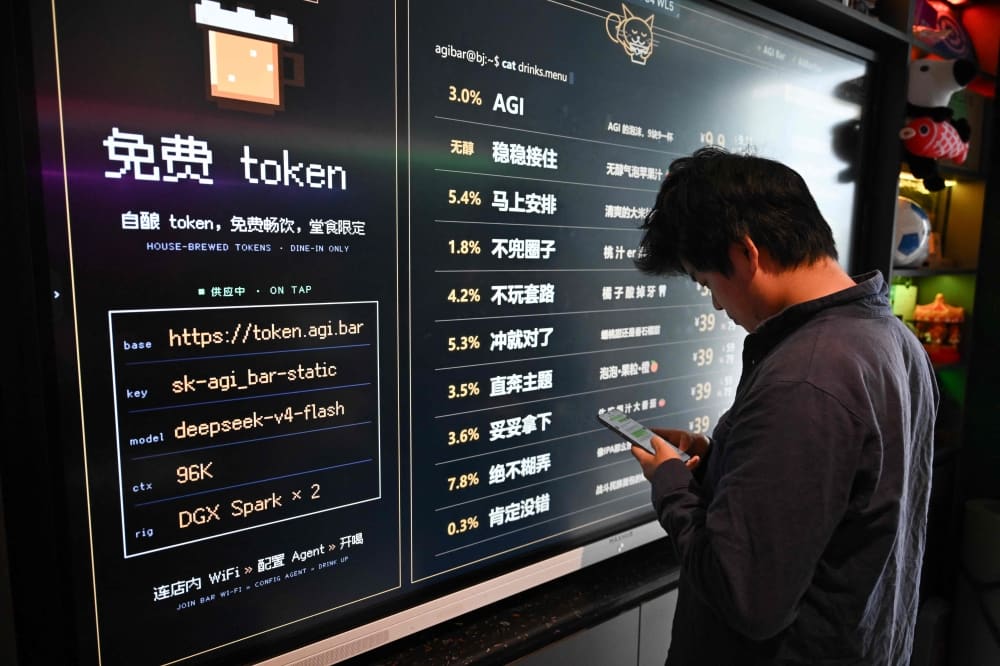
Beijing's AI Bar Offers Free DeepSeek Access as Price Wars Reshape Global Market
Cheng Wei-Lun · 3 min
Spot something wrong? Email editor@briefasia.com. We log every correction publicly.