Asia · Business
Porsche Cuts 9,000 Jobs as China Sales Collapse and EV Strategy Falters
The German luxury carmaker will eliminate one-fifth of its workforce by 2035 as parent Volkswagen restructures amid weak demand and intensifying competition from Chinese rivals.
KEY TAKEAWAYS
- ·Porsche will cut 9,000 jobs by 2035, roughly 20% of its 42,600-person workforce, through voluntary schemes and attrition rather than forced layoffs.
- ·The restructuring responds to collapsed sales in China, once a highly profitable market, with analysts saying strong growth recovery is not expected.
- ·The agreement secures factory operations through 2035 and commits 2.1 billion euros to Stuttgart and Weissach facilities as parent Volkswagen pursues 100,000 group-wide cuts.
Stuttgart Factory Faces Historic Workforce Reduction
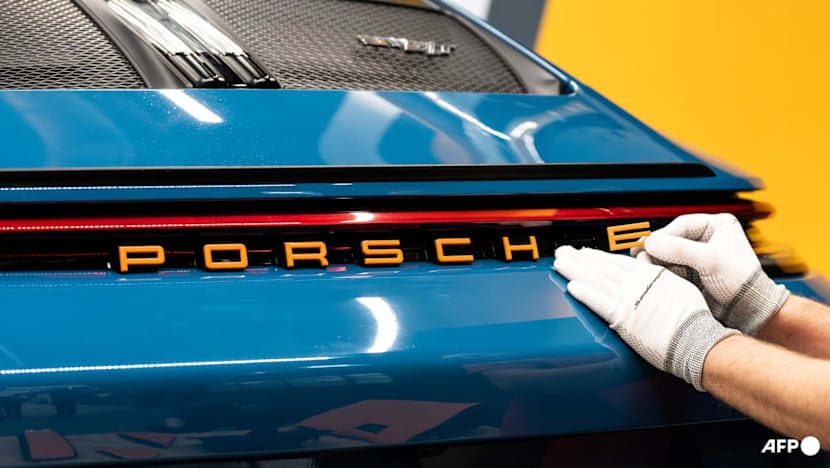
Porsche will eliminate 9,000 positions by 2035, cutting roughly one-fifth of its workforce as the German luxury carmaker confronts collapsing sales in China and struggles with its electric vehicle transition. The cuts mark one of the most significant restructurings in the company's history.
Management and labour representatives reached an agreement on Monday following months of negotiations. The deal includes 5,000 additional job reductions that will avoid forced layoffs through natural attrition and voluntary departure programmes, according to Porsche and its works council.
These latest cuts add to 3,900 job reductions agreed in February 2025 and another 500 announced by CEO Michael Leiters this year in connection with subsidiary closures. Porsche employed approximately 42,600 people at the end of 2024.
China Market Collapse Drives Restructuring
The workforce reductions directly correspond to declining sales volumes, particularly in China, where Porsche once generated substantial profits. Daniel Schwarz, automotive analyst at investment bank Metzler, noted the cuts are unavoidable given the cost structure and dim prospects for recovery in the Chinese market.
Leiters assumed the CEO role at the start of 2026 with a mandate to overhaul the business after the China downturn and EV strategy setbacks. His predecessor Oliver Blume now focuses exclusively on leading parent company Volkswagen, having ended a controversial dual leadership arrangement that drew investor criticism.
The restructuring extends across Volkswagen Group brands. Mercedes-Benz and BMW are implementing similar cost-cutting measures as German manufacturers navigate the electric transition while competing against Chinese automakers and absorbing the impact of elevated tariffs on both sides.
Investment Commitments Alongside Job Cuts
The agreement includes guarantees to keep Porsche facilities operating through the end of 2035, extending site security by five years. The company and works council also committed 2.1 billion euros (US$2.39 billion) in investments for the main Stuttgart-Zuffenhausen factory and the Weissach research and development centre.
Porsche's supervisory board approved the additional job cuts during a meeting last Wednesday, clearing the way for Monday's formal announcement.
Broader Volkswagen Group Pressures
The Porsche restructuring sits within a larger Volkswagen Group strategy to reduce costs amid mounting competitive pressure. Blume is pushing to double job cuts across the entire group to 100,000 positions, arguing the measures are essential to remain viable as Chinese brands expand into European markets.
Volkswagen has warned that four group factories, including one operated by Audi, face potential closure after 2030. The announcements underscore the financial strain on German automakers as they invest heavily in electric powertrains while managing overcapacity and slowing demand in key markets.
For Asia, the dynamic reflects a fundamental shift in automotive power. Chinese manufacturers have moved from being primarily a market for German luxury brands to direct competitors with advanced EV technology and aggressive pricing. The tariff environment on both continents further complicates supply chains and profitability calculations.
Porsche's workforce agreement provides temporary stability through 2035, but the company faces continued pressure to prove its electric models can command the pricing power and margins that sustained its combustion-engine sports cars. The next decade will test whether traditional luxury brands can defend their positioning against nimble Asian competitors who built their businesses around electric architecture from the start.
RELATED STORIES

Indonesia Car Sales Jump 34% as Electric Vehicles Reshape Southeast Asia's Auto Market
Siti Nuraini · 3 min
Indonesia Prepares Fresh EV Subsidies as Electrified Sales Jump 69%
Siti Nuraini · 3 min
Proton Eyes 200,000 Units in 2026, Aiming for Best Sales Year Since 2011
Priyanka V. Rao · 3 min
Vietnam Automakers Push to Relax Euro 5 Tech Transfer Rules
Priyanka V. Rao · 3 min
Spot something wrong? Email editor@briefasia.com. We log every correction publicly.