Asia · Business
Indonesia Prepares Fresh EV Subsidies as Electrified Sales Jump 69%
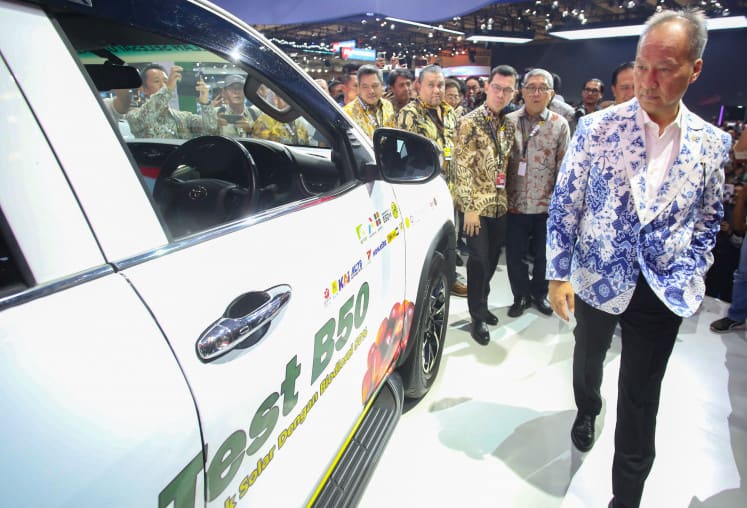
Battery and hybrid vehicles now account for more than a quarter of passenger car sales in Southeast Asia's largest economy, prompting Jakarta to plan another incentive round to maintain momentum.
KEY TAKEAWAYS
- ·Indonesia's wholesale vehicle sales rose 15.9 percent year-on-year to 436,564 units in the first half of 2026, with electrified vehicles accounting for 26.8 percent of passenger sales.
- ·Electrified vehicle sales jumped 69.4 percent to around 117,000 units in the period, with battery electric vehicles making up roughly 69,000 units.
- ·The government is preparing a new round of EV incentives to sustain adoption momentum, building on earlier tax breaks and purchase subsidies.
Sales Rebound Across the Board
Indonesia's automotive sector posted a 15.9 percent year-on-year increase in wholesale vehicle sales during the first half of 2026, reaching 436,564 units, according to the Indonesian Automotive Manufacturers Association (Gaikindo). The recovery marks a turning point after years of subdued growth that kept household purchasing power in check.
Electrified vehicles drove much of the expansion. Battery electric, hybrid, and plug-in hybrid models combined for approximately 117,000 units in the six-month period, a 69.4 percent jump from the same span in 2025. Pure battery electric vehicles accounted for roughly 69,000 of those sales. Electrified vehicles now represent 26.8 percent of national passenger vehicle sales, up from 18.3 percent a year earlier.
Government Eyes New Incentives
Jakarta is preparing a fresh round of incentives aimed at sustaining the pace of EV adoption. Details of the new program remain under discussion, but officials have indicated that maintaining the current trajectory will require continued policy support, particularly as global automakers ramp up local production and battery supply chains mature.
The Indonesian government has previously deployed tax breaks, import duty reductions, and direct purchase subsidies to encourage both consumers and manufacturers. The upcoming measures are expected to build on that framework, with a focus on accelerating the transition to zero-emission passenger transport and commercial fleets.
Market Potential Remains Untapped
Despite the encouraging performance, industry executives argue that Indonesia's automotive market remains far below its potential. Gaikindo chairman Purbaya noted that although Indonesia's population exceeds Malaysia's by more than seven times, annual vehicle sales in the two countries are roughly comparable. He attributed the gap to a decade of slower economic expansion that constrained household incomes and limited consumers' ability to finance new vehicle purchases.
Purbaya suggested that stronger GDP growth and an improved business climate would eventually translate into higher disposable incomes and a larger addressable market for automakers. The association has called for broader stimulus measures, including potential vehicle tax cuts, to unlock latent demand and bring Indonesia's per-capita sales figures closer to regional peers.
Regional Context and Investment Flows
Indonesia's push into electrified mobility sits within a broader regional competition for EV investment. Vietnam, Thailand, and Malaysia have all rolled out incentive packages to attract battery and assembly plants, betting that early leadership in the segment will yield long-term industrial gains. Jakarta's strategy combines domestic content requirements with financial inducements, aiming to build a vertically integrated supply chain that spans nickel processing, cell manufacturing, and final assembly.
Several global automakers have announced or expanded Indonesian production lines for hybrid and battery electric models over the past two years. The government has also inaugurated the country's first electric bus and truck assembly plant, signaling ambitions that extend beyond passenger cars into commercial and public transport.
The electrification wave arrives as Indonesia grapples with air quality challenges in major urban centers and seeks to reduce its dependence on imported refined fuels. Transport accounts for a significant share of national oil consumption, and policymakers view electric powertrains as a lever to improve both environmental outcomes and energy security.
What Comes Next
The next few quarters will test whether the current momentum can be sustained without continuous subsidy top-ups. Battery costs have declined globally, but price parity with internal combustion vehicles remains elusive in most segments. Consumer acceptance has grown, yet charging infrastructure outside Jakarta and major provincial capitals remains sparse.
Industry watchers will be monitoring the details of the forthcoming incentive package, particularly any shift toward performance-based criteria or phase-out timelines. How Jakarta balances support for electrification with fiscal discipline will shape both the pace of adoption and the competitive landscape for automakers operating in Southeast Asia's most populous market.
RELATED STORIES

Indonesia Car Sales Jump 34% as Electric Vehicles Reshape Southeast Asia's Auto Market
Siti Nuraini · 3 min

Indonesia's Education Bill Revision Could Reopen Funding Door for Free Meals Program
Siti Nuraini · 3 min
Indonesia's Growth Numbers Hide Shrinking Savings and Rising Household Debt
Priyanka V. Rao · 4 min
Brazil's JBS Commits $2.5 Billion to Indonesia Protein Venture With Danantara
Priyanka V. Rao · 5 min
Spot something wrong? Email editor@briefasia.com. We log every correction publicly.