Asia · Business
Philippines Tests Nanotechnology to Lift Coconut Yields
Two-year field trial with Japanese firm Mitsui aims to raise output for the nation's top agricultural export through direct-trunk nutrient delivery
KEY TAKEAWAYS
- ·The Philippine Coconut Authority and Mitsui Group signed a two-year trial agreement on July 27 to test nano-formulated nutrients delivered directly into coconut trunks.
- ·Philippine coconut product exports reached a record $3.57 billion in 2025, up 34 percent from the prior year, setting a high baseline for productivity improvements.
- ·If successful, the trunk-injection technology could lower input costs and raise yields per hectare, benefiting millions of smallholder farmers across the archipelago.
Agreement Launches Two-Year Trial
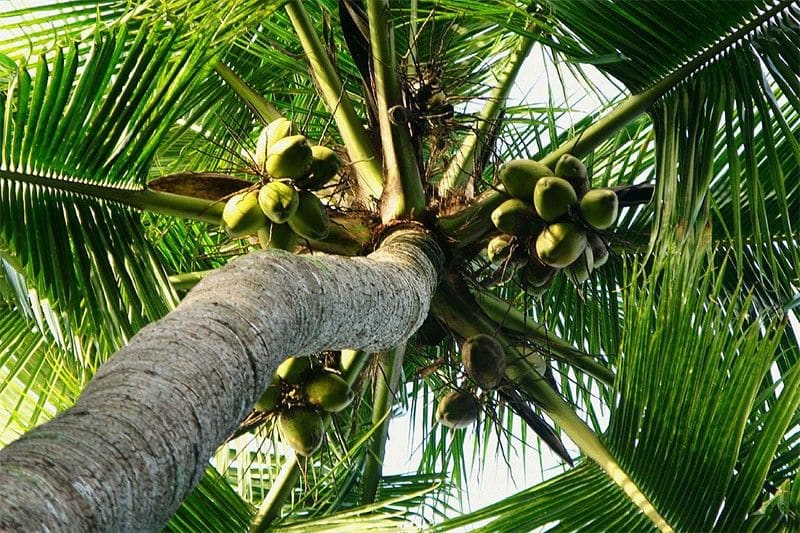
The Philippine Coconut Authority has entered a two-year partnership with Mitsui Group to test nano-formulated nutrients on coconut plantations, a move designed to increase yields and strengthen tree health across the archipelago's sprawling coconut belt. The agreement, signed July 27 after eight months of negotiations, brings Japanese agricultural technology into direct contact with farms that underpin the nation's largest crop export.
Under the arrangement, Mitsui supplies its proprietary nano-nutrient formulation while the PCA identifies trial sites and oversees implementation. The technology diverges sharply from conventional fertilizer application: instead of broadcasting granules across soil, the system injects tiny capsules of nutrients and crop-protection compounds straight into the trunk. That direct delivery is intended to improve absorption rates and reduce the volume of inputs needed per tree.
PCA administrator Dexter Buted framed the pilot as a potential inflection point for the sector. Better productivity with lower input costs could lift farm incomes and sharpen the industry's competitive edge in global markets, he noted. If field results validate laboratory promise, the approach may offer a scalable path to modernizing plantations that have long relied on broadcast fertilization and reactive pest management.
Technology Tested on Palm Oil Estates
Mitsui has already deployed the nano-capsule platform in palm oil plantations, where it has been used to manage pest infestations, according to the PCA. The trunk-injection method allows active ingredients to circulate through vascular tissue, targeting pests and pathogens more precisely than foliar sprays or soil amendments. Adapting the system to coconut palms, which have different growth patterns and nutrient demands, is the central question the trial will address.
Agriculture Secretary Francisco Tiu Laurel emphasized the rural development dimension. Coconut farming employs millions across the Philippines, many in regions with limited alternative livelihoods. Technologies that raise output per hectare translate directly into higher household incomes and can slow migration to urban centers. Laurel also pointed to export competitiveness, noting that sustained growth in overseas sales depends on cost efficiency and product quality.
Export Surge Sets High Bar
Philippine coconut product exports climbed 34 percent in 2025, reaching an all-time high of $3.57 billion, up from $2.66 billion the previous year, according to the Philippine Statistics Authority. The PCA expects another record in 2026 despite El Niño-related risks of below-normal rainfall, which can stress trees and depress yields.
That export performance underscores both opportunity and vulnerability. Global demand for coconut oil, desiccated coconut, and value-added derivatives remains strong, driven by food manufacturing, cosmetics, and biofuel blending. Yet the industry faces price competition from palm oil and other vegetable oils, as well as climate variability that can swing output sharply from year to year.
Implications for Farm Economics
If the nanotechnology trial demonstrates measurable yield gains and cost savings, adoption could ripple through the sector's economics. Lower fertilizer volumes per hectare would cut input bills, while higher output per tree would improve land productivity without requiring new plantings. Both effects matter in a country where coconut smallholders often operate on thin margins and limited access to credit.
The trial also arrives as the Philippines navigates a broader push to modernize agriculture through precision tools, digital extension services, and climate-resilient crop varieties. Nanotechnology in trunk injection represents a different vector, one that bypasses soil variability and targets the tree's internal transport system. Success in coconuts could prompt interest in applying similar platforms to other tree crops, from cacao to coffee.
Mitsui's involvement signals continued Japanese interest in Southeast Asian agribusiness, particularly in technologies that promise resource efficiency and yield stability. For the PCA, the partnership offers access to R&D capacity and field data that would be costly to generate independently. The two-year timeline will allow the trial to capture at least one full production cycle, providing data on flowering, nut set, and harvest weight across different soil types and climatic zones.
Results from the pilot are expected to inform decisions on wider rollout, regulatory pathways for nano-formulated inputs, and potential integration into existing extension programs that reach hundreds of thousands of coconut farmers nationwide.
RELATED STORIES

US and Japan Stage First Joint Yen Intervention in 28 Years
Cheng Wei-Lun · 3 min
Philippines Halts Meat Imports from Seven Middle East and Mediterranean Nations
Priyanka V. Rao · 3 min

Manila Eyes Nickel Processing to Escape China's Price Control
Priyanka V. Rao · 4 min
San Miguel's Ramon Ang Takes Quarter Stake in Lopez Holding Company
Priyanka V. Rao · 5 min
Spot something wrong? Email editor@briefasia.com. We log every correction publicly.