Finance · Markets
US and Japan Stage First Joint Yen Intervention in 28 Years
Washington joined Tokyo in buying yen after the currency hit a 40-year low, sending a clear message to speculators and providing relief across Asian foreign-exchange markets

KEY TAKEAWAYS
- ·The US and Japan executed their first joint yen purchase since 1998, reversing the currency from 164 per dollar to 155.20 in a single session.
- ·Japan holds $1.14 trillion in US Treasuries, and large-scale intervention could force Tokyo to sell bonds, pressuring US yields and prompting Washington's participation.
- ·The Philippine peso rebounded from a record low of 61.85 to 60.90 per dollar, benefiting from yen stabilization and improving sentiment across Asian foreign-exchange markets.
The Reversal
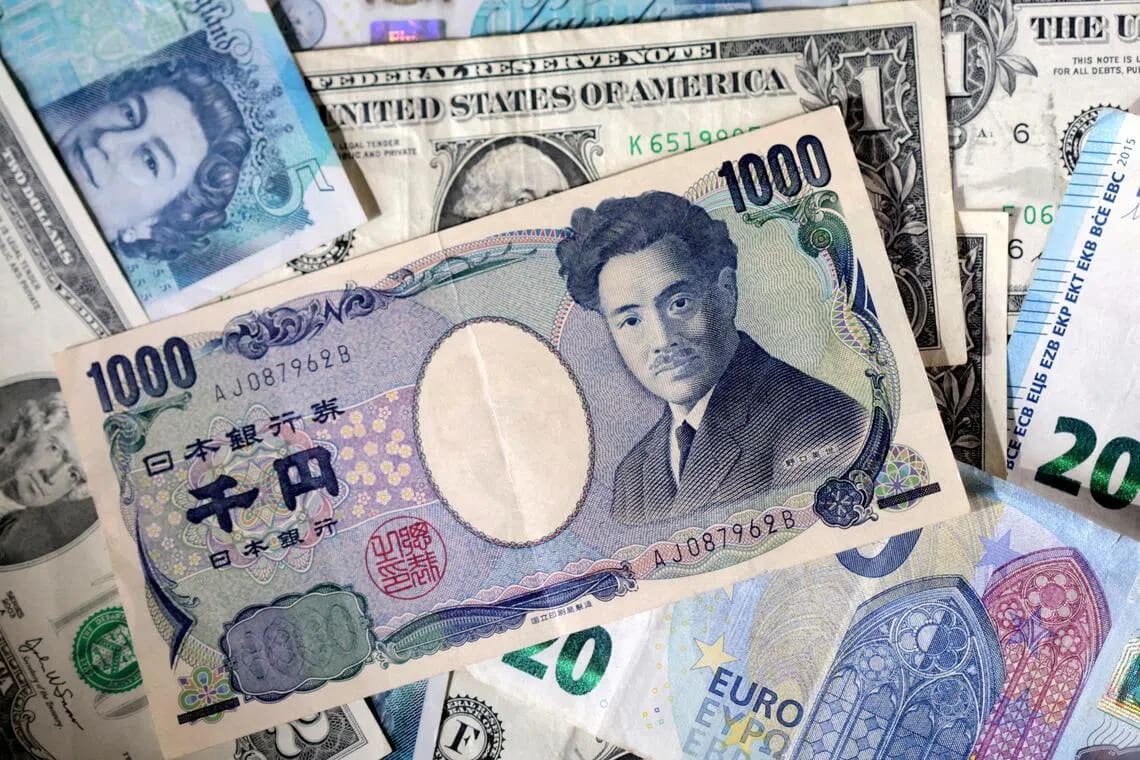
On July 30, the Japanese yen executed one of its sharpest reversals in decades. The currency had weakened to nearly 164 per dollar, marking its lowest level in four decades, before surging to an intraday high of 155.20. The catalyst was coordinated intervention by Japan and the United States, the first joint operation to purchase yen since the Asian financial crisis of 1998.
By the following Friday, the yen traded around 158 per dollar. The 9-yen swing in a single session delivered an unmistakable message to currency traders who had grown comfortable betting against the Japanese currency. What appeared to be a technical breakout above the 162 resistance level suddenly became a failed rally, with the 160 level now serving as a critical threshold.
President Donald Trump characterized US participation as "a signal of friendship" toward Japan. Treasury Secretary Scott Bessent went further, stating that Washington would not hesitate to join future interventions if necessary.
Echoes of Plaza
The coordinated action recalls the Plaza Accord of 1985, when the G-5 economies agreed to weaken the dollar through joint intervention. At that time, dollar-yen traded around 260 before central banks set sequential target prices of 220, 200, 150, and eventually 120. The yen continued strengthening beyond 100 even after policymakers signaled the adjustment had gone far enough.
The current intervention differs in scope but shares a similar objective: changing the risk calculus for speculators. Japan has intervened multiple times in recent years, but those solo efforts produced only temporary rallies. US participation alters the equation. Traders shorting the yen now face the prospect of sudden, coordinated moves and the possibility of further Bank of Japan rate hikes, making their positions considerably more expensive to maintain.
Treasury Holdings at Stake
Washington has its own strategic reasons for supporting yen stability. Japan holds approximately $1.14 trillion in US Treasuries as of May 2026, making it the largest foreign holder of American government debt. Large-scale intervention could force Tokyo to liquidate Treasury holdings to raise dollars, adding upward pressure on US bond yields at a time when Washington prefers stable borrowing costs.
Bessent has advocated for expanding the Federal Reserve's FIMA repo facility, which would allow Japan to borrow dollars against its Treasury holdings rather than sell them outright. The arrangement would protect both the yen and the Treasury market simultaneously.
Regional Spillover
The intervention carries significance beyond bilateral US-Japan relations. The yen serves as a bellwether for Asian foreign-exchange markets, and its prolonged weakness had intensified pressure on regional currencies. A more stable yen removes a source of contagion.
The improvement has spread across the region. The Korean won has led the rebound, with the Indonesian rupiah, Thai baht, Singapore dollar, and Chinese yuan also strengthening over the past month. The coordinated intervention effectively provided breathing room for central banks from Seoul to Jakarta that had been managing their own currency pressures.
Peso Rebounds from Record Low
The Philippine peso has participated in the regional rally. After touching a record low of 61.85 per dollar in mid-July, the currency strengthened back below 61 this week, closing at 60.90 on Friday. That marked its strongest level in more than a month.
The peso's rebound reflects multiple factors: the yen intervention, declining oil prices, and improving sentiment toward Asian assets. For the Philippines, the firmer currency helps contain import costs and gives Bangko Sentral ng Pilipinas more flexibility to focus on domestic inflation and growth rather than currency defense.
After weeks of trading near historic lows, the peso has regained some stability. Whether that stability holds depends partly on whether Washington and Tokyo follow through on their implicit promise to defend the yen floor, and partly on broader risk appetite for emerging-market assets.
The New Floor
Intervention alone cannot permanently reverse currency trends driven by interest-rate differentials and capital flows. But coordinated action between the world's largest and third-largest economies establishes a credible floor. Traders who had treated yen weakness as a one-way bet now face a two-sided risk.
The joint operation also signals that currency stability has returned as a policy priority in Washington, a shift from the benign neglect that characterized much of the past decade. For Asian economies managing their own exchange rates, that shift offers both relief and a reminder that major-economy coordination can reshape markets quickly.
RELATED STORIES
Yen Slides Back Toward 160 as Joint Intervention Fades
Cheng Wei-Lun · 3 min

Asian Tech Stocks Surge as Weak US Jobs Data Dims Rate Hike Outlook
Cheng Wei-Lun · 4 min
Japan Logs First Current Account Deficit in 17 Months as Dividends Flow Abroad
Aiko Nakamura · 3 min
Bank of Japan Signals Willingness to Accelerate Rate Hikes Amid Rising Inflation Concerns
Aiko Nakamura · 3 min
Spot something wrong? Email editor@briefasia.com. We log every correction publicly.