Asia · Politics
Pentagon Reviews Tactical Nuclear Options Amid Regional Escalation Risks
Defense Department examines expanding low-yield capabilities as adversaries signal willingness to employ battlefield nuclear weapons in limited conflicts
KEY TAKEAWAYS
- ·The Pentagon has initiated a nuclear posture review examining tactical, low-yield weapons to address adversary capabilities designed for limited battlefield use.
- ·The reassessment responds to concerns that US strategic arsenal lacks credible options for proportionate response to small-scale nuclear aggression in regional theaters.
- ·Findings will inform upcoming defense budget and force structure decisions, with congressional oversight and allied confidence in extended deterrence at stake.
A Strategic Arsenal in a Tactical Age
The Pentagon has opened a formal review of US nuclear doctrine, with particular attention to low-yield, battlefield-oriented capabilities. The reassessment comes as Washington grapples with a fundamental asymmetry: while American nuclear forces remain heavily weighted toward large-scale strategic deterrence, potential adversaries have invested in weapons designed for limited, regional use.
The Defense Department initiated the review this month, according to defense officials familiar with the matter. The examination centers on whether the current US nuclear inventory, built largely around high-yield warheads meant to deter existential threats, is adequate for scenarios where adversaries might employ smaller nuclear weapons in a confined theater.
The Mismatch Problem
For decades, US nuclear strategy prioritized massive retaliation and strategic stability with peer competitors. That calculus assumed nuclear use would be binary: all-out exchange or none at all. But both China and Russia have developed and fielded tactical nuclear systems intended for battlefield advantage rather than Armageddon, a shift that creates what defense planners call an "escalation ladder" the United States is ill-equipped to climb.
Tactical nuclear weapons typically range from sub-kiloton yields to around 100 kilotons, far smaller than the city-destroying warheads atop American intercontinental ballistic missiles. Proponents argue these weapons offer a credible response to limited nuclear aggression without forcing a president to choose between capitulation and全面 escalation. Critics counter that any nuclear use, however small, risks spiraling beyond control.
The review does not signal an imminent deployment decision, but it reflects growing concern within the Pentagon that adversaries may perceive a gap in US deterrence. If Moscow or Beijing believes Washington would hesitate to respond to a single tactical strike with its strategic arsenal, the logic goes, the threshold for nuclear use drops.
Regional Flashpoints
Asia looms large in this calculus. China has modernized its nuclear forces rapidly over the past decade, expanding both strategic and theater-range systems. Russian doctrine, meanwhile, has long included provisions for limited nuclear use to de-escalate conflicts it is losing conventionally, a posture rehearsed in exercises near NATO's eastern flank and, more recently, in scenarios involving Japan and the Korean Peninsula.
For US allies in the region, particularly Tokyo and Seoul, the credibility of extended deterrence hinges on whether Washington can respond proportionately to a tactical strike. A binary choice between inaction and all-out war undermines confidence. Both Japan and South Korea have signaled, quietly but persistently, that they expect the United States to maintain flexible nuclear options.
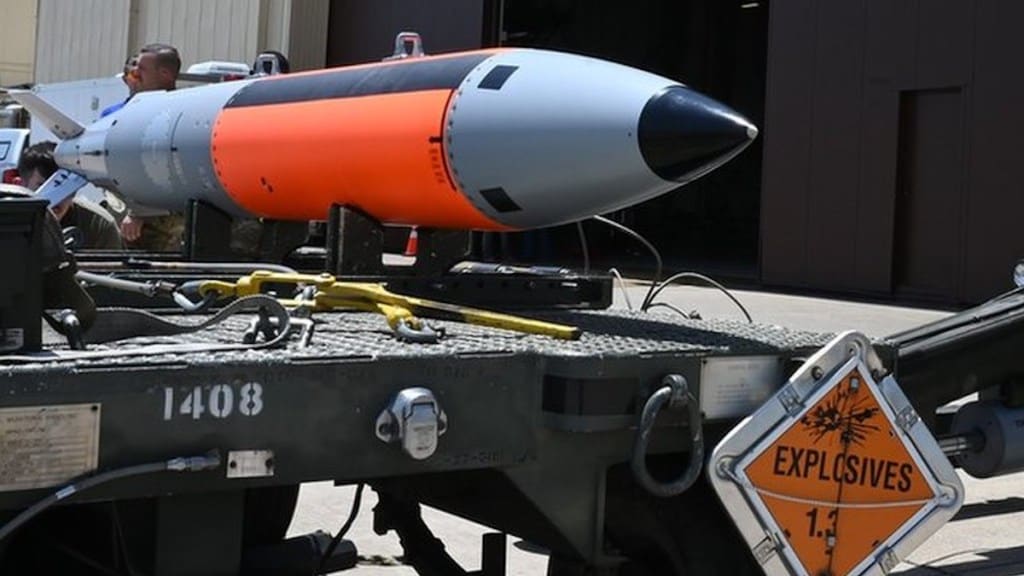
The review will likely examine existing capabilities, including the W76-2 low-yield submarine-launched ballistic missile warhead deployed in 2020, as well as potential new systems. It will also assess command-and-control architecture, pre-delegation authorities, and the political feasibility of fielding additional tactical options.
The Escalation Debate
Arms control advocates warn that expanding tactical nuclear arsenals increases the likelihood of use. Lower-yield weapons, they argue, blur the line between conventional and nuclear warfare, making the unthinkable seem manageable. Several former senior defense officials have cautioned that tactical nukes do not solve the escalation problem; they simply move it to a more dangerous rung.
Yet the Pentagon's review reflects a view that deterrence credibility rests on adversaries believing the United States possesses both the capability and will to respond at every level of conflict. If China or Russia calculates that a limited nuclear strike would leave Washington paralyzed, the risk of miscalculation rises.
The reassessment arrives as the United States renegotiates its strategic posture across the Indo-Pacific. With defense commitments stretching from the Taiwan Strait to the Indian Ocean, and allies increasingly vocal about their security anxieties, nuclear doctrine is no longer an abstract Cold War artifact. It is a live variable in regional stability.
What Comes Next
The Defense Department has not announced a timeline for completing the review, but officials indicate findings will inform budget and force structure decisions in the next fiscal cycle. Congressional oversight committees have already requested briefings, and any move to expand tactical capabilities will require sustained political backing.
For now, the review signals that Washington recognizes a shift in the nuclear landscape. Whether it translates into new weapons, revised doctrine, or simply updated contingency plans remains to be seen. What is clear is that the Pentagon no longer assumes nuclear deterrence is a static equation. In an era where adversaries are signaling comfort with limited nuclear use, the United States is recalculating its own thresholds.
RELATED STORIES

Manila Eyes Nickel Processing to Escape China's Price Control
Priyanka V. Rao · 4 min

Midea Ships 200,000 Portable Air Conditioners to Europe in Six Months
Cheng Wei-Lun · 3 min

7-Eleven Owner Calls China Its Toughest Market Amid Subsidy Wars
Cheng Wei-Lun · 3 min

Shein Retreats From Vietnam Warehouse Bet as China Manufacturing Proves Irreplaceable
Cheng Wei-Lun · 4 min
Spot something wrong? Email editor@briefasia.com. We log every correction publicly.