Asia · Business
7-Eleven Owner Calls China Its Toughest Market Amid Subsidy Wars
DFI Retail Group's Scott Price says mainland stores remain profitable despite 'unsustainable' online pricing pressure reshaping consumer expectations
KEY TAKEAWAYS
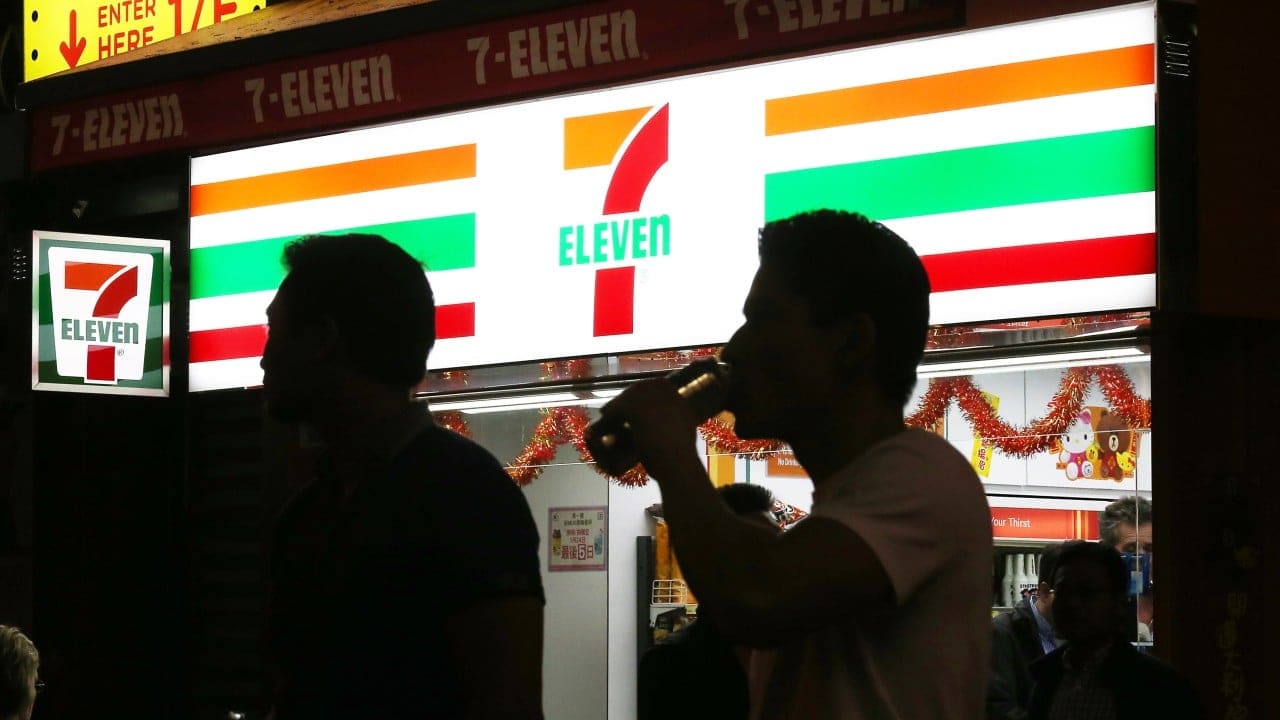
- ·DFI Retail Group, which operates 7-Eleven and Maxim's across 12 Asian markets, calls mainland China its toughest operating environment despite maintaining store profitability.
- ·CEO Scott Price attributes the challenge to e-commerce platform subsidies that have created unsustainable pricing benchmarks and reshaped consumer expectations.
- ·Major platforms including Meituan, Pinduoduo, and Douyin continue price wars that undercut physical retail by 20 to 30 percent through marketing-funded discounts.
A Profitable Struggle
Operating convenience stores in mainland China has become the hardest market challenge for DFI Retail Group, even as its 7-Eleven and Maxim's outlets continue to turn a profit across the country. The company's chief executive attributes the difficulty to platform subsidies that have warped consumer expectations around what products should cost.
Scott Price leads the Asian retail giant, which runs operations in 12 markets throughout the region. He told reporters that mainland shoppers maintain a sharp focus on value and careful spending, but that their pricing expectations have been shaped by what he characterizes as economically questionable online promotions.
The comments arrive as e-commerce platforms and food delivery apps wage sustained price wars across China's consumer landscape. Major players including Meituan, Pinduoduo, and Douyin have poured capital into subsidies to capture market share, a strategy that has compressed margins across retail categories and trained consumers to expect steep discounts.
The Economics of Expectation
Price describes a market dynamic in which sustained promotional activity has created pricing benchmarks that brick-and-mortar retailers struggle to match. The subsidies underwriting these low prices do not reflect sustainable unit economics, he argues, yet they reset the reference point consumers use to judge value.
DFI Retail operates more than 3,400 stores across Asia, with a significant footprint in Hong Kong, Singapore, Thailand, and mainland China. The company's portfolio includes 7-Eleven convenience stores, Maxim's restaurants, and several supermarket chains. In Hong Kong alone, 7-Eleven commands roughly half the convenience store market.
The mainland China operations remain profitable despite the pricing pressure, according to the executive. That profitability stems from tight inventory management, high-turnover product mixes, and store formats designed for grab-and-go transactions rather than destination shopping. Convenience stores globally operate on thin margins but high volume, a model that holds in China even as online competitors absorb losses to build customer bases.
Platform Capital and Retail Reality
China's e-commerce subsidy cycle has intensified over the past three years. Pinduoduo pioneered aggressive group-buying discounts, prompting Alibaba's Taobao and JD.com to launch competing subsidy programs. Meituan extended its food delivery subsidies into grocery and convenience goods. Douyin, the domestic version of TikTok, added live-stream commerce with heavy promotional support.
The result is a retail environment in which online prices for packaged food, beverages, and household essentials frequently undercut physical store prices by 20 to 30 percent. These discounts are funded by platform marketing budgets rather than supplier concessions, creating a pricing gap that reflects capital deployment rather than operational efficiency.
For physical retailers, the challenge is not just margin compression but also the behavioral shift among consumers who now cross-check prices on their phones before purchasing in-store. This price transparency has accelerated in markets like Shanghai and Shenzhen, where smartphone penetration is near universal and delivery infrastructure is dense.
Navigating the Complexity
DFI Retail has responded by emphasizing immediacy and location. Convenience stores serve consumers who prioritize speed over price, a segment that remains stable even in subsidy-heavy markets. The company also tailors product assortments to local tastes and refreshes inventory multiple times daily to ensure freshness, particularly for ready-to-eat items that e-commerce struggles to deliver efficiently.
The broader question for international retailers in China is how long the subsidy environment will persist. Regulatory scrutiny of platform competition has increased, and several major e-commerce players have scaled back promotional intensity in recent quarters as investor pressure mounts to demonstrate profitability.
Price's comments reflect a broader tension in China's retail sector between platform-driven disruption and the economics of sustainable operations. While DFI Retail maintains its mainland presence and profitability, the executive's characterization of China as the company's most difficult market signals the structural headwinds facing traditional retail formats in the world's second-largest economy.
The company continues to expand selectively in China, focusing on high-density urban areas where convenience store economics are most favorable. That strategy contrasts with the rapid, subsidy-fueled expansion pursued by local competitors, but it aligns with DFI Retail's regional approach of prioritizing unit profitability over market share growth.
As China's consumer economy navigates slower growth and shifting spending patterns, the sustainability of online subsidy models will likely determine whether pricing expectations realign with retail fundamentals or whether physical stores face ongoing pressure to match artificially low benchmarks.
RELATED STORIES

BYD, Geely and Chery Crack Global Auto Top Ten
Cheng Wei-Lun · 3 min
Midea Ships 200,000 Portable Air Conditioners to Europe in Six Months
Cheng Wei-Lun · 3 min

Manila Eyes Nickel Processing to Escape China's Price Control
Priyanka V. Rao · 4 min
Shein Retreats From Vietnam Warehouse Bet as China Manufacturing Proves Irreplaceable
Cheng Wei-Lun · 4 min
Spot something wrong? Email editor@briefasia.com. We log every correction publicly.