Asia · Business
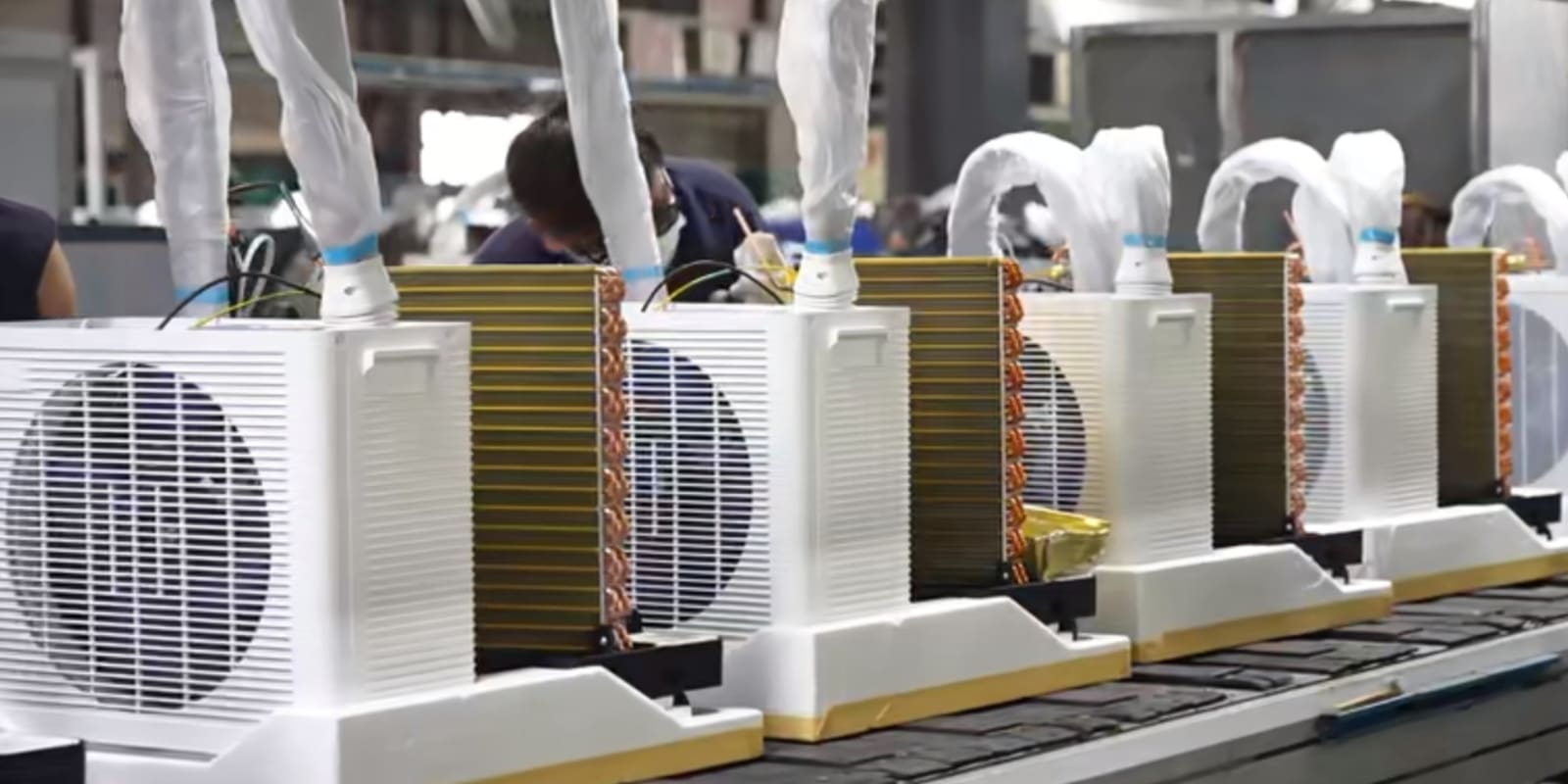
Midea Ships 200,000 Portable Air Conditioners to Europe in Six Months
Chinese home appliance maker doubles previous year's total as European heat drives demand for no-installation cooling units
KEY TAKEAWAYS
- ·Midea shipped 200,000 portable air conditioners to Europe in the first half of 2026, twice its total 2025 shipments.
- ·No-installation units priced 20 to 30 percent below Japanese competitors are capturing demand in rental markets and older buildings.
- ·Sustained growth depends on weather patterns and whether European consumers shift toward more energy-efficient permanent installations.
Surging Demand for No-Installation Units
Midea Group shipped 200,000 portable air conditioners to Europe between January and June 2026, according to the company. The figure represents double the total units the Chinese home appliance maker sent to the continent throughout all of 2025.
The surge reflects Europe's intensifying summer heat and a structural shift in how the region approaches climate control. Traditional split-system air conditioners require wall mounting and professional installation, creating barriers in rental markets and older buildings where modification permissions are difficult to secure. Portable units eliminate those friction points entirely.
Midea's PortaSplit line has captured market attention precisely because it requires no permanent installation. Users can plug the unit into a standard outlet and vent warm air through an included window kit. For apartment dwellers across Paris, Berlin, and Madrid, where landlords often prohibit structural changes, the value proposition is immediate.
Why Europe Is Buying Chinese Cooling
The European air conditioning market has historically lagged behind Asia and North America. Cooler climates meant lower penetration rates, and cultural preferences leaned toward natural ventilation. That calculus is changing rapidly. Record-breaking heatwaves over the past three summers have pushed daytime temperatures above 40 degrees Celsius in cities once known for mild weather.
Chinese manufacturers have moved aggressively into this opening. Midea, headquartered in Guangdong province, has built supply chains optimized for speed and cost. The company's ability to scale production quickly gives it an edge over European and Japanese competitors who face longer lead times and higher manufacturing costs.
Price plays a decisive role. A Midea PortaSplit unit typically retails between 300 and 500 euros, undercutting comparable models from Daikin or De'Longhi by 20 to 30 percent. For households facing inflation and rising energy bills, the upfront savings matter.
Distribution has also evolved. E-commerce platforms like Amazon and regional chains such as MediaMarkt have made Chinese appliances accessible across the continent. Midea has invested in localized customer service and warranty networks, addressing earlier concerns about after-sales support.
Competitive Landscape Shifts
Midea is not alone in targeting Europe. Fellow Chinese appliance giants Gree and Haier have expanded their European footprints, though neither has disclosed portable AC shipment figures for 2026. Japanese incumbent Daikin reported stronger air conditioner sales in Europe during the same period, driven in part by heat-related demand, but the company has focused more on premium split systems for commercial and residential installations.
The portable segment is growing faster than the overall air conditioning market. Ease of use and the elimination of installation costs have broadened the customer base beyond homeowners to include students, temporary residents, and small businesses. Midea's shipment acceleration suggests the company has captured a significant share of this expansion.
European regulators have yet to impose the kind of tariff scrutiny on home appliances that electric vehicles and solar panels have faced. That regulatory calm has allowed Chinese brands to compete primarily on price and product features rather than navigating trade barriers.
What Comes Next
Midea's first-half performance sets up a strong year, but sustainability of growth hinges on several factors. Weather patterns will continue to drive short-term demand. If European summers remain consistently hot, portable AC sales will likely stay elevated. A cooler-than-average summer in 2027 could dampen momentum.
Longer term, the question is whether European consumers will transition from portable units to permanent installations as air conditioning becomes a standard rather than an occasional purchase. Portable models offer convenience but are less energy-efficient than split systems. Rising electricity costs could push buyers toward more efficient solutions, potentially benefiting companies with stronger permanent installation offerings.
Competitive pressure will intensify. European and Japanese manufacturers are developing their own portable lines, and some are exploring partnerships with local retailers to improve price positioning. Midea's current advantage rests on cost and speed, but those edges can narrow.
The company has not disclosed revenue figures tied to the 200,000 units shipped, nor has it broken out European sales as a percentage of global air conditioner revenue. For context, Midea is one of the world's largest home appliance manufacturers, with operations spanning more than 200 countries. Europe represents a strategic growth market but remains smaller than its core Asian base.
For now, the numbers tell a clear story. European heat is real, and Chinese manufacturers are meeting the demand with products that fit the market's constraints. Midea's shipment doubling in six months is less about breakthrough innovation and more about being in the right place with the right product when the temperature climbs.
RELATED STORIES
7-Eleven Owner Calls China Its Toughest Market Amid Subsidy Wars
Cheng Wei-Lun · 3 min

Manila Eyes Nickel Processing to Escape China's Price Control
Priyanka V. Rao · 4 min
Shein Retreats From Vietnam Warehouse Bet as China Manufacturing Proves Irreplaceable
Cheng Wei-Lun · 4 min
Shein Scales Back Vietnam Expansion, Reinforces China Manufacturing Base
Cheng Wei-Lun · 3 min
Spot something wrong? Email editor@briefasia.com. We log every correction publicly.