Asia · Business
Pakistan Signs $850 Million Pharmaceutical Deals With Chinese Companies
Agreements span vaccine production, medical devices, and API manufacturing as Islamabad moves to reduce import dependence and build domestic capacity
KEY TAKEAWAYS
- ·Pakistan and Chinese companies signed $850 million in pharmaceutical agreements covering vaccine production, API manufacturing, medical devices, and clinical trials at a July conference in Islamabad.
- ·Pakistan imports all 13 vaccines in its national immunization program and 95 percent of active pharmaceutical ingredients needed for domestic medicine production, with annual vaccine import costs projected to reach $1.2 billion by 2030.
- ·The deals include plans for Chinese firms to establish manufacturing plants through joint ventures in special economic zones, supported by Pakistan's first National Local Vaccine Production Policy.
Historic Investment Conference
Pakistan finalized pharmaceutical agreements totaling $850 million with Chinese companies at a two-day investment conference in Islamabad on July 17 and 18. The Pakistan-China Pharmaceutical and Healthcare B2B Investment Conference drew 146 Chinese companies with roughly 220 delegates alongside more than 200 Pakistani firms, representing the largest bilateral business engagement in the pharmaceutical, healthcare, and biotechnology sectors to date.
Federal Health Minister Mustafa Kamal confirmed on July 18 that 16 contracts and 80 memoranda of understanding were signed during the event. The agreements span multiple areas: two focus on active pharmaceutical ingredient (API) manufacturing, eight on vaccine production, two on clinical trials, two on generic formulation injectables, and eight on medical devices.
Import Dependency Crisis
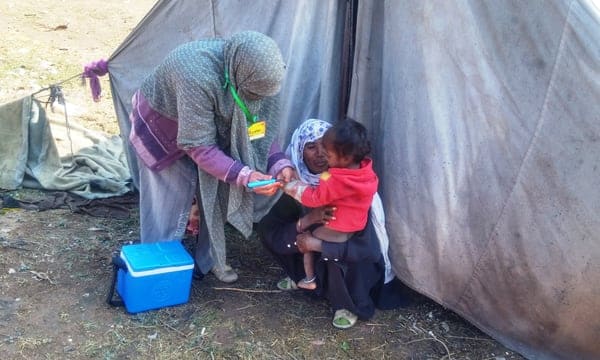
Pakistan's healthcare system currently relies almost entirely on external suppliers. The country administers 13 vaccines through its national immunization program, all of which are imported. While domestic manufacturers produce approximately 85 percent of finished medicines, they import around 95 percent of the API needed for production.
This dependency exposes Pakistan's 240 million people to substantial risks. Global shipping disruptions, currency fluctuations, foreign aid cuts, and shifting donor priorities can all trigger supply shortages. Vaccine-preventable diseases including measles, diphtheria, polio, and rabies continue to cause illness and death, particularly among children. Delayed shipments have forced health authorities to ration doses or postpone immunization campaigns.
The economic burden is considerable. Pakistan's annual medicine and vaccine import costs reach hundreds of millions of dollars, with estimates projecting the vaccine import bill alone could hit $1.2 billion by 2030.
New Policy Framework
Pakistan has approved a National Local Vaccine Production Policy for the first time, establishing a framework for domestic manufacturing with Chinese technical assistance. The policy aims to build production capacity, strengthen health security, and reduce reliance on imported medicines and vaccines.
Chinese firms are expected to establish manufacturing plants in Pakistan through joint ventures, co-produce raw materials, and develop new industrial capacity. Many facilities will be located in special economic zones under development through the China-Pakistan Economic Corridor, where policy incentives are designed to accelerate industrial growth.
Manufacturing and Job Creation
The planned domestic production could reduce imports and conserve foreign exchange reserves. Agreements with Chinese companies to produce raw materials locally are anticipated to lower medicine prices for Pakistani consumers. The industrial buildout will also generate employment in manufacturing, quality control, and technical roles.
The conference marked a shift from limited trade exchanges to deeper industrial collaboration. No other country has committed comparable investment or private-sector engagement in Pakistan's pharmaceutical sector at this scale, according to government officials.
Implementation Challenges
The success of these agreements will depend on regulatory clarity and political stability. Chinese private investors require a transparent, competitive environment free from bureaucratic confusion and policy reversals. Research and development activities may face particular regulatory obstacles that need resolution.
Pakistan's government must ensure consistent policy support and efficient approval processes if the partnership is to deliver tangible results. The agreements provide a framework, but execution over the coming years will determine whether domestic vaccine production and API manufacturing become operational realities.
For a healthcare system strained by persistent shortages and high import costs, the deals represent a potential turning point. Whether they translate into functioning production lines and affordable medicines will hinge on implementation discipline and sustained political commitment.
RELATED STORIES
Gwadar's Fishing Communities Face Livelihoods Crisis as Port Expansion Accelerates
Priyanka V. Rao · 4 min
Pakistan Secures Access to $10 Billion US Currency Facility After Iran Diplomacy
Rajesh K. Iyer · 3 min
India's Chinese Import Bill Climbs Despite Self-Reliance Push
Priyanka V. Rao · 3 min
Saudi Arabia, Turkey, and Pakistan Sign Trilateral Defense Pact in Makkah
Priyanka V. Rao · 3 min
Spot something wrong? Email editor@briefasia.com. We log every correction publicly.