ExclusivePerspectives · Interviews
Why Mundo Asia Hires Graduates With Zero Experience, and Wins
After 26 years in Asian travel, most of them spent working alongside seasoned professionals, Lucas Pham stopped hiring them. The founder and CEO of Hanoi-based Mundo Asia Tours now recruits fresh graduates with no industry experience, trains them for two months, and watches them outperform veteran hires. He speaks to BriefAsia about his contrarian talent playbook, and about why Vietnam may be Asia’s most underrated exporter of services.
KEY TAKEAWAYS
- ·Mundo Asia Tours recruits fresh graduates with no travel experience, trains them for two months, and finds they outperform veteran hires, five of its six market and product leads started with zero industry background.
- ·From Hanoi, it sells multi-country Asia tours direct to consumers in Spanish and Portuguese across Latin America and Spain, owning the customer, the data, and on-the-ground operations instead of buying through middlemen.
- ·Founder Lucas Pham's bigger bet: Vietnam's young, digital-native, language-trained workforce lets it export services under its own brand, and packaged tours survive wherever complexity and trust outweigh convenience.
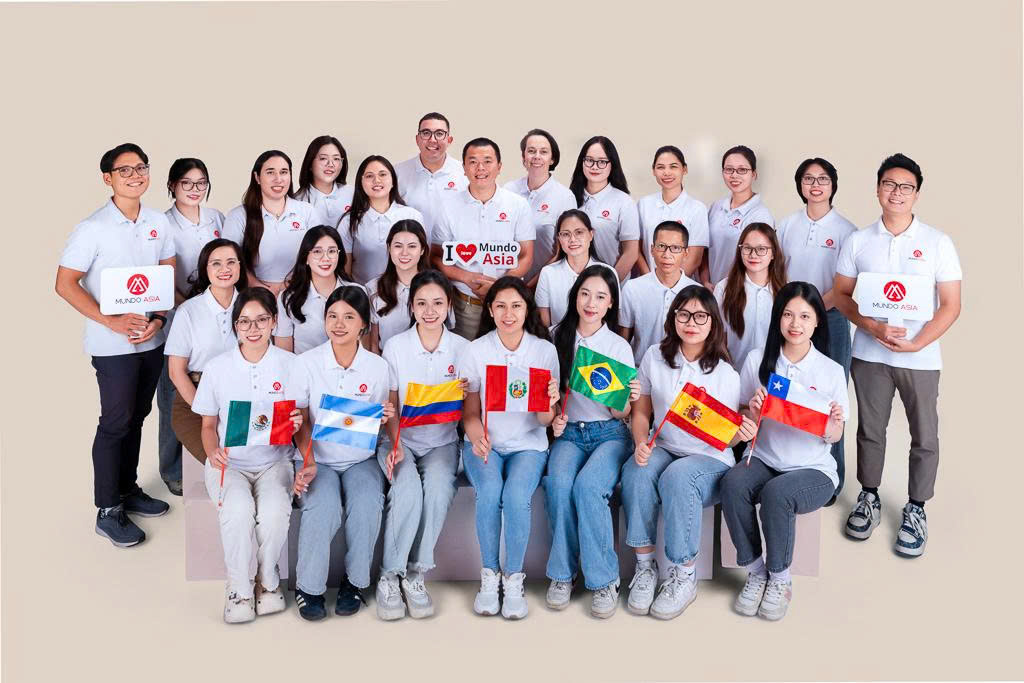
Mundo Asia Tours is not a typical Vietnamese tour operator. From its Hanoi headquarters, with branches in Thailand and Cambodia and representatives across Latin America and Spain, the company sells group and private tours spanning Vietnam, Thailand, Japan, China, South Korea and beyond, entirely in Spanish and Portuguese, directly to consumers. It is one of the very few agencies running weekly scheduled group departures in Spanish across Asia. Behind the platform at mundoasiatours.com sit roughly 80 people, including representatives and freelancers, most of them based in Vietnam, working with travellers on the other side of the world. And most of them, when they joined, had never sold a tour in their lives.
THE CONTRARIAN HIRE
BriefAsia: You have spent 26 years in this industry. Nearly every CEO in it says experienced travel talent is impossible to find. You seem to have stopped looking for it altogether. Why?
Lucas Pham: The shortage is real, if you insist on experience. The pandemic pushed a generation of experienced travel professionals into real estate, logistics and technology, and many never came back. So the industry is competing ever harder for a shrinking pool. We simply stepped out of that competition. And I want to be clear that this is not romanticism about youth: I spent most of my career working with very senior people, and I know precisely what they are worth. But our business is digital, direct to consumer, and conducted in Spanish and Portuguese with travellers in Latin America. Tell me honestly: where in Vietnam do I find someone with ten years of experience in exactly that? Nobody has it. So experience was never the advantage people assume. We decided to build our own talent instead of renting someone else’s past.

Lucas Pham, founder and CEO of Mundo Asia Tours. Photo: Mundo Asia Tours
So you recruit graduates straight out of university, with no industry background at all. What happens in the first two months?
It is a structured programme, not an orientation. The first weeks cover our destinations and products in depth: a consultant who has not internalised the difference between Hoi An and Hokkaido cannot advise anyone. Then we train the customer, meaning the culture of Latin American and Spanish travellers, how they plan, what they worry about, how they communicate. Then our digital toolkit: CRM, response standards, the data behind every enquiry. The final weeks are live work under a mentor, with real customers and measurable targets from day one. Our new consultants close their first booking within an average of six weeks. After two months, they graduate by doing the job, not by passing a test.
The striking claim is not that this works, but that these fresh recruits become your best performers. Why would someone with no experience outperform a veteran?
Three reasons. First, they carry no habits from a different era of this business: no offline reflexes, no B2B shortcuts, no “this is how we always did it”. Second, they are digital natives, and the tools we run the company on are the tools they grew up with. Third, hunger. A first job is a mission, not a routine. What we add is method: product knowledge, service standards, discipline. And the numbers are not ambiguous. By their second year, consultants we trained from zero convert enquiries at a higher rate than the experienced hires we have made. Five of our six market and product leads today joined Mundo Asia with no experience in travel at all.
“We decided to build our own talent instead of renting someone else’s past.”
Put yourself in the position of a family in Bogotá spending four thousand dollars on a three-week trip to Japan. Should they be comfortable that their consultant graduated eighteen months ago?
They should ask the question, and the answer is straightforward: a young consultant at Mundo Asia is never alone. Each one works inside a structure. We keep our own representative in every market where we sell. Above the consultant there is a mentor, a senior consultant they can escalate to at any hour, and an operations team on the ground in each country whose experience is measured in decades. Our local managers, our guides and our drivers in Vietnam, Thailand, Cambodia and Japan are not fresh graduates, and never will be. What the young consultant brings is responsiveness, language, empathy and complete attention to your file. What sits behind them is a company that has built these itineraries thousands of times, and 26 years of my own experience. The customer gets both. What they do not get, and this is deliberate, is a consultant who is bored by their trip because he has sold it four hundred times.
If experience is not the filter, what do you actually screen for?
Attitude, curiosity and service instinct, in that order. Language aptitude matters, of course, because our customers live in Latin America and they speak only Spanish and Portuguese. And here Vietnam is genuinely privileged. The country has a deep network of foreign language universities and training institutes, and every year it produces graduates in Spanish and Portuguese who are disciplined, hard-working and eager to prove themselves. Very few countries in Asia have that pool at all. But the deciding factor is how a candidate thinks about another human being’s trip of a lifetime. You can teach destinations in weeks. You cannot teach someone to care. In interviews we spend little time on CVs and a lot of time on scenarios: a flight cancelled at midnight in Tokyo, a worried mother in Bogotá. How they respond tells us everything.
The obvious objection: you invest two months of training, and then a competitor hires them away. How do you manage that risk?
Some leave, that is life, and I would rather train people who leave than keep people I never trained. But most stay, for a simple reason: growth. In a traditional operator, a young consultant might wait five years for real responsibility. Here, someone strong can lead a market or a product line within two. Most of the consultants we hired three years ago are still with us. And frankly, the cost of a two-month programme is far lower than the cost of one wrong senior hire who arrives expensive and leaves damage behind. Training is the cheapest risk in our budget.

Members of the Mundo Asia Tours. Photo: Mundo Asia Tours
THE DIGITAL REWRITE OF THE TOUR BUSINESS
Mundo Asia sells complex multi-country tours to customers you may never meet in person. What has digital fundamentally changed about this business?
It removed the middle. Twenty years ago, a traveller in Mexico City bought an Asia tour through a local agency, which bought from a wholesaler, which bought from a ground operator here. Every layer added cost and subtracted information. Today that traveller finds us on Google, Facebook or Instagram, talks directly to my team in Hanoi in her own language, and books. We own the relationship, the data and the responsibility. Digital transformation in tours is not about having a website: it is about collapsing the distance between the person who dreams of the trip and the people who actually deliver it.
Globally, online travel agencies have commoditised flights and hotels. Where does the packaged tour survive?
Wherever complexity and trust outweigh convenience. Nobody needs help booking a hotel in Bangkok anymore. But a three-week journey across Vietnam, Cambodia and Japan, with visas, internal flights, guides in your own language and food you can trust, is not a commodity, and travellers know it. The future of the tour is the hybrid: digital in discovery, marketing and operations, deeply human in advice and care. The operators disappearing today are the ones who are neither, too analogue to compete on efficiency and too transactional to compete on trust.
And artificial intelligence? Every travel company now claims to be an AI company.
We use it every day. Our consultants draft itineraries and translate supplier documents with it, and our advertising, our website analytics and our CRM run on a single connected data stack, so an enquiry from an Instagram advertisement in São Paulo reaches a consultant in Hanoi within minutes with its full history attached. A team of this generation operates that stack without a large traditional IT department. But here is the connection people miss: digital transformation is a people transformation. AI amplifies whoever uses it. Give it to a team trained in rigid old processes and it automates mediocrity. Give it to curious, well-trained young people and it multiplies excellence. That is another reason our hiring model works. We are not retrofitting technology onto old habits. We built the team for the tools.
You sell Japan and China to Latin America from Hanoi, competing with operators headquartered in Mexico City and Buenos Aires. Why should the Vietnamese company win that fight?
Because we are on the ground and they are not. An operator in Buenos Aires selling Japan is buying it from a company like ours, or from a company that buys from us. We control the product, the price and the problem-solving. When something goes wrong at eleven at night in Kyoto, we are not sending an email to a partner in another time zone. We have people there. And the sales side, which everyone assumes has to sit in the customer’s country, does not need to any more. My consultant in Hanoi talks to a family in Bogotá on WhatsApp, in Spanish, at their hour, and we keep eight representatives of our own in Brazil, Mexico, Colombia, Argentina, Peru, Ecuador, the United States and Spain. That is the part people have not fully absorbed. Vietnam has spent twenty years being seen as a country that manufactures goods for other people’s brands. It is now perfectly capable of exporting services under its own brand, to markets on the other side of the planet. Ours happens to be travel. It will not be the only one.
“Vietnam has spent twenty years manufacturing for other people’s brands. It can now export services under its own.”
Finally, what would you say to fellow CEOs still waiting for experienced staff to reappear?
Stop waiting. They are not coming back. Build your own academy, even a small one. Vietnam has an extraordinary asset: a young, educated, adaptable workforce that can serve travellers anywhere on earth through a screen. The talent shortage is real only for companies that outsource their people development to the past. For everyone else, the market is full of exceptional employees. They simply have not been trained yet. That part is our job.
This interview was conducted by BriefAsia in August 2026. Answers have been condensed and edited for clarity. Company information from Mundo Asia Tours (mundoasiatours.com).
RELATED STORIES

Nguyen Dang Quang and the long, quiet path to mastery
Manh Khang · 7 min
The pianist who goes looking for forgotten music
Manh Khang · 8 min

Đăng Khôi Takes Trống Cơm to Silk Way Star
Manh Khang · 8 min

Southeast Asia's Data Centre Rush Faces Power Grid Reality
Mariel D. Santos · 4 min
Spot something wrong? Email editor@briefasia.com. We log every correction publicly.