ExclusivePerspectives · Interviews
The pianist who goes looking for forgotten music
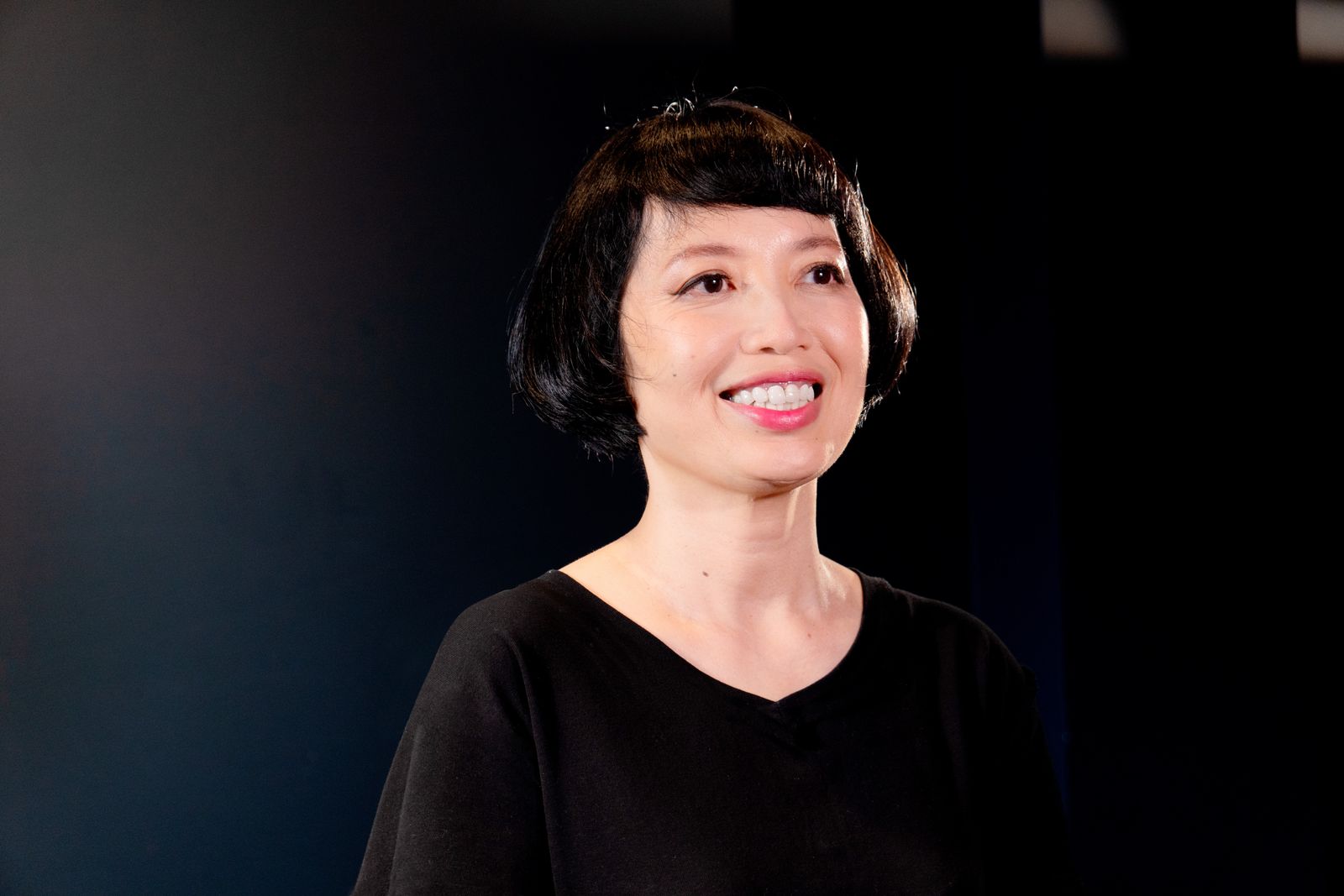
For over a decade Tra Nguyen has recorded music almost nobody plays. This November she enters Scriabin's ten sonatas, stepping into repertoire where there are others to be measured against.
KEY TAKEAWAYS
- ·For twelve years Tra Nguyen has recorded music almost no one plays, nine discs of the forgotten Joachim Raff and one of a living composer, choosing to widen the repertoire rather than reinterpret the famous.
- ·This November she changes direction, recording and filming the second half of Scriabin's ten sonatas, core repertoire where for the first time she will be measured against the biggest names in piano.
- ·Trained on the old Moscow-to-London route and now based in Hong Kong beside her label Naxos, she models a slower path than Vietnam's competition route: find untouched music, do it properly, let the recording outlast the concert.
Joachim Raff was among the most performed composers in nineteenth-century Europe. By the twentieth he had vanished from concert halls almost entirely. Nine discs of his piano music, several of them world premiere recordings, carry the name of a Vietnamese pianist.
This is the work Nguyen Bich Tra has quietly done for 12 years: going after what was left behind, and giving it back to listeners.
There are two kinds of performing musician. The first takes the works everyone knows and looks for a different way to say them. The second walks toward the works nobody remembers, accepting that the value of the effort will be measured by what audiences come to know, not by whether they remember the performer's name.
Tra Nguyen belongs to the second kind. It is a choice that requires considerable humility, and it explains why in Vietnam she is respected more than she is talked about.
This year the choice changes direction. On November 8 in Hong Kong, then on consecutive nights on November 30 and December 1 at Wyastone Concert Hall in Monmouth, she presents and records the second half of Alexander Scriabin's cycle of ten piano sonatas, numbers six through ten. The first half, numbers one to five, has already run in Ho Chi Minh City, Hong Kong and London, and was recorded at Wyastone in the United Kingdom.
Scriabin is not Raff. This is core repertoire, recorded complete by some of the largest names of two centuries of pianism. For the first time in her recording life, she walks into a room where others are already sitting.

The Russian school, and a way of learning
She was born in Hanoi in 1973, into a household where art was the daily work. Her mother is the film actress Tra Giang, a People's Artist. Her father was Professor Nguyen Bich Ngoc, a Meritorious Artist and violinist who helped train several generations of Vietnamese string players, and who died in 1999.
Her earliest memory of music, according to the biography she writes herself, is of Bach's solo violin sonatas and partitas drifting out of her father's teaching room. Not a concert. Not a record. The sound of students working through their assignments in her own house.
She entered the Hanoi Conservatory in 1980 and made her first public appearance at ten, then playing Mozart's Piano Concerto No. 23 with the conservatory orchestra. At fourteen she was selected to study in Russia. A scholarship to Britain followed, then the Royal Academy of Music in London, where she graduated in 1999, the year her father died.
That Moscow-to-London route has almost no travelers now. It belongs to a generation of Vietnamese musicians formed inside Russian pedagogy, where a phrase is repeated hundreds of times not to build speed but to understand why it has to sound the way it does. That discipline later became the precondition for something quite different: sitting in a studio for days with music nobody has recorded before.
Nine discs for a forgotten man
Recording a forgotten composer is the act of someone who believes music deserves to outlive its own era.
She has recorded nine discs of Raff, released on Naxos's Grand Piano imprint and on the Swedish label Sterling. Among them is the Suite for piano and orchestra Op. 200, recorded with the Norrlands Opera orchestra under Roland Kluttig, named Album of the Week by The Independent on March 20, 2010. Another disc in the series took the same honor in April 2012.
Her artist profile cites Gramophone, BBC Music Magazine, International Piano, Klassik Heute and the American Record Guide. These are record review desks of top music magazines, where someone sits and listens minute by minute. The recognition she has came from inside the recording world itself.
In 2023 she went a step further and released a disc devoted entirely to Nimrod Borenstein, a living composer. She told Tuoi Tre it was terribly difficult, and her first record made up wholly of contemporary work with a complex musical language. For a musician most at home in the German Romantic repertoire, that is not the safe decision.
The discography amounts to a position on what performers are for. It holds that the job is not only to interpret what exists but to widen what can be heard. A disc of well-known composers enriches a career. A Raff disc enriches the repertoire.
The label behind most of that work, Naxos, was founded in 1987 and is headquartered in Hong Kong. Its stated strategy is to build a catalogue of unduplicated repertoire. After many years in London she moved to Hong Kong, which she describes as the closest she can live to her mother and to Vietnam, and which is also where her label sits. Few people notice that a recording career this European is run out of an Asian city.
Scriabin, the flame and the ten sonatas
Scriabin's ten sonatas are among the strangest journeys any composer left behind. The first still breathes Chopin. By the last, the harmony has left every familiar key behind and the music has become something closer to a state of ecstasy than to a form. Tra Nguyen is committed to perform all of them in concert, also to film and record them for Naxos.
Her Ho Chi Minh City recital in early December 2025, titled The Gleam of Another Sun, took its name from a poem by Scriabin himself. The program moved from Chopin to Scriabin, from very human grief toward metaphysical longing.
Asked by Tuoi Tre which feeling best described the project, among fear, excitement and faith, she chose excitement, and said the difficulty itself is what makes her feel she is widening what she can do and crossing into a new threshold.
The answer is worth noting because it comes from someone with enough behind her that no further threshold is required. She is placing herself in the hard position, recording and filming one of the most challenging sets in the piano repertoire, not to prove to herself that she can do it, but out of a desire to learn and to seek new artistic visions. Growth, she says, is not born out of comfort.
Wyastone, where she films and records on two consecutive days in late November, is the Nimbus Foundation's 550-seat hall, which doubles as a recording studio and keeps three Steinway Model D pianos.

Coming back, and handing on
Since moving to Hong Kong she has returned to Vietnam more regularly. In 2024 she played Tchaikovsky's First Concerto with the Ho Chi Minh City Ballet Symphony Orchestra and Opera under Le Ha My, Rachmaninoff's Second Concerto and premiered Hoang Cuong's Piano Concerto under Tran Vuong Thach, and two nights at the Ho Guom Opera in Hanoi with the Vietnam National Symphony Orchestra under Le Phi Phi. In 2025 she taught masterclasses at the Ho Chi Minh City Conservatory and at Impressivo.
She also sat on the jury of the Grand Opus Performing Competition in 2025, a contest that puts every finalist on stage with a symphony orchestra, admits entrants up to 32 and accepts players who never went through conservatory training.
What she passes on is not principally technique. Vietnamese conservatories teach the competition route very thoroughly: enter, win, be noticed. Her career demonstrates a second route, slower and more durable: find music nobody has touched, do it properly, and let the recording outlive the concert. It is a route open even to musicians from places without a large concert market.
An East Asian quality
There is something shared among East Asian musicians of this generation, whether they are in Seoul, Tokyo, Hong Kong or Hanoi. They were taught that a career accumulates rather than detonates. That the teacher must be named. That a work deserves decades of living with, not a season.
Tra Nguyen is close to a complete demonstration of that idea. She has no bestselling disc of popular composers. She has nine discs by a forgotten man, one by a living one, and a sonata cycle ahead of her that she knows perfectly well will be compared.
In November, in Hong Kong, she starts with the Sixth. Naxos will release the albums and videos in 2027.
Sources
Concert dates and the shape of the Scriabin project come from the artist's own website and from Naxos. Discography details and the review citations come from artist files at Naxos and Grand Piano, and the description of Wyastone Concert Hall from the Nimbus Foundation. Quoted remarks are drawn from Tuoi Tre and Nguoi Lao Dong between 2020 and 2025.
Tra Nguyen read this article before publication and corrected several details, among them the conducting credits, the length of her recording career and the scope of the Naxos release.
RELATED STORIES
Vietnam's Offshore Oil Find Tests Hanoi's Will Against Beijing
Priyanka V. Rao · 5 min
-800x471.jpg?prefix=brief-asia)
Cover the logo. They'll still know who you are.
Simon Ng · 9 min
Ho Tu Bao Taught Machines to Learn. Now He Teaches Doubt.
Manh Khang · 9 min
American Cherry Prices Surge 95% in Vietnam as Harvest Shrinks
Priyanka V. Rao · 2 min
Spot something wrong? Email editor@briefasia.com. We log every correction publicly.