Asia · Business
Malaysia Regains Ground as Asia's Cocoa Processing Hub
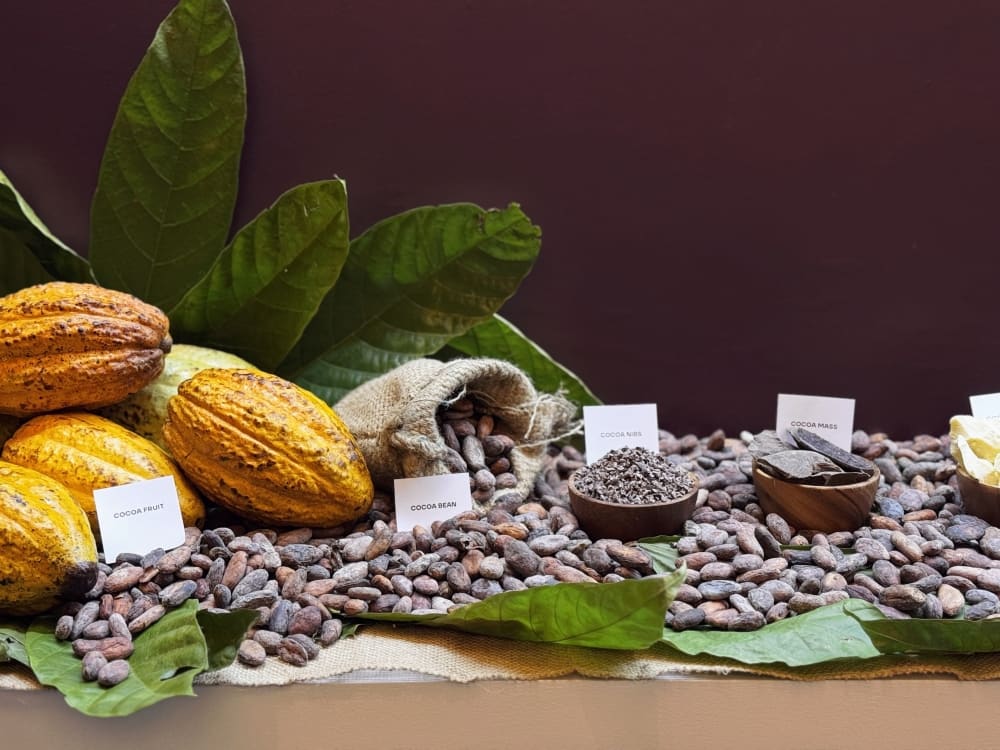
Second-quarter grinding surged by nearly a third as supply pressures ease and regional demand rebounds across Southeast Asia's chocolate sector.
KEY TAKEAWAYS
- ·Malaysia processed 90,849 tonnes of cocoa in Q2 2026, up 29 per cent year-on-year and representing 40 per cent of Asia's total grinding.
- ·Barry Callebaut expanded from one distributor to seven partners nationwide, while a stronger ringgit improved purchasing power for raw materials.
- ·The chocolate and confectionery market is forecast to grow above seven per cent annually through 2031, driven by rising product penetration and local innovation.
A Quarter of Strong Recovery
Malaysia processed 90,849 tonnes of cocoa in the second quarter of 2026, a 29 per cent increase from the same period last year, according to data from the Cocoa Association of Asia and Malaysian Cocoa Board. The figure represents roughly 40 per cent of total cocoa grinding across Asia for the quarter, underscoring Malaysia's position as a regional processing center.
The rebound follows two years of turbulence in global cocoa markets, driven by supply disruptions and price spikes linked to geopolitical instability. Ciptadi Sukono, managing director for Southeast Asia at Barry Callebaut, noted that consumption patterns are normalizing as prices stabilize. The Zurich-based manufacturer operates a processing facility in Pasir Gudang, Johor, alongside one of the largest cocoa bean warehouses in Asia Pacific, managed jointly with logistics provider Maersk.
Expanding Distribution Networks
Barry Callebaut has shifted from a single-distributor model in Malaysia to a network of seven partners nationwide, broadening its customer reach across the food service and industrial segments. Ciptadi highlighted Malaysia and Vietnam as the strongest-performing markets in Southeast Asia over recent years, attributing part of the momentum to currency strength. A firmer ringgit has improved purchasing power for raw materials and equipment, lowering effective input costs for local processors and confectioners.
The company employs more than 400 people in Malaysia, including staff at its Pasir Gudang site and a global business services center in Petaling Jaya. The Johor facility handles both bean processing and warehousing, positioning the country as a logistics node for cocoa flows into East and Southeast Asia.
Consumer Trends and Market Projections
Malaysia's chocolate and confectionery market is forecast to grow at a compound annual rate exceeding seven per cent through 2031, driven by rising penetration of chocolate products in bakery, dessert, and beverage applications. Ciptadi pointed to the country's culinary culture as a catalyst, with local players adapting global chocolate trends into regional flavors and formats, from pandan-infused ganache to durian pralines.
The processing uptick also reflects broader shifts in Asia's cocoa supply chain. West African production, which accounts for roughly two-thirds of global output, has faced weather-related shortfalls and export-control measures in recent seasons, prompting buyers to diversify sourcing and increase inventory in regional hubs. Malaysia's established infrastructure, port access, and trade agreements with ASEAN neighbors position it to capture a larger share of intra-Asian cocoa flows.
What Comes Next
Industry participants expect demand growth to continue as middle-class expansion in Indonesia, the Philippines, and Thailand drives per-capita chocolate consumption higher. Malaysia's processing capacity, currently concentrated in Johor and Penang, may see further investment if global bean prices remain within a manageable band and if regional consumption trends hold.
Barry Callebaut's remarks at its Masters of Taste event in Kuala Lumpur signal confidence in the sector's trajectory, though the company acknowledged that future supply shocks remain a risk. For now, the combination of easing raw-material costs, stronger regional currencies, and growing appetite for premium and artisanal chocolate products is giving Malaysia's cocoa industry room to expand.
RELATED STORIES
Malaysia's Natural Rubber Output Jumps on Smallholder Strength
Priyanka V. Rao · 3 min
Hong Kong Opens Kuala Lumpur Office in Asia Network Push
Cheng Wei-Lun · 4 min

Malaysia Probes Former Tabung Haji Officials After $10 Billion Asset Deficit Revealed
Priyanka V. Rao · 4 min
Malaysia Construction Sector Posts RM47.8 Billion in Q2 Work Value
Priyanka V. Rao · 3 min
Spot something wrong? Email editor@briefasia.com. We log every correction publicly.