Real Estate · Land
Long Thanh Airport Runway Nears Completion Ahead of Phase One Launch
Vietnam's flagship infrastructure project reaches critical milestone as contractors mobilize to finish second runway by September, setting stage for 2026 opening.
KEY TAKEAWAYS
- ·Long Thanh International Airport's second runway has reached substantial completion after 14 months of construction, with contractors now mobilizing to meet the September deadline.
- ·The airport's first phase is designed to handle 25 million passengers and 1.2 million tons of cargo annually, addressing severe capacity constraints at Ho Chi Minh City's Tan Son Nhat Airport.
- ·Vietnam has committed approximately $4.7 billion to phase one of the project, positioning Long Thanh as a key element in the country's strategy to become a regional aviation hub.
Construction Sprint Enters Final Phase
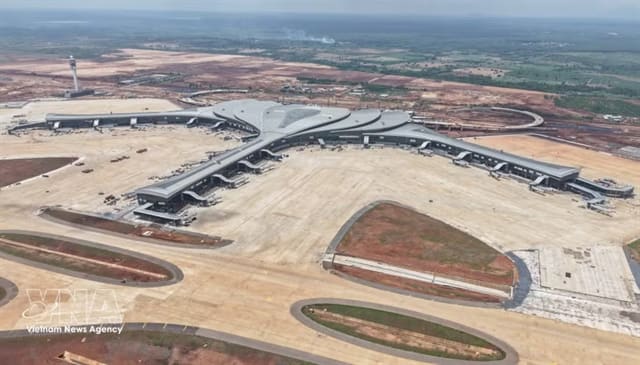
The second runway at Long Thanh International Airport has reached substantial completion after 14 months of intensive construction work, according to the Airports Corporation of Vietnam. Contractors are now deploying hundreds of workers and heavy equipment to complete remaining tasks before the September deadline, a timeline that positions the facility to begin operations later this year.
The cement-based concrete pavement for both the runway and its associated taxiways has been laid, representing the bulk of the ground infrastructure required for aircraft operations. This phase of work forms the backbone of the airport's initial capacity, designed to handle the projected surge in passenger traffic through southern Vietnam over the next decade.
Long Thanh International Airport, located approximately 40 kilometers east of Ho Chi Minh City in Dong Nai Province, represents Vietnam's largest infrastructure investment in the aviation sector. The project is being developed in phases, with the first stage targeting an annual capacity of 25 million passengers and 1.2 million tons of cargo. The second runway is a critical component of this initial phase, which will also include a passenger terminal, cargo facilities, and supporting infrastructure.
Regional Hub Ambitions Take Shape
The timeline for Long Thanh's development reflects Vietnam's broader strategy to position itself as a regional aviation hub in Southeast Asia. The country's existing airports, particularly Tan Son Nhat International Airport in Ho Chi Minh City, have been operating beyond designed capacity for years. Tan Son Nhat currently handles more than 40 million passengers annually despite being designed for 28 million, creating bottlenecks that have constrained both tourism and business travel growth.
Construction at Long Thanh began in earnest in 2021, following years of planning and land clearance. The project has faced challenges typical of large infrastructure developments in the region, including resettlement of local communities, coordination among multiple contractors, and supply chain pressures during the pandemic period. The current pace of work suggests these obstacles have been largely overcome.
The airport's location in Dong Nai Province positions it to serve not only Ho Chi Minh City but also the surrounding industrial zones that have attracted significant foreign direct investment in recent years. Manufacturing hubs operated by Samsung, LG, and numerous Japanese automotive suppliers are within an hour's drive, making efficient cargo handling a priority for the facility's design.
Infrastructure Investment and Capacity Planning
Vietnam's civil aviation market has been one of the fastest-growing in Asia over the past decade, with domestic passenger numbers expanding at double-digit annual rates before the pandemic. While growth slowed during travel restrictions, demand has rebounded sharply, reinforcing the case for expanded infrastructure. The government has committed approximately $4.7 billion to the first phase of Long Thanh, with subsequent phases planned to eventually increase capacity to 100 million passengers per year by 2040.
The emphasis on runway completion reflects operational priorities. Without functional runways and taxiways, no other component of the airport can generate revenue or serve passengers. The September target allows time for testing, certification, and pilot familiarization before commercial operations commence.
Other elements of phase one are progressing in parallel. The main passenger terminal building, designed by a consortium including French firm ADP Ingenierie, is under construction with a target completion date aligned with the runway schedule. Airfield lighting, navigation systems, and ground support infrastructure are being installed concurrently.
What Comes Next
Once the runway work concludes in September, the focus will shift to operational readiness testing. This includes calibration of navigation aids, surface inspections, and trial runs with aircraft to verify that the pavement can withstand the loads imposed by modern widebody jets. Vietnamese aviation authorities will need to certify the facility before any commercial carrier can schedule flights.
The government has indicated that national carrier Vietnam Airlines will be among the first operators to shift routes from Tan Son Nhat to Long Thanh, along with budget carriers Vietjet Air and Bamboo Airways. International airlines serving Ho Chi Minh City are expected to transition gradually, a process that will depend on terminal readiness and coordination with customs and immigration authorities.
Long Thanh's development is being closely watched by investors and policymakers across Southeast Asia. Indonesia, Thailand, and the Philippines are all pursuing airport expansion projects of their own, creating a competitive dynamic as each country seeks to capture a larger share of regional air traffic. Vietnam's ability to deliver Long Thanh on schedule and within budget will influence perceptions of its execution capacity for large infrastructure projects, with implications for future investment in ports, rail, and energy infrastructure.
The completion of the second runway by September represents more than a construction milestone. It signals Vietnam's readiness to accommodate the next phase of economic growth, underpinned by connectivity that links its manufacturing base and urban centers to global markets.
RELATED STORIES
Da Nang Airport Begins $379 Million Terminal Expansion in August 2027
Tran Quoc Bao · 4 min
Southeast Asian Factories Adopt Proximity Planning to Retain Workers and Investors
Lim Hui Ying · 3 min

Mixue Shutters 89 Stores Across Southeast Asia Amid Profit Decline
Siti Nuraini · 3 min
Chinese Brands Capture Vietnam's $92 Million Robot Vacuum Market
Siti Nuraini · 3 min
Spot something wrong? Email editor@briefasia.com. We log every correction publicly.