Real Estate · Offices
Kuala Lumpur Office Tower Faces Court-Ordered Sale After Decade-Long Debt Dispute
Thirty-eight parcels in Maju Junction will be auctioned next month for RM354 million as creditors pursue a judgment dating back to Malaysia's steel privatization era.
KEY TAKEAWAYS
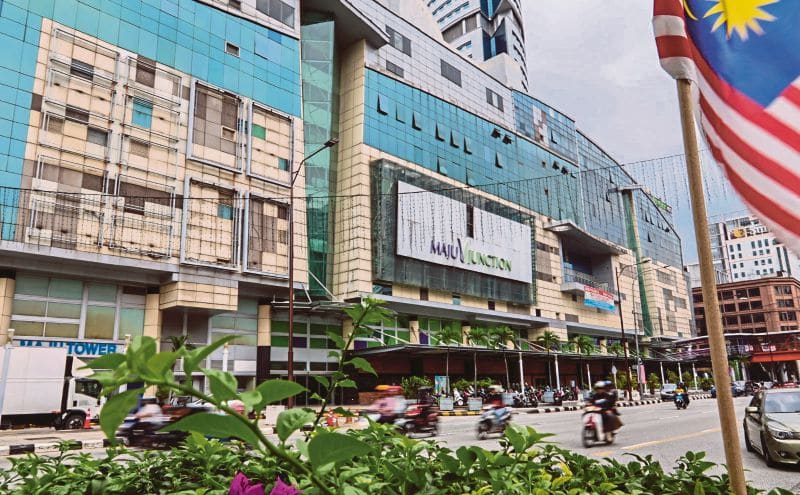
- ·Thirty-eight strata parcels in Maju Junction, a mixed-use complex in central Kuala Lumpur, will be auctioned on August 20 at a reserve price of RM353.95 million under court-ordered execution proceedings.
- ·The forced sale follows a 2019 High Court judgment ordering Maju Holdings to pay Perwaja Terengganu RM197.99 million over disputes linked to Malaysia's Perwaja Group steel privatization in the late 1990s.
- ·The auction tests investor appetite for distressed commercial assets in Kuala Lumpur's secondary office market, where vacancy rates exceed 20 percent and older buildings face competition from newer Grade A towers.
Prime Real Estate Hits the Block
Thirty-eight strata parcels in Maju Junction, a mixed-use complex occupying a prominent corner where Jalan Sultan Ismail meets Jalan Tuanku Abdul Rahman in Kuala Lumpur, will go under the hammer on August 20 through e-Lelong at a reserve price of RM353.95 million. The properties include office suites, retail units, and car park lots held under ASM Properties Sdn Bhd.
The online auction requires the winning bidder to post a 10 percent deposit immediately and settle the remaining balance within 120 days. The forced sale stems from execution proceedings brought by Perwaja Terengganu Sdn Bhd against ASM Properties, according to the proclamation of sale issued by the High Court of Malaya.
Court documents show the auction proceeds under orders dated June 20, 2025, and June 23, 2026, pursuant to Sections 256 and 257 of the National Land Code 1965 and Order 83 of the Rules of Court 2012. The complex has anchored its central business district location for more than twenty years.
Roots in Steel Privatization Litigation
The execution action follows a separate but potentially related judgment secured by Perwaja Terengganu against Maju Holdings Sdn Bhd. On July 25, 2019, the High Court ruled in favor of Perwaja, ordering Maju Holdings to pay RM197.99 million plus interest. That dispute arose from agreements tied to the privatization of the Perwaja Group, Malaysia's troubled state-linked steel venture that underwent restructuring in the late 1990s.
Maju Holdings challenged the ruling, but the Court of Appeal dismissed the appeal on December 20, 2022, leaving the judgment intact. The case underscores the lingering financial fallout from Malaysia's heavy-industry privatization push, which saw the government offload loss-making entities to private consortia often unable to absorb accumulated liabilities.
Available court filings do not clarify whether the current execution proceedings against ASM Properties derive directly from the RM198 million judgment against Maju Holdings or rest on independent legal grounds. Legal representatives for Perwaja declined to comment when approached for clarification, citing client confidentiality.
Market Implications for Distressed Assets
The reserve price of RM354 million values the portfolio at roughly RM9.3 million per parcel on average, though individual lots vary widely in size and type. Distressed commercial real estate auctions in Malaysia typically attract a mix of institutional buyers, property syndicates, and opportunistic investors willing to navigate legal encumbrances and tenant management challenges.
Kuala Lumpur's office market has faced headwinds since the pandemic, with vacancy rates in secondary buildings climbing above 20 percent in some submarkets. Prime locations along the Golden Triangle corridor, where Maju Junction sits, have fared better, but older stock without recent upgrades competes poorly against newer Grade A towers offering flexible layouts and sustainability credentials.
Buyers of auctioned strata parcels must also contend with existing tenants, outstanding service charges, and potential disputes with other unit owners in the same development. The 120-day settlement window is standard for court-ordered sales but leaves limited time for due diligence and financing arrangements, particularly for portfolios of this scale.
Legal Mechanics of Execution Sales
Execution proceedings allow judgment creditors to satisfy unpaid debts by seizing and selling a debtor's assets through court supervision. In Malaysia, real property executions under the National Land Code involve a proclamation of sale, public notice, and an auction conducted by the court or its appointed agent.
The process offers creditors a path to recovery but often yields below-market prices, especially when reserve amounts reflect outstanding debt rather than current valuations. For debtors, forced sales represent a final recourse after exhausting settlement negotiations and restructuring options.
The involvement of ASM Properties, rather than Maju Holdings directly, suggests the judgment creditor traced assets across related entities within the same corporate group. Malaysian courts permit such enforcement when plaintiffs can demonstrate common ownership or control, though each case turns on specific evidence of asset transfers or corporate veils.
What Happens Next
The August 20 auction will test investor appetite for a sizable commercial portfolio encumbered by litigation history. If bidding falls short of the reserve price, Perwaja Terengganu may seek a revised court order lowering the threshold or pursue alternative enforcement avenues, including garnishment of rental income or appointment of a receiver.
Should the sale proceed, the proceeds will first satisfy the judgment debt, accrued interest, and legal costs before any surplus returns to ASM Properties. The outcome will also signal whether Malaysia's courts can efficiently resolve legacy debt disputes that have dragged on for years, tying up assets and capital that could otherwise be redeployed.
For Kuala Lumpur's commercial real estate sector, the case adds another data point to the growing inventory of distressed and auctioned properties, a trend that has accelerated as post-pandemic economic pressures expose overleveraged developers and aging assets in secondary locations.
RELATED STORIES
Malaysia's KLCI Index to Add 20 Stocks in Phased Expansion
Jun-ho Seo · 2 min

Blackstone's AirTrunk Lines Up S$2 Billion Loan for Singapore REIT IPO
Anand Sundaram · 3 min

Blackstone's AirTrunk Pursues $1.6 Billion Loan Ahead of Singapore REIT Listing
Jun-ho Seo · 3 min
OpenAI Secures Multi-Year Malaysia Data Centre Deal with Firmus
Jun-ho Seo · 3 min
Spot something wrong? Email editor@briefasia.com. We log every correction publicly.