Finance · Markets
Malaysia's KLCI Index to Add 20 Stocks in Phased Expansion
Benchmark restructure aims to reduce concentration in financial services and utilities while broadening exposure to industrials, technology and consumer sectors through 2027.
KEY TAKEAWAYS
- ·Malaysia's FTSE Bursa Malaysia KLCI will expand from 30 to 50 constituents by June 2027, with the 20 new entrants expected to represent around 15.6 per cent of the index.
- ·The restructure reduces concentration in financial services and utilities while increasing exposure to industrials, technology, consumer discretionary, energy, real estate and consumer staples.
- ·Inclusion occurs in two phases at 50 per cent weighting in December 2026 and full weighting in June 2027, with constituent announcement scheduled for 3 December 2026.
A More Diversified Benchmark
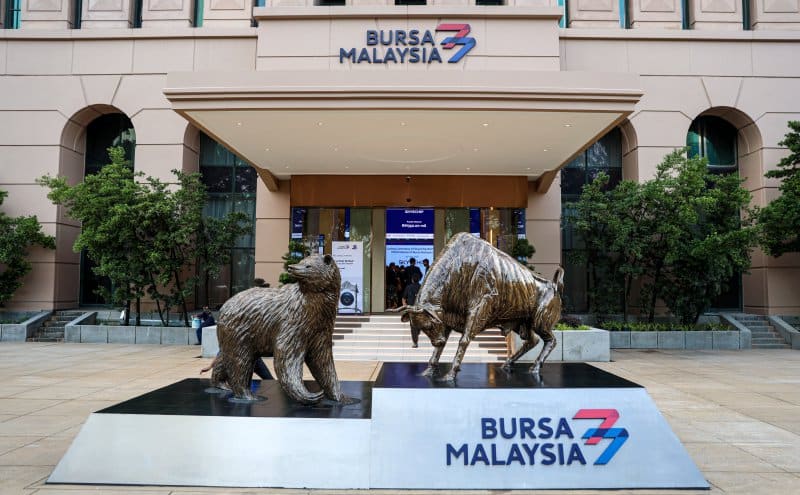
Malaysia's main equity gauge is set for its most significant structural overhaul in years. The FTSE Bursa Malaysia KLCI will expand from 30 to 50 constituents through a phased process concluding in June 2027, according to CIMB Securities.
The restructure addresses a long-standing criticism of the Malaysian benchmark: heavy concentration in financial services and utilities. The 20 incoming stocks will shift the index's sector balance materially, increasing representation across industrials, technology, consumer discretionary, energy, real estate and consumer staples.
CIMB Securities estimates the new entrants could account for roughly 15.6 per cent of the expanded index once fully included. The research house views the change as structurally positive, creating a more representative gauge of the Malaysian economy and widening institutional access beyond the incumbent large-cap sectors.
Selection and Weighting Mechanics
FTSE Russell has clarified the methodology underpinning the expansion. Full market capitalisation will determine which stocks qualify for inclusion, while free float will govern index weights. This two-tier approach separates eligibility from influence, ensuring that companies with concentrated ownership structures do not dominate the benchmark disproportionately.
The inclusion will roll out in two stages: 50 per cent weighting in December 2026, followed by full weighting in June 2027. Because passive assets tracking the KLCI remain relatively modest and the phase-in is gradual, CIMB Securities expects near-term flows to be stock-specific rather than broad-based. Individual names may see targeted buying, but a market-wide surge appears unlikely.
Ancillary Index Changes
The expansion triggers adjustments elsewhere in the FTSE Bursa Malaysia index family. The FBM70, which currently holds 70 mid-cap names, will shrink to 50 constituents and be rebranded the FBM Mid-cap Index on 21 December 2026. The FBM100, encompassing the top 100 stocks by market value, remains unchanged.
Derivatives linked to the KLCI will retain their existing specifications. FTSE Russell is separately reviewing whether to relax the fast-entry threshold for large initial public offerings, a provision that allows newly listed companies to join the index ahead of the regular rebalancing cycle. Details are expected in an updated FTSE Bursa Malaysia Index Series Ground Rules notice by the end of September.
Timeline and Next Steps
The ranking cut-off for constituent selection falls on 23 November 2026. FTSE Russell will announce the final list of additions and deletions on 3 December 2026, giving market participants three weeks to prepare for the first-stage inclusion on 21 December 2026. Full inclusion follows six months later on 21 June 2027.
For portfolio managers and index arbitrageurs, the November ranking will be the definitive snapshot. Stocks that have rallied or declined sharply in the interim may still miss the cut or secure a place, depending on where they stand relative to peers at that single point in time.
Implications for Malaysian Equities
The expansion arrives as regional bourses compete for investor attention in a crowded Southeast Asian landscape. A broader, more sector-diverse benchmark should, in theory, make Malaysia's equity market more attractive to global allocators who seek exposure beyond banking and infrastructure plays.
Whether the structural change translates into sustained inflows depends on factors beyond index construction: economic growth, policy clarity, and corporate earnings. But by mirroring the economy more closely, the revamped KLCI removes one friction point for international capital considering Malaysia as an allocation destination.
RELATED STORIES
Ringgit Set to Hold Gains as Malaysia Central Bank Meeting Nears
Priyanka V. Rao · 3 min
Malaysian Palm Oil Giant KLK Swings to RM1.34 Billion Quarterly Loss
Priyanka V. Rao · 3 min
Ringgit Strengthens as Malaysia's Stable Rates Signal Policy Flexibility
Mariel D. Santos · 3 min
CIMB Tests Digital Sukuk Settlement in $343 Million Malaysia Pilot
Priyanka V. Rao · 3 min
Spot something wrong? Email editor@briefasia.com. We log every correction publicly.