Technology · AI
OpenAI Secures Multi-Year Malaysia Data Centre Deal with Firmus
The AI company becomes an anchor tenant at two sites as competition for computing infrastructure intensifies across Southeast Asia
KEY TAKEAWAYS
- ·OpenAI has signed a multi-year capacity agreement with Australian developer Firmus for two data centre sites in Malaysia, becoming an anchor tenant.
- ·The deal reflects intensifying competition for power and rack space in Southeast Asia, where Malaysia offers land availability and competitive electricity rates.
- ·AI workloads require power densities above fifty kilowatts per rack, driving demand for purpose-built facilities with advanced cooling and grid connections.
Anchor Tenant Role
OpenAI has committed to a multi-year agreement with Firmus, an Australian AI infrastructure developer, securing dedicated computing capacity at two data centre sites in Malaysia. The deal positions OpenAI as an anchor customer at the facilities, providing Firmus with a stable revenue base as it expands its footprint in Southeast Asia.
The arrangement reflects the intensifying competition among AI companies to lock in power and rack space ahead of demand. Malaysia has emerged as a regional hub for data centre construction, driven by abundant land, competitive electricity rates, and proximity to subsea cable landing points connecting Asia-Pacific markets.
Regional Infrastructure Race
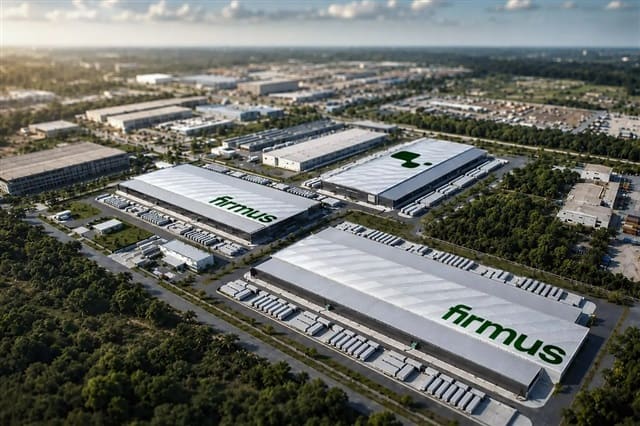
Firmus has been developing what it describes as AI factory campuses, purpose-built facilities designed to handle the thermal and electrical loads of dense GPU clusters. The two Malaysian sites are part of a broader buildout targeting markets where power availability and regulatory frameworks support large-scale AI workloads.
The anchor tenant model reduces financing risk for infrastructure developers, who can secure debt and equity on the strength of committed capacity. For OpenAI, the deal ensures access to computing resources as the company scales inference workloads and continues training runs for future models.
Southeast Asia has seen a wave of data centre announcements over the past eighteen months, with Singapore, Malaysia, Indonesia, and Thailand all attracting investment from hyperscalers and specialised AI infrastructure operators. Malaysia's appeal lies in part in its willingness to fast-track permits for projects that meet energy efficiency standards and commit to renewable power purchase agreements.
Power and Cooling Constraints
The shift towards AI workloads has changed the economics of data centre construction. Traditional facilities were designed for storage and enterprise applications, with power densities typically below ten kilowatts per rack. AI training and inference can push requirements above fifty kilowatts per rack, necessitating liquid cooling systems and substations capable of delivering tens of megawatts.
Firmus has indicated that its Malaysian campuses will incorporate advanced cooling infrastructure and direct connections to the national grid. The sites are expected to come online in phases, with initial capacity available in the second half of 2027.
OpenAI's decision to secure capacity outside the United States and Europe reflects both the geographic distribution of its user base and the practical constraints of power availability in saturated markets. Northern Virginia, Dublin, and Frankfurt, long the backbone of cloud infrastructure, face grid congestion and lengthening permitting timelines.
Implications for Regional Competition
The deal underscores Malaysia's growing role in the AI supply chain. While Singapore remains the financial and operational hub for many technology companies in the region, land scarcity and high electricity costs have pushed some infrastructure investment across the Causeway.
Other AI companies are pursuing similar strategies. Anthropic, Cohere, and several Chinese model developers have signed capacity agreements with data centre operators in Asia-Pacific markets over the past year, aiming to reduce latency for regional users and diversify infrastructure risk.
Firmus has not disclosed the financial terms of the OpenAI agreement or the total capacity reserved. The company is backed by a consortium that includes Australian pension funds and Singapore-based infrastructure investors, according to earlier filings.
As AI inference costs fall and model deployment becomes more geographically distributed, access to power and cooling will increasingly determine where workloads run. OpenAI's move into Malaysia signals that the next phase of AI infrastructure competition will be won not only by model performance but by the ability to secure physical resources in markets where capacity remains available.
RELATED STORIES
Singapore Targets High-Value Data Centre Workloads as Neighbors Scale Up Capacity
Cheng Wei-Lun · 3 min

Ringgit Strengthens as Malaysia's Stable Rates Signal Policy Flexibility
Mariel D. Santos · 3 min
Proton Eyes 200,000 Units in 2026, Aiming for Best Sales Year Since 2011
Priyanka V. Rao · 3 min
CIMB Tests Digital Sukuk Settlement in $343 Million Malaysia Pilot
Priyanka V. Rao · 3 min
Spot something wrong? Email editor@briefasia.com. We log every correction publicly.