Finance · Markets
Korean Equities Rebound as Traders Hunt for Value After Tech Selloff
Seoul's main index climbs 0.35 percent in early trading following two consecutive sessions of sharp declines driven by global AI investment doubts
KEY TAKEAWAYS
- ·Seoul's benchmark equity index rose 0.35 percent Thursday morning after plunging nearly 17 percent over two consecutive sessions driven by technology sector selloffs.
- ·The rebound reflects bargain hunting by investors seeking discounted valuations, though concerns about artificial intelligence capital spending and Federal Reserve policy continue to weigh on sentiment.
- ·South Korean semiconductor exporters face heightened volatility due to heavy exposure to AI infrastructure supply chains and shifting expectations for hyperscaler spending growth.
Recovery Attempt Gains Traction
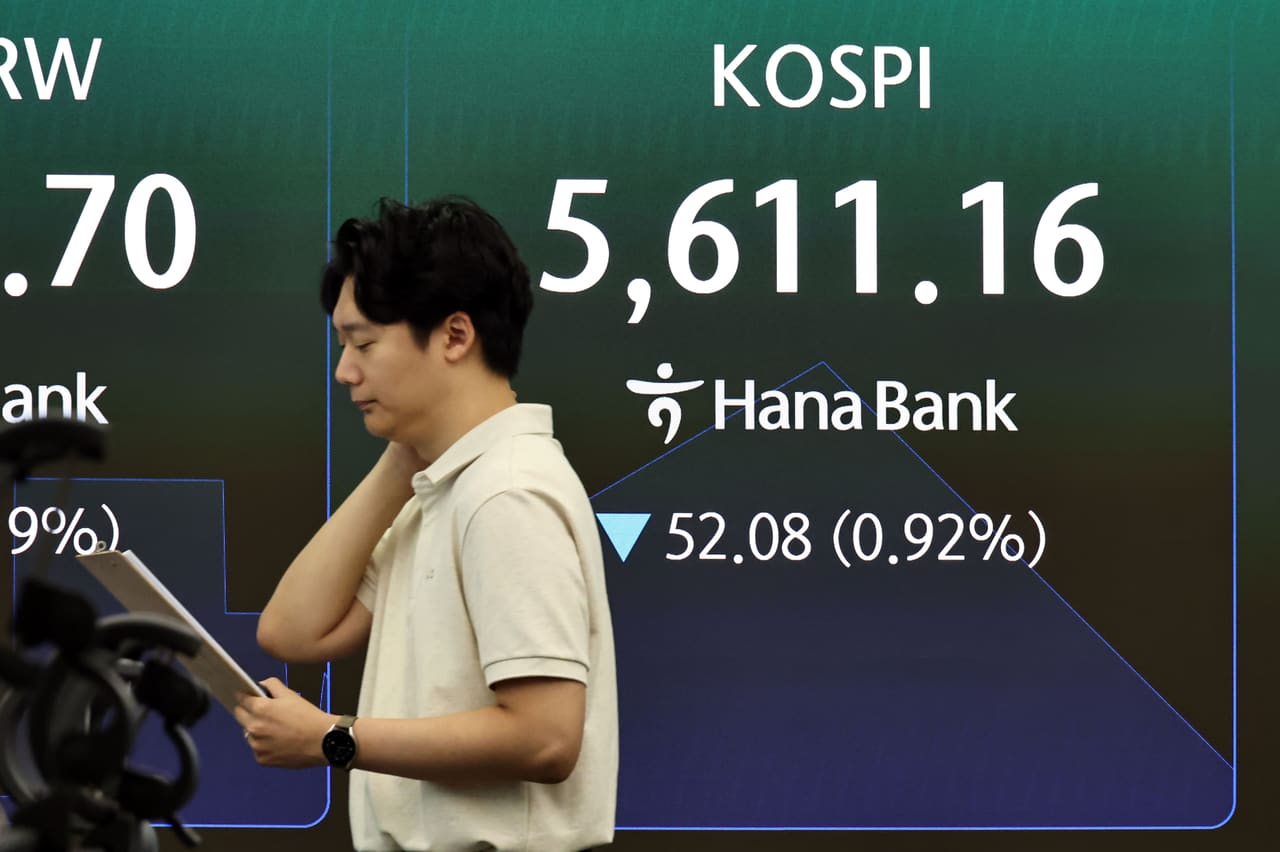
South Korean equities climbed in early trading Thursday as market participants sought to capitalize on depressed valuations following a brutal two-day rout that wiped out nearly 17 percent of the benchmark index's value. The Korea Composite Stock Price Index added 19.85 points to reach 5,683.09 by 9:15 a.m. local time, marking a 0.35 percent gain from the previous close.
The modest recovery follows a punishing stretch for Seoul equities. Wednesday's session saw the index crater 5.98 percent to settle at 5,663.24, extending losses from a 10.84 percent collapse the day before. The consecutive declines represent one of the sharpest two-day drops in recent memory for Korean markets, reflecting broader anxieties rippling through global technology and semiconductor sectors.
Trading volumes in the opening minutes suggested institutional and retail investors alike were testing the waters for potential entry points. The index opened 0.33 percent higher before edging slightly upward as early positions were established. Market watchers noted that the pace of recovery remained tentative, with many participants waiting to assess whether the bounce represented genuine stabilization or merely a technical correction within a broader downtrend.
Global Headwinds Persist
The rebound in Seoul comes despite continued weakness in U.S. equity markets overnight, where major indices extended losses amid mounting questions about the sustainability of massive capital expenditures in artificial intelligence infrastructure. American technology stocks have faced intense scrutiny from investors demanding clearer pathways to profitability from the tens of billions of dollars being poured into AI data centers, chip design, and machine learning platforms.
These concerns carry particular weight for South Korean exporters, especially semiconductor manufacturers that have positioned themselves as critical suppliers to the global AI boom. Companies producing high-bandwidth memory chips, advanced packaging solutions, and specialized components for AI accelerators have seen their valuations swing wildly in recent weeks as market sentiment shifts between enthusiasm for long-term growth and skepticism about near-term returns.
Adding to the uncertainty is the opaque trajectory of U.S. monetary policy. Federal Reserve officials have offered mixed signals about the timing and magnitude of potential interest rate adjustments, leaving investors to parse economic data and central bank commentary for clues. Higher borrowing costs tend to weigh disproportionately on growth-oriented technology firms and export-dependent economies, making the Fed's next moves a focal point for Asian equity traders.
Regional Dynamics at Play
The volatility in Korean markets mirrors turbulence across major Asian financial centers, though the magnitude of Seoul's decline stands out. Tokyo, Hong Kong, and Taipei have all experienced selloffs in recent sessions, but South Korea's heavy concentration of technology and semiconductor exposure has amplified the impact of sector-specific concerns.
Analysts point to several factors that make Korean equities particularly sensitive to shifts in AI investment sentiment. The country's largest conglomerates derive substantial revenue from memory chips, display panels, and electronics components that feed directly into data center and cloud computing infrastructure. Any slowdown in hyperscaler capital spending or delays in next-generation chip adoption cascades quickly through supply chains anchored in Seoul and surrounding industrial zones.
Currency dynamics also play a role. The won has weakened against the dollar in recent weeks, offering a mixed blessing for exporters who benefit from improved price competitiveness abroad but face higher input costs for imported materials and equipment. Foreign institutional investors, who hold significant stakes in blue-chip Korean technology firms, have been net sellers in recent sessions, contributing to downward pressure on share prices.
Technical Factors Drive Bargain Hunting
Thursday's uptick appears driven primarily by technical considerations rather than fundamental catalysts. After such steep declines, oversold conditions often attract opportunistic buyers looking to acquire quality assets at reduced prices. Options and futures positioning data suggest some traders are betting on a near-term stabilization, though conviction remains low given the unresolved questions hanging over the technology sector.
Market depth and liquidity conditions will be closely watched throughout the session. Thin trading volumes could amplify price swings in either direction, while robust participation might signal that institutional capital is beginning to return to Korean equities after sitting on the sidelines during the recent volatility.
The coming weeks will test whether this nascent recovery has legs or whether Korean markets face additional turbulence. Key variables include upcoming earnings reports from major semiconductor firms, fresh guidance on capital spending plans from global technology leaders, and any new signals from the Federal Reserve about the interest rate outlook. For now, Seoul traders are cautiously probing for a bottom after one of the most challenging stretches in recent market history.
RELATED STORIES
Korean Stocks Retreat as Nvidia Earnings Loom
Cheng Wei-Lun · 2 min
Seoul Markets Tumble as Tech Selloff Ripples Across Asia
Cheng Wei-Lun · 3 min
South Korea Extends Trading Hours to Attract Foreign Capital
Anand Sundaram · 2 min

MBK Partners Chair Questioned Over Homeplus Debt Issuance Ahead of Collapse
Anand Sundaram · 3 min
Spot something wrong? Email editor@briefasia.com. We log every correction publicly.