Lifestyle · Culture
Japan Home Hands Singapore Operations to Valu$ Parent After S$2.3M Loss
The Hong Kong homeware chain's three-year licensing deal with Radha Exports marks a strategic retreat from direct retail as mainland e-commerce reshapes Asia's discount market
KEY TAKEAWAYS
- ·Japan Home Singapore licensed its remaining stores to Radha Exports for three years starting August 19, 2026, after posting S$2.3 million in losses for the fiscal year ended April 2025.
- ·Nine of the chain's 34 outlets have closed or transitioned to Valu$ branding, while the JFUN loyalty program and e-commerce platform were terminated in July and August 2026.
- ·The parent company in Hong Kong cited mainland Chinese e-commerce platforms as a key driver of revenue decline, reflecting structural pressure on physical discount retailers across Asia.
A Quiet Handover
Japan Home Singapore confirmed on August 20, 2026 that it has transferred operational control of its remaining stores to Radha Exports, the fast-moving consumer goods distributor behind budget chain Valu$. The three-year licensing agreement, effective from August 19 and renewable for another three years, comes after the homeware retailer posted losses of S$2.3 million for the financial year ended April 30, 2025.
That figure represents a near-tripling from the S$858,596 loss recorded the previous year. Revenue had already slipped to S$51.7 million from S$53.7 million a year earlier, capping three consecutive years of profit declines before the company tipped into the red.
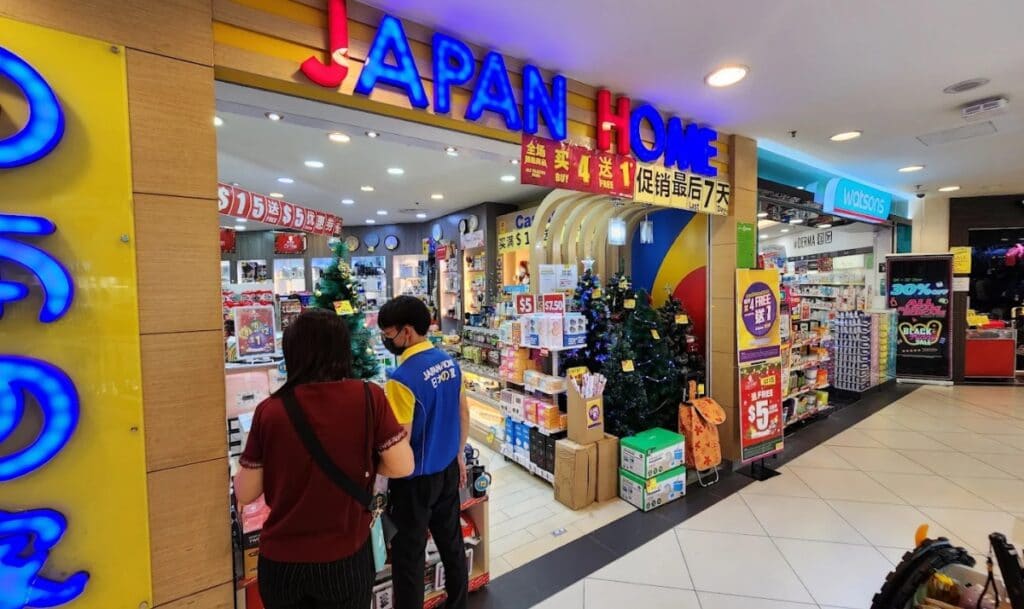
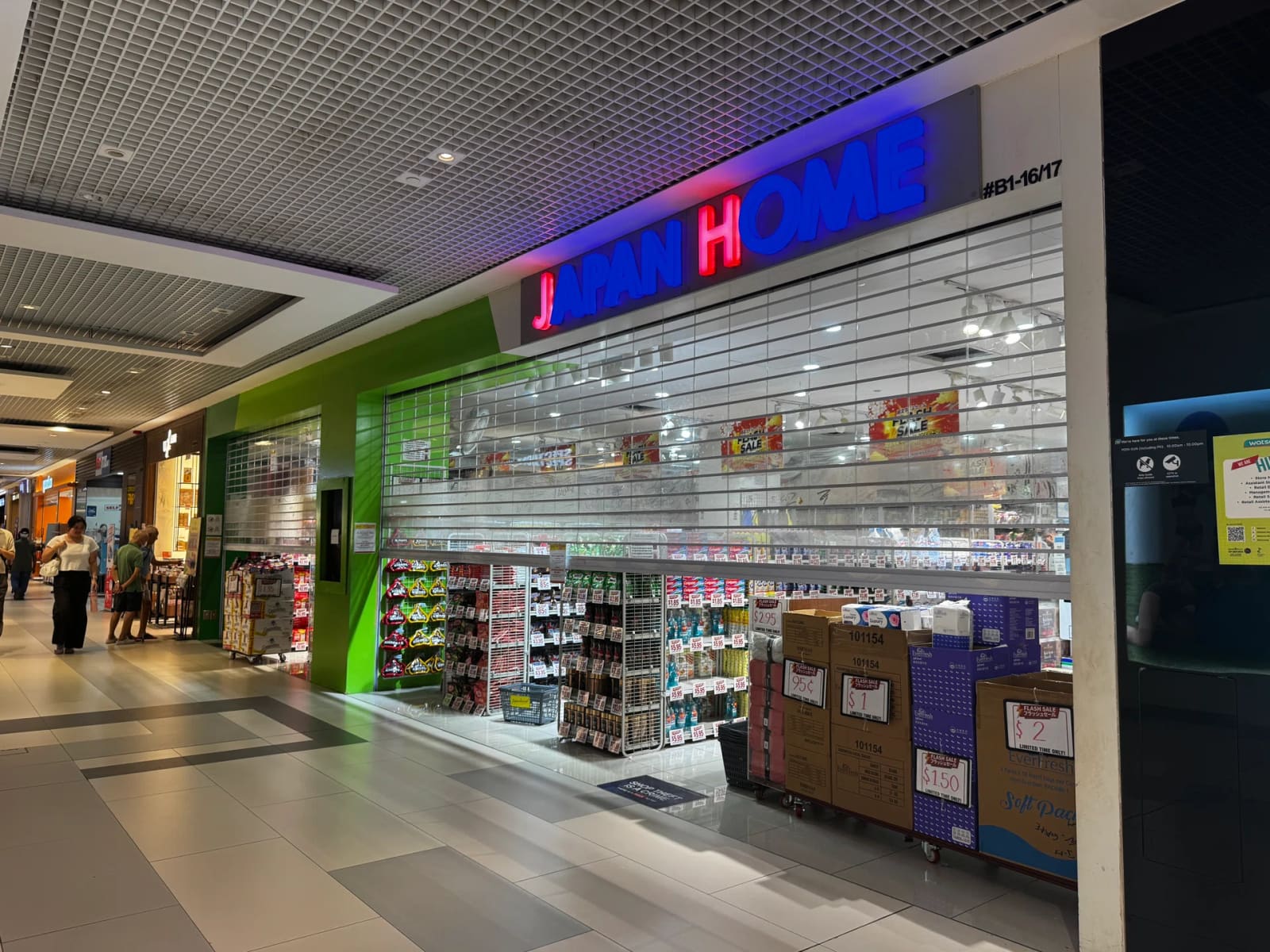
Between June and July 2026, Japan Home announced clearance sales at five outlets: Hougang Mall, Century Square, Northpoint City, HarbourFront Centre, and Buangkok Square. By mid-August, field visits revealed three additional locations had shuttered, while several others displayed closed-for-stocktaking signs. Shelves at operational stores carried a mix of Japan Home inventory and Valu$ merchandise, and staff at some branches wore Valu$ uniforms.
The ownership structure makes the transition less abrupt than it appears. Radha Japan, a Singapore-registered entity that also runs ACE Fresh and Mr Fix hardware stores, holds approximately 30 percent of Japan Home Singapore, according to ACRA filings. The remainder is owned by Japan Home Centre (Management) Ltd, the Hong Kong parent. Valu$, meanwhile, is operated by DD Pte Ltd, a 2005 spinoff of Radha Exports. In effect, both brands sit within the same corporate orbit.
Customer Programs Terminated
Japan Home's JFUN and Gold Membership Programme ended on July 21, 2026, with no new sign-ups or renewals accepted. Existing members had until August 18 to redeem accumulated J-Fun points, J Cash Rebates, and loyalty rewards; unused balances expired thereafter. The company's e-commerce platform was also taken offline for maintenance, eliminating the digital channel for customers who relied on it.
At its peak in June 2026, Japan Home operated 34 stores across Singapore. Globally, the chain claimed more than 380 branches spanning Hong Kong, Macau, Cambodia, Eastern Malaysia, and Australia. Founded in Hong Kong in 1991 by parent company International Housewares Retail Company, the brand entered Singapore in 1999 through co-founders Ngai Lai Ha and Peter Lau Pak Fai, who opened the first three outlets in Toa Payoh, Ang Mo Kio, and Bugis Village.
Hong Kong Precedent
Singapore's situation echoes events in Hong Kong a year earlier. In July 2025, shoppers reported widespread discounts and lease-expiry notices at Hong Kong branches, fueling speculation of a full shutdown. Chairman Ngai stepped in to deny closure rumors, announcing instead that the Hong Kong operation would rebrand from JHC (日本城) to JHC (真好城) to broaden its product sourcing and introduce more competitive pricing.
Yet the parent company's financial performance painted a more difficult picture. International Housewares Retail Company issued a profit warning in July 2025, forecasting annual profits would fall 51 to 57 percent from the prior year's HK$100 million (S$16.21 million). The group attributed the decline to weak consumer sentiment, shifting purchasing behavior, and competition from mainland Chinese e-commerce platforms, which collectively drove a 5.6 percent year-on-year revenue drop. For the financial year 2024-25, the parent still posted a profit of HK$47.727 million (S$7.73 million), but the trajectory was clear.
The E-Commerce Squeeze
Japan Home built its model on proximity and price: walk into a neighborhood mall, pick up a kitchen rack or a set of dish towels for a few dollars, and walk out. For most of the 2000s and 2010s, that formula faced little direct competition. Taobao, Pinduoduo, and Shein changed the equation. These platforms connect consumers directly to Chinese manufacturers, bypassing the rent, labor, and logistics overhead that physical retailers carry in Singapore's high-cost environment.
The parent company explicitly named mainland e-commerce as a primary driver of revenue erosion. A kitchen organizer that costs S$10 or more at a mall store can be ordered online for half that amount, delivered within days. As friction in cross-border ordering disappeared and price gaps widened, the heartland housewares shop lost its footing.
A Broader Retail Contraction
Japan Home is not an isolated case. Isetan's Tampines Mall location closed in November 2025 after three decades, shrinking the Japanese department store's Singapore presence. Daiso, another fixture of affordable Japanese retail, shuttered three outlets in 2026: 100 AM in January, Sembawang Shopping Centre in April, and Tampines 1 in June.
These closures reflect a structural squeeze. Physical discount retailers face rising rent and labor costs even as foot traffic declines, while e-commerce platforms undercut them on price without bearing the same fixed-cost burden. The middle ground where Japan Home once thrived has become increasingly difficult to defend.
Whether Valu$ can sustain the Japan Home brand under the new licensing arrangement remains an open question. For shoppers who grew up making quick stops at Japan Home for household basics, the shift marks the end of a retail era shaped by the 100-yen shop concept. The next three years will test whether that model can adapt or whether it will join the growing list of Japanese retail concepts that have downsized or exited Singapore altogether.
RELATED STORIES
Japan Home Hands Singapore Operations to Valu$ Parent Under Three-Year License
Lim Hui Ying · 3 min

Singapore Entrepreneur Trades University for Family Fish Farm in Johor Bahru
Lim Hui Ying · 4 min
Singapore's Dollar Stores Face Existential Threat as E-Commerce Slashes Margins
Lim Hui Ying · 3 min

Singaporeans Lease Second Homes in Southeast Asia as Rents Soar at Home
Lim Hui Ying · 4 min
Spot something wrong? Email editor@briefasia.com. We log every correction publicly.