Asia · Business
Indonesia Shutters 750 State Enterprises in Sprawling Overhaul
President Prabowo Subianto unveils what may be the world's largest corporate restructuring, targeting loss-making entities that disguised their performance for decades.
KEY TAKEAWAYS
- ·Indonesia will close more than 750 state-owned enterprises by December 31, reducing the total from 1,074 to fewer than 300 in what may be the world's largest corporate restructuring.
- ·The government has already saved over $2.8 billion by eliminating overhead costs such as executive salaries, leases, and travel expenses, with a year-end target exceeding $4 billion.
- ·President Prabowo is considering an ad hoc court to investigate three decades of management misconduct alongside a possible amnesty for executives who cooperate.
A Bigger Problem Than Expected
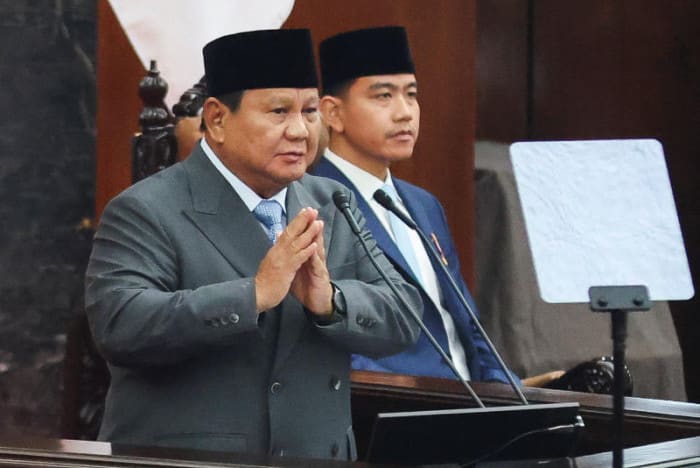
Indonesia's government plans to eliminate more than 750 state-owned enterprises by December 31, cutting a sprawling portfolio of 1,074 entities down to fewer than 300, President Prabowo Subianto announced during his state of the nation address to parliament on Friday.
The restructuring represents what Prabowo described as potentially the largest corporate overhaul of its kind globally. The president told lawmakers that the true scale of the problem only became apparent after Danantara, the country's sovereign wealth fund established last year to centralize state asset management, completed its initial audit of the portfolio.
"I had thought there were 300 or 400 state-owned enterprises, but it turns out there are 1,074," Prabowo said. The discovery revealed a sprawling, largely unmonitored network of entities operating with limited accountability.
Phantom Profits and Missing Oversight
Prabowo singled out chronic mismanagement and deceptive reporting practices that allowed underperforming enterprises to persist. Many state-owned entities consistently reported losses while simultaneously claiming profits, he said, adding that those declared earnings were fabricated.
"These state-owned enterprises sometimes operate as they please, with no sense of responsibility to the nation, to the state," Prabowo told parliament. The lack of centralized oversight meant boards and directors faced few consequences for poor performance or financial manipulation.
The government has already closed 290 enterprises since the Danantara audit began. The remaining cuts will leave only entities that demonstrate productivity and deliver tangible value to the Indonesian public, according to Prabowo.
$2.8 Billion in Savings Already Realized
The closures have generated approximately 50 trillion rupiah in cost savings so far, equivalent to more than $2.8 billion. Those savings come primarily from eliminating redundant overhead, including salaries for directors and commissioners, building and vehicle leases, and business travel expenses, Prabowo said.
The administration has set a target to save more than 70 trillion rupiah by the end of the year as the restructuring accelerates. The scale of the savings underscores how bloated the state enterprise sector had become, with layers of management and operational costs that delivered minimal return.
Special Court and Amnesty on the Table
Prabowo floated the possibility of establishing an ad hoc court to investigate the management and boards of shuttered enterprises, potentially reaching back three decades to examine past conduct. Such a tribunal would focus on accountability for years of misreporting and mismanagement that drained public resources.
At the same time, the president asked lawmakers to consider a form of amnesty for executives willing to cooperate. "A special amnesty for those who repent," he suggested, signaling a pragmatic approach that balances accountability with the need to move forward quickly.
Regional Context
The restructuring places Indonesia at the center of a broader debate across Southeast Asia about the role and efficiency of state-owned enterprises. Governments in Vietnam, Thailand, and Malaysia have all grappled with bloated state portfolios that consume capital without delivering competitive returns, though none have announced cuts on the scale Jakarta is now pursuing.
Indonesia's move comes as the region's largest economy seeks to attract more private capital and improve fiscal discipline ahead of its planned ascension to OECD membership. Streamlining state assets and improving governance are key benchmarks international investors and multilateral institutions watch closely.
The Danantara fund, modeled loosely on Singapore's Temasek, was designed to professionalize state asset management and impose private-sector discipline on government holdings. The audit that revealed the true number of enterprises was the fund's first major test, and the results have prompted one of the most aggressive rationalization campaigns in emerging market history.
Execution risk remains high. Closing hundreds of entities involves unwinding contracts, managing labor transitions, and navigating political resistance from stakeholders who benefited from the old system. But Prabowo's public commitment and the specific December deadline suggest the administration is prepared to push through opposition to meet its target.
RELATED STORIES
Indonesia Sets 6% Growth Target as Prabowo Unveils 2027 Fiscal Blueprint
Priyanka V. Rao · 3 min
Indonesia Plans to Slash State Enterprises to 300, Launch Probe Into Three Decades of Directors
Siti Nuraini · 4 min
Indonesia Targets 2.4% Deficit in 2027 Budget as Prabowo Pushes Fiscal Restraint
Siti Nuraini · 3 min

Riau Battles Wildfire Surge With Skeleton Budget
Siti Nuraini · 2 min
Spot something wrong? Email editor@briefasia.com. We log every correction publicly.