Asia · Trade
Indonesia Ratifies ILO Fishing Convention, Setting One-Year Clock for Labor Reform
The treaty covers 15 times more workers than merchant shipping but implementation will test Jakarta's capacity to enforce standards across fragmented fleets and remote ports.
KEY TAKEAWAYS
- ·Indonesia ratified ILO 188 in April, giving the government one year to align domestic fishing crew regulations with minimum standards for wages, safety, and working conditions.
- ·Ordinary deckhands on Indonesian vessels earn roughly 1.40 US dollars per day, with total two-month voyage earnings as low as 84 dollars, highlighting the need for stronger protections.
- ·Enforcement remains the central challenge, requiring shore medical infrastructure, oversight of crewing agencies, and support for small-scale fisheries with limited compliance capacity.
A Deckhand's Economics
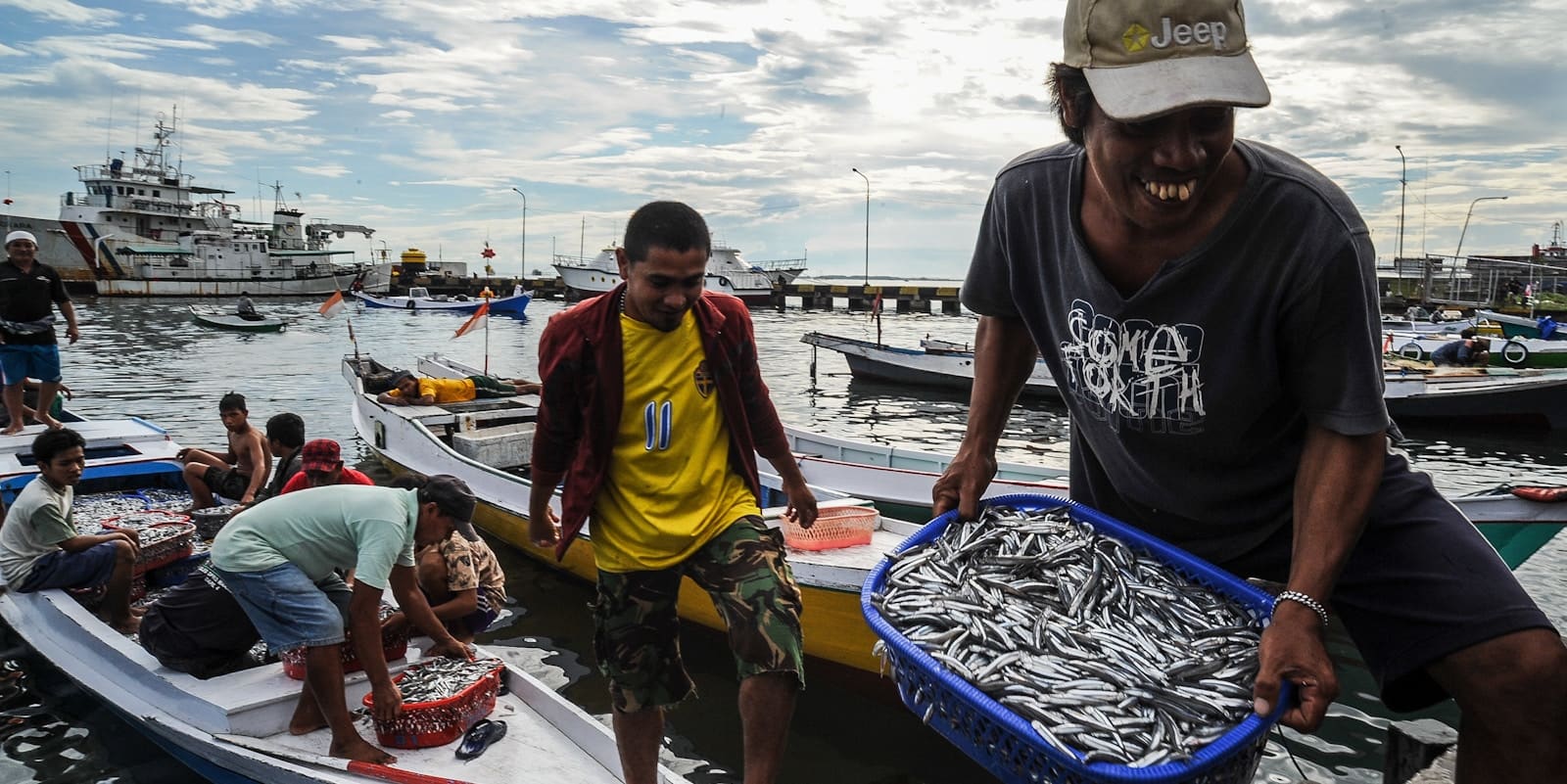
Endi earns 25,000 rupiah per day as an ordinary deckhand on a Jakarta-registered fishing vessel, roughly 1.40 US dollars. After a two-month voyage, his total pay reaches 1.5 million rupiah, or 84 dollars. The chief engineer on the same boat takes home four times that amount. The 42-year-old, who completed only primary school, tried construction work but found the pay worse and the physical demands unmanageable. He remains at sea because the alternatives are narrower still.
That calculus may shift. In April, Indonesia ratified the International Labour Organization's Work in Fishing Convention of 2007, known as ILO 188. The treaty sets minimum standards for occupational safety, fair wages, working conditions, social security, legal protection, and rest periods in the fishing industry. Jakarta now has one year to align domestic regulations with those standards, a timeline that will test the government's enforcement capacity across thousands of vessels and dozens of scattered ports.
What the Treaty Demands
ILO 188 applies to vessels with capacity exceeding 30 gross tonnage and establishes binding requirements for crew age, working and rest hours, onboard medical care, living facilities, certified emergency personnel, and mandatory health insurance. The convention also calls for stronger safety protocols during hazardous conditions and clearer administrative procedures governing crew recruitment and certification.
Syofyan Razali, an organizer with Team 9, a coalition of Indonesian civil society groups and labor unions, said the ratification addresses legal gaps that have long plagued the sector. Authority for labor inspections remains unclear, regulations are fragmented across ministries, and existing national legislation lacks a precise legal definition of fishing crews. The result has been patchy enforcement and limited recourse for workers facing abuse.
Arnon Hiborang, chair of the North Sulawesi chapter of the Indonesian Fishing Crew Union, noted that policy attention has historically centered on Indonesians working aboard foreign vessels, even though domestic crews face similar risks. The union has logged persistent complaints about working conditions on Indonesian-flagged boats, and Arnon said the ratification should eliminate ambiguity. "There should be no grey areas anymore," he said.
The Enforcement Challenge
Fis Purwangka, a researcher at the Bogor Institute of Agriculture who studies occupational safety in fisheries, pointed to the gap between regulation and reality. Several large Indonesian fishing companies already require health examinations for crew members, but the practice is far from universal. Small-scale fisheries and remote communities will struggle to comply with new requirements without government support, and the risk of document fraud remains high. Some operators may reflag vessels to foreign registries to avoid compliance altogether.
Medical facilities at fishing ports are limited, and many vessels lack certified personnel to handle emergencies at sea. Purwangka said the government will need to build shore-based medical infrastructure, strengthen oversight of crewing agencies, and expand access to education, training, and certification programs for fishing crews.
Brant Connors, a director at the International Maritime Health Association, a Belgium-based NGO focused on seafarer welfare, said the fishing industry employs more than 15 times as many workers as the merchant shipping sector and remains one of the world's most hazardous occupations. Pre-employment health checks, adequate rest, nutrition, clean water, and access to medical care during long voyages are not luxuries but minimum requirements. "Ultimately, if conditions and treatment on board do not meet acceptable standards, the people working on those vessels are at risk," he said.
Export Markets and IUU Fishing
Mohamad Abdi Suhufan, special assistant to Indonesia's fisheries minister, said the ratification strengthens the country's international standing by raising employment standards for Indonesian crews on foreign-flagged vessels and reinforcing Jakarta's reputation in global seafood markets. He cited Thailand's experience after ratifying the convention in 2019, which he said contributed to higher export values for Thai seafood.
Labor abuse and illegal, unreported, and unregulated fishing are often intertwined in global seafood supply chains. Stronger labor standards can improve traceability and credibility, helping Indonesian exporters meet the sustainability and due diligence requirements increasingly common in North American and European markets.
Many jurisdictions where Indonesian migrant fishers work, including Taiwan, South Korea, New Zealand, and several European countries, have already adopted ILO and International Maritime Organization standards for crew health, safety, and welfare. Suhufan acknowledged that the challenge lies in dealing with countries that have not ratified ILO 188, where broader international rules must still apply.
Twelve Months to Deliver
The one-year implementation window will require Jakarta to revise recruitment, training, certification, and crew management regulations while building the institutional capacity to enforce them. The government must balance the needs of large commercial operators, who already have compliance infrastructure in place, with the realities of small-scale fisheries that operate on thin margins and limited administrative capacity.
For Endi, the prospect of clearer rules and better conditions offers a measure of hope. "I will comply with all the required conditions as long as they improve my life on fishing vessels," he said. Whether the government can translate ratification into enforcement at scale will determine whether that hope translates into tangible change across Indonesia's vast and fragmented fishing sector.
RELATED STORIES

Indonesia Faces Critical Choice Between Resource Control and Industrial Growth
Tran Quoc Bao · 3 min
Indonesia's Wildfires Push Air Quality to World's Worst Levels
Siti Nuraini · 2 min

Indonesia Charges Toba Pulp Lestari in $113 Million Tax Fraud Probe
Siti Nuraini · 3 min
Indonesia Unveils Bid to Become Global Commodity Price-Setter
Priyanka V. Rao · 3 min
Spot something wrong? Email editor@briefasia.com. We log every correction publicly.