Asia · Business
Indonesia Unveils Bid to Become Global Commodity Price-Setter
President Prabowo announces ambition to establish Jakarta as regional pricing hub, but execution hinges on market credibility and infrastructure depth
KEY TAKEAWAYS
- ·President Prabowo Subianto announced Indonesia's ambition to become a global commodity price-setter during his August 4 State of the Nation Address before parliament.
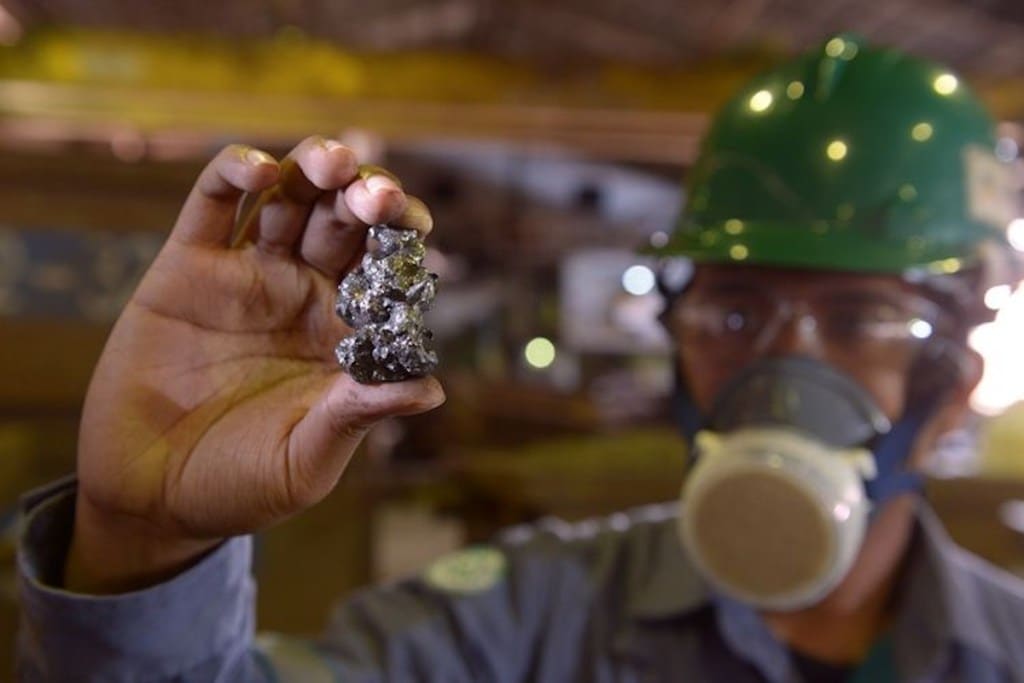
- ·Indonesia produces half of global nickel and ranks among top coal exporters, yet most pricing occurs on London, Chicago, or Shanghai exchanges.
- ·Success requires transparent settlement mechanisms, regulatory credibility, and sufficient liquidity to attract international commodity traders and capital.
Jakarta's Pricing Ambition
President Prabowo Subianto announced Indonesia's intention to establish itself as a global price-setter for commodities during his State of the Nation Address on August 4, 2026. Speaking before a joint session of the People's Consultative Assembly, House of Representatives, and Regional Representative Council, Prabowo framed the initiative as part of a broader strategy to translate the archipelago's resource endowment into market influence.
Indonesia produces significant volumes of nickel, coal, palm oil, tin, and copper. The country accounts for roughly half of global nickel output and remains a top-three exporter of thermal coal. Yet most of these commodities are priced on exchanges in London, Chicago, or Shanghai. The gap between production scale and pricing authority forms the core tension Prabowo seeks to address.
The Infrastructure Question
Building a credible commodity exchange requires more than political will. Market participants look for transparent settlement mechanisms, enforceable contract standards, sufficient liquidity, and regulatory oversight that commands international confidence. Singapore's success as a regional trading hub rests on decades of legal predictability and open capital flows. Shanghai's futures markets gained traction only after China allowed qualified foreign institutional investors and aligned contract specifications with international norms.
Indonesia's existing commodity infrastructure remains fragmented. The Jakarta Futures Exchange lists palm oil and tin contracts, but trading volumes lag far behind Bursa Malaysia Derivatives or the London Metal Exchange. Domestic price discovery mechanisms for coal and nickel are still tied to spot market negotiations rather than transparent futures curves. Foreign buyers and traders have little incentive to adopt Jakarta-based benchmarks unless liquidity and contract enforceability meet global standards.
Trust as the Bottleneck
Commodity exchanges function as trust networks. Buyers and sellers commit capital based on confidence that contracts will settle, disputes will be resolved impartially, and market manipulation will be prosecuted. Indonesia's regulatory track record in commodities has been uneven. Export bans on nickel ore, abrupt changes to palm oil export levies, and inconsistent enforcement of mining regulations have introduced volatility that traders price into risk premiums.
Prabowo's announcement did not detail the legal or regulatory framework that would underpin the proposed exchange. Without clarity on foreign participation rules, capital controls, dispute resolution mechanisms, and the independence of market oversight bodies, international commodity houses are unlikely to route significant volumes through Jakarta. Trust is not declared; it is earned through consistency.
Regional Competition
Indonesia is not the only Southeast Asian nation seeking commodity market influence. Malaysia has long hosted palm oil futures trading through Bursa Malaysia Derivatives, and Singapore remains the dominant venue for physical commodity trading desks across oil, metals, and agriculture. Thailand and Vietnam have explored domestic commodity exchanges with limited success, constrained by shallow liquidity and limited foreign participation.
China's experience offers a mixed lesson. The Shanghai International Energy Exchange launched yuan-denominated crude oil futures in 2018, and trading volumes have grown. Yet Brent and WTI remain the global benchmarks. Shanghai's contracts serve primarily domestic refiners and regional participants willing to navigate capital controls. Indonesia would face similar headwinds unless it opens capital accounts and allows unrestricted hedging by international players.
What Comes Next
Prabowo's speech marked a statement of intent, not a roadmap. The gap between ambition and execution will be measured in legislative action, regulatory appointments, and the willingness to cede some domestic policy flexibility in exchange for market credibility. Indonesia's Ministry of Trade and the Financial Services Authority will need to coordinate on contract design, margin requirements, warehouse receipt systems, and cross-border capital rules.
The country's resource wealth provides raw material for a commodity exchange, but pricing power flows to venues that offer liquidity, legal certainty, and operational reliability. Whether Jakarta can build that combination remains an open question. For now, the world's commodity traders are watching, waiting for details that will determine if Indonesia's ambition translates into market reality.
RELATED STORIES
Indonesia's Record Current Account Deficit Threatens Rupiah Stability
Siti Nuraini · 3 min
Indonesian Investment Climbs as Trade War Reshapes Asian Capital Flows
Siti Nuraini · 5 min

Indonesia's Instant Noodle Consumption Falls for First Time in Five Years
Priyanka V. Rao · 3 min
China's $1.2 Trillion Trade Surplus Threatens Indonesian Rupiah and Industry
Rajesh K. Iyer · 3 min
Spot something wrong? Email editor@briefasia.com. We log every correction publicly.