Sustainability · Energy
Indonesia's Off-Grid Coal Plants Bypass National Energy Transition Targets
Captive coal capacity now exceeds 25 gigawatts, with most serving nickel smelters outside the national grid and official planning frameworks
KEY TAKEAWAYS
- ·Indonesia's captive coal power capacity reached 25.9 gigawatts in 2024, with over 75 percent serving off-grid industrial facilities, primarily nickel smelters.
- ·A 2022 regulation banned new grid-connected coal plants but exempted strategic industrial projects, allowing captive coal to grow outside official planning frameworks.
- ·Indonesia's captive coal capacity is projected to exceed 32 gigawatts by 2031, surpassing Vietnam's total coal generation and complicating the country's 2060 net-zero target.
The Loophole in Indonesia's Coal Phase-Out
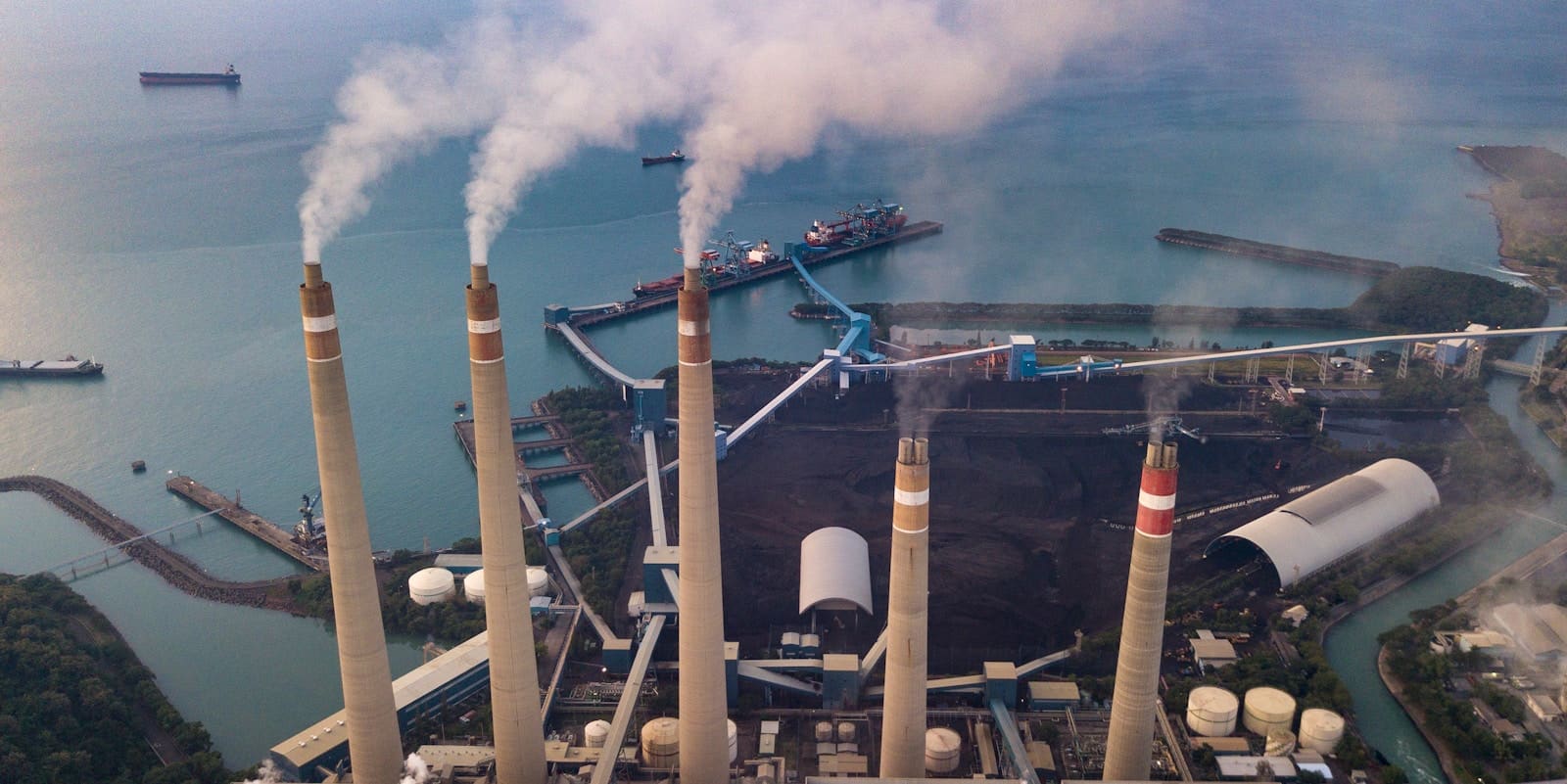
Indonesia faces a structural challenge in its energy transition: a growing fleet of industrial coal plants that exist beyond the reach of national grid regulations. These captive power stations, built to serve individual factories and smelters, reached 25.9 gigawatts of operating capacity in 2024, according to Indonesia's Just Energy Transition Partnership. More than three-quarters of that capacity burns coal.
The scale becomes more striking when factoring in projects under construction or planned. Total captive capacity climbs to 36.7 gigawatts, with 3.1 gigawatts of new coal plants in the pipeline. That pipeline contradicts the timeline President Prabowo Subianto announced in 2025, pledging that all Indonesian electricity would come from renewable sources within a decade.
The disconnect stems from a 2022 presidential regulation that banned new coal plants connected to the national grid but carved out exceptions. Projects already approved could proceed. New coal plants supporting strategic industrial initiatives, particularly nickel processing, received permission to operate provided they cut emissions by at least 35 percent within ten years and shut down by 2050. The Prabowo administration maintained these exemptions and, during a November 2025 consultation, proposed additional carve-outs for plants deemed necessary for system reliability and energy independence.
Outside the Planning Framework
Captive coal plants occupy a regulatory blind spot. Because they operate off-grid and under private ownership, they do not appear in Indonesia's Electricity Supply Business Plan, the ten-year strategy co-published by state utility PLN and the Ministry of Energy and Mineral Resources that governs grid power supply.
They do, however, surface in the government's 2024-2060 electricity master plan. That document projects more than 16 gigawatts of additional captive coal capacity by 2031 for mineral processing. According to Ember, a non-profit energy think-tank, Indonesia's captive coal capacity will surpass 32 gigawatts within seven years, exceeding Vietnam's total coal generation capacity of 27.2 gigawatts in 2024.
Elvita Trisnawati, a researcher at the Indonesian Center of Environmental Law, described large-scale captive coal plants as operating outside official planning structures. The result is what she called an "anomalous spectre" of the energy transition.
Driven by Nickel Downstreaming
The concentration of captive power aligns closely with Indonesia's hilirisasi policy, which banned nickel ore exports in 2020 and pushed domestic producers toward higher-value intermediate products such as ferronickel. Mining-heavy regions dominate the captive power landscape. Sulawesi held the highest operating capacity at 10.5 gigawatts, while Maluku came third with 4.5 gigawatts, according to the Just Energy Transition Partnership study.
Central Sulawesi hosts PT Indonesia Morowali Industrial Park, a joint venture involving China's Tsingshan Group and Indonesian firms Bintang Delapan Group and Sulawesi Mining Investment. North Maluku is home to PT Indonesia Weda Bay Industrial Park, backed by Tsingshan, Huayou Holding Group, and Zhenshi Holding Group.
Haykal Hubeis, secretary general of the Indonesian Smelter and Refining Enterprises Association, pointed to grid limitations as the rationale for captive plants. Industrial zones where smelters operate face constraints in national power supply, he said. Coal plants offer reliability for continuous operations, not merely cost savings but readiness to meet 24-hour demand.
The Just Energy Transition Partnership study acknowledged coal's appeal as the most cost-effective and timely power source for facilities lacking suitable grid access and facing high, stable electricity requirements. Yet the study warned that expanding captive coal creates market and financial risks. Global industries and governments increasingly demand supply chain sustainability, and continued coal reliance could jeopardize Indonesia's competitiveness in export markets and its ability to attract foreign direct investment seeking cleaner operations.
Early Renewable Efforts and Structural Barriers
Some industrial estates have begun aligning with Indonesia's 2060 net-zero greenhouse gas emissions target. PT Indonesia Morowali Industrial Park built a solar power plant alongside its coal-fired cogeneration facility, which generates both electricity and industrial steam. Spokesperson Dedy Kurniawan said the park began developing renewable energy in 2022 with a feasibility study. Construction of a 1.27 megawatt-peak solar plant started the following year and reached full operation in 2024.
Kurniawan described the solar installations as complementary rather than primary substitutes. He emphasized that the energy transition is both a strategic choice and a necessity for environmental sustainability and long-term industrial competitiveness. Operational renewable energy also reduces costs, including minimizing carbon tax liabilities.
Dwi Cahya Agung Saputra, electricity systems and renewable energy manager at the Institute for Essential Services Reform, said no single solution exists for shifting to renewables. A February 2026 report from the Jakarta-based think-tank noted that Indonesian companies with aging captive fossil fuel plants have begun switching to the PLN grid, cutting operational costs and accessing cleaner power sources.
In Riau, the palm oil and pulp sectors hold potential to convert abundant organic waste into baseload energy, reducing methane emissions. But the report also identified obstacles. PLN's parallel charge for grid-integrated operations is calculated as a monthly flat rate that can exceed the actual generation of a solar installation, restricting renewables adoption to small-scale off-grid applications for monitoring and green branding rather than substantial power displacement.
For biomass-driven decarbonization, national investment roadmaps lack a specific strategy, creating significant uncertainty for investors. Local governments have emphasized the need for regulatory revisions aligning central policy with regional biomass capacity.
Kurniawan noted that delivering large-scale industrial power 24 hours a day requires substantial upfront investment, particularly for energy storage infrastructure. He called for government policy that accounts for full industry costs, identifying gaps and mismatches in energy transition investments.
Saputra argued the government should begin restricting captive coal by 2030, or at least earlier than 2050, to meet net-zero emissions targets. Continued fossil fuel reliance beyond 2030 will make the renewable transition even more difficult, he said.
RELATED STORIES
Indonesia's Renewable Energy Capacity Faces AI Data Centre Test
Tran Quoc Bao · 3 min

Indonesia's Palm Oil Zones Account for Bulk of Fire-Ravaged Land This Year
Siti Nuraini · 4 min
Indonesia Seeks 100GW Solar Build From China, But Not Chinese Ownership
Priyanka V. Rao · 3 min
Indonesia's Carbon Market Needs Tighter Rules to Reach $40 Price Target
Lim Hui Ying · 3 min
Spot something wrong? Email editor@briefasia.com. We log every correction publicly.