Asia · Business
Indonesia's National Electric Motorcycle Brand Set for August Reveal
State asset fund confirms Aug. 13 launch date as government ties delayed EV incentives to domestic manufacturing push
KEY TAKEAWAYS
- ·Indonesia will unveil its national electric motorcycle brand on Aug. 13, with design and production by Indonesian engineers, according to state asset fund Danantara.
- ·The government is redirecting long-delayed EV purchase incentives to the national motorcycle and car projects, prompting industry calls for clarity on subsidy access.
- ·The state-backed brand enters a market where private manufacturers have already invested in local assembly, raising questions about competitive dynamics and subsidy allocation.
Launch Timeline Confirmed
Indonesia will unveil its national electric motorcycle brand on Aug. 13, according to Sigit Puji Santosa, chief technology officer at state asset fund Danantara. The announcement will identify both the brand name and the manufacturer selected to produce the two-wheelers, all designed and built by Indonesian engineers.
The timeline provides the first concrete date for a project President Prabowo Subianto has championed as central to building a domestic automotive sector. Sigit, who also leads state defense manufacturer PT Pindad, clarified that his company will not produce the motorcycles. Pindad has been assigned to develop a separate national car brand instead.
"There will be a new brand, with the design by Indonesian engineers. The design and production will be ours," Sigit said Wednesday.
Incentives Redirected
Coordinating Economy Minister Airlangga Hartarto confirmed that the government's long-delayed electric vehicle purchase incentives will now be tied to the national motorcycle and car projects. The shift marks a departure from earlier subsidy programs that stalled amid budget constraints and regulatory uncertainty.
Industry players are pressing for clarity on how the new incentive structure will work. The redirection raises questions about whether existing EV manufacturers, many of which have invested in local assembly capacity, will retain access to government support or face exclusion in favor of the state-backed brands.
State Secretary Prasetyo Hadi described the initiative on July 21 as a strategic effort to strengthen domestic production, accelerate the shift to renewable-powered transport, and reduce fossil fuel dependence. The government has not disclosed the budget allocated to the project or the criteria for selecting the manufacturing partner.
Manufacturing Landscape
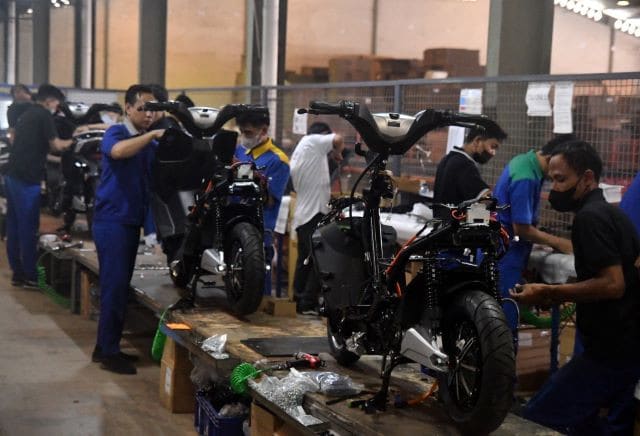
Indonesia's electric motorcycle sector has grown rapidly over the past three years, with private manufacturers ramping up local assembly. PT Terang Dunia Internusa, which operates under the United Bike brand, has targeted annual output of 500,000 units from its Bogor facility. Other players include joint ventures with Chinese and Taiwanese partners, which have established assembly lines in Java.
The introduction of a state-backed brand adds a new layer of competition and raises questions about market dynamics. If the national brand receives preferential access to subsidies, private manufacturers may find themselves at a disadvantage despite earlier investments in local capacity.
The government has not specified whether the national brand will be assembled from imported components or rely on domestically produced parts. Indonesia has been working to build a battery supply chain anchored by its nickel reserves, but cell manufacturing and motor production remain limited.
Regional Context
Southeast Asia's two-wheeler market is the world's largest, with Indonesia accounting for more than 6 million motorcycle sales annually. The country lags regional peers in electrification, however. Vietnam has seen rapid adoption of electric scooters, driven by private brands and favorable urban policies. Thailand has attracted foreign EV investment through tax incentives and export-oriented manufacturing support.
Indonesia's approach centers on state direction and domestic ownership, reflecting broader industrial policy under Prabowo's administration. The strategy parallels efforts in the four-wheel segment, where the government has pursued a national car project despite questions about technical readiness and market viability.
The redirection of subsidies to state-backed brands may accelerate adoption if the motorcycles are competitively priced and widely distributed. But it also introduces execution risk. Past national vehicle projects in Indonesia have faced delays, cost overruns, and limited commercial success.
What Comes Next
The Aug. 13 announcement will clarify the brand identity, manufacturing partner, and initial production targets. Industry observers will watch for details on pricing, subsidy levels, and whether private manufacturers retain access to government incentives.
Battery standards and safety regulations are also in development, according to government statements. Those rules will shape the competitive landscape and determine whether imported components remain viable or face restrictions.
The success of the national motorcycle brand will hinge on execution, pricing, and consumer acceptance. If the government can deliver a product that competes on cost and performance, the initiative may accelerate Indonesia's EV transition. If delays or quality issues emerge, the project risks repeating the challenges that have plagued earlier state-led automotive ventures.
RELATED STORIES
Indonesia Faces Critical Choice Between Resource Control and Industrial Growth
Tran Quoc Bao · 3 min
Indonesia's Wildfires Push Air Quality to World's Worst Levels
Siti Nuraini · 2 min

Indonesia Charges Toba Pulp Lestari in $113 Million Tax Fraud Probe
Siti Nuraini · 3 min
Indonesia Unveils Bid to Become Global Commodity Price-Setter
Priyanka V. Rao · 3 min
Spot something wrong? Email editor@briefasia.com. We log every correction publicly.