Real Estate · Homes
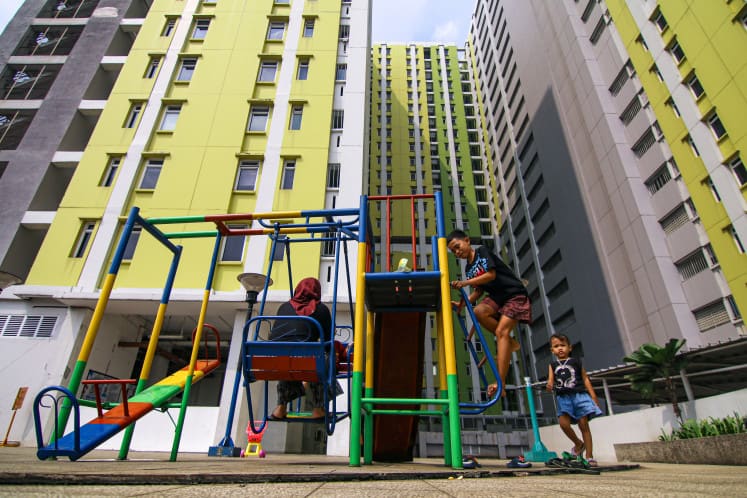
Indonesia's Housing Backlog Drops to 9.29 Million Households
New government data shows homeownership gap narrowing as quality deficits persist across the archipelago
KEY TAKEAWAYS
- ·Indonesia's homeownership backlog fell to 9.29 million households in March 2026, down 350,000 from a year earlier, with declines recorded across all provinces.
- ·A separate quality backlog showed 24.03 percent of homeowners live in substandard conditions, down from 25.33 percent in March 2025.
- ·Statistics Indonesia launched its first dedicated Housing Statistics Publication to provide a unified baseline for tracking progress and guiding policy decisions.
Ownership Gap Narrows
Indonesia recorded 9.29 million households without their own homes in March 2026, representing 12.39 percent of all households, according to Statistics Indonesia. The figure marks a decline from 13 percent a year earlier, a drop of roughly 350,000 households.
The data comes from the agency's inaugural Housing Statistics Publication, released Thursday. It consolidates findings from the National Socioeconomic Survey and administrative records across ministries and local governments. Statistics Indonesia head Amalia Adininggar Widyasanti confirmed the report will be published regularly to guide policy and track progress.
The backlog counts households that rent or occupy housing they do not own. Declines were observed in every province, suggesting gains in access across the archipelago. The government has set a target of building 3 million homes nationwide, with the Jakarta administration planning 11 new low-cost apartment complexes starting in 2027.
Quality Deficit Persists
A separate measure tracks households that own a home but live in conditions below minimum adequacy standards. That quality backlog stood at 24.03 percent in March 2026, down from 25.33 percent the previous year. Nearly all provinces showed improvement.
The dual metrics offer a clearer picture of Indonesia's housing challenge. Ownership rates are climbing, yet a substantial share of homeowners still contend with substandard structures, inadequate water and sanitation, or overcrowding. The quality gap affects roughly one in four households that have managed to secure a property.
Statistics Indonesia intends the new publication to serve as a baseline for evaluating housing development and informing resource allocation. Administrative data from local governments and housing stakeholders will feed into future editions, allowing year-on-year comparisons.
Policy Implications
The narrowing backlog arrives as President Prabowo Subianto has pressed ministries on the pace of the national housing program. Officials have pointed to land acquisition bottlenecks and financing constraints as recurring obstacles, particularly for low-income families in urban centers.
Jakarta's planned apartment complexes target strategic locations to ease access for workers and reduce commute times. The capital's land scarcity and rising prices have pushed many households toward the urban fringe, straining transport networks and limiting economic opportunity.
Wider homeownership can stabilize household balance sheets and reduce rent burdens, freeing income for consumption and investment. Yet construction quality and infrastructure access determine whether new housing translates into genuine improvements in living standards. The quality backlog underscores the need for enforcement of building codes and investment in water, electricity, and sewage networks.
Regional variations remain pronounced. Provinces with stronger economic growth and better transport links have seen faster declines in both ownership and quality backlogs. Rural areas and eastern provinces still face higher deficits, reflecting income disparities and weaker public services.
Data-Driven Planning
Statistics Indonesia's decision to publish a dedicated housing report signals a shift toward more granular tracking. Previous housing data appeared in broader socioeconomic surveys without a unified framework. The new publication aggregates multiple sources, offering policymakers a single reference point.
Regular updates will allow officials to assess whether construction targets translate into measurable reductions in the backlog. They will also reveal whether quality improvements keep pace with ownership gains, or whether households are simply trading rent for inadequate structures.
The housing sector carries implications for employment, construction materials demand, and credit growth. Banks have expanded mortgage lending in recent years, and developers have ramped up project launches. Tracking household outcomes ensures that supply-side activity aligns with genuine progress in shelter security.
Indonesia's demographic profile, with a young population and continued urbanization, keeps housing demand elevated. The 9.29 million household backlog remains substantial, even as the trend moves in a positive direction. Sustained investment, efficient land-use planning, and targeted subsidies will determine whether the decline accelerates or stalls.
RELATED STORIES

Indonesia's External Debt Reaches $444 Billion as Government Borrowing Accelerates
Siti Nuraini · 3 min

Indonesia Targets 2.4% Deficit in 2027 Budget as Prabowo Pushes Fiscal Restraint
Siti Nuraini · 3 min

Riau Battles Wildfire Surge With Skeleton Budget
Siti Nuraini · 2 min
Jakarta Charts Course for 8% Growth With State-Led Resource Strategy
Priyanka V. Rao · 4 min
Spot something wrong? Email editor@briefasia.com. We log every correction publicly.