Finance · Markets
Indonesia Debuts Physical Gold ETF as Capital Market Deepens
The Jakarta exchange's first bullion-backed fund opens a new channel for retail investors in a country holding the world's sixth-largest gold reserves.
KEY TAKEAWAYS
- ·Indonesia's stock exchange launched its first physical gold ETF on Monday, backed by the country's 2,600-tonne reserve base, the world's sixth largest.
- ·Deputy Finance Minister Juda Agung cited global gold ETF assets of $559 billion in 2025, supported by 4,025 tonnes of metal, as context for the domestic rollout.
- ·The product aims to formalize fragmented retail bullion demand through transparent, liquid exchange-traded shares with regulated custody and audit standards.
A New Gateway for Bullion Exposure
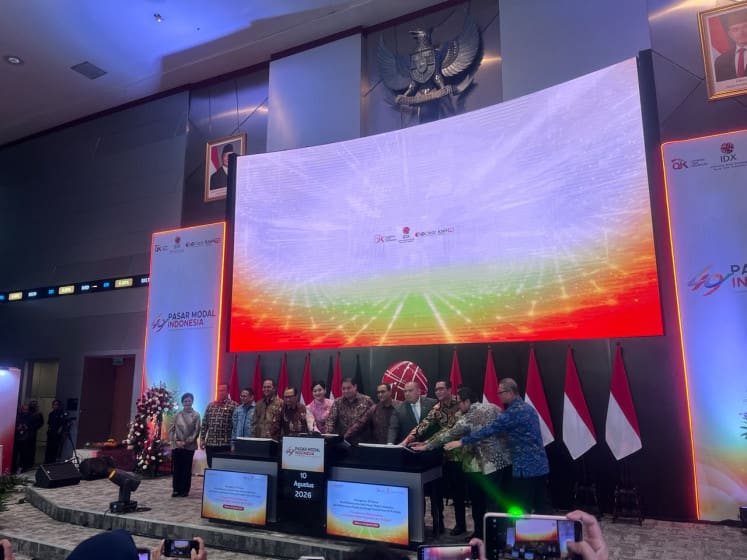
Indonesia's stock exchange introduced its first exchange-traded fund backed by physical gold on Monday, creating a regulated path for retail investors to gain exposure to the precious metal without direct ownership or storage concerns.
The product rolled out at a ceremony attended by officials from the Coordinating Economy Ministry, the Finance Ministry, and the Financial Services Authority. Deputy Finance Minister Juda Agung framed the launch as part of a broader capital market reform agenda focused on liquidity enhancement and market depth.
Global gold ETF holdings reached $559 billion in 2025, supported by 4,025 tonnes of physical metal, according to figures cited by Juda. The Indonesian offering aims to capture a share of that institutional and retail appetite while tapping into domestic demand for alternative savings instruments.
Linking Two Ecosystems
The initiative bridges the capital market with Indonesia's existing bullion infrastructure. The country holds approximately 2,600 tonnes in gold reserves, the sixth-largest stock globally, yet retail participation in bullion markets has remained fragmented across jewelry, small-bar purchases, and informal channels.
By listing the ETF on the Indonesia Stock Exchange, regulators hope to formalize that demand and channel it through transparent, liquid instruments. Coordinating Economy Minister Airlangga Hartanto stated that Indonesia's gold asset base could rise further, potentially surpassing regional peers such as Singapore and India in scale.
The ETF structure allows investors to buy and sell shares representing fractional claims on physical gold stored in secure vaults, eliminating the logistical barriers of direct bullion ownership. Units trade during market hours at prices that track the underlying metal's spot rate, with creation and redemption mechanisms ensuring tight alignment.
Regional Context and Timing
The launch arrives as Asian central banks and investors have accelerated gold accumulation. Central bank purchases across emerging Asia reached multi-decade highs in recent years, driven by reserve diversification away from dollar-denominated assets and concerns over currency volatility.
Indonesia's move follows similar product rollouts in Thailand, Malaysia, and South Korea, where gold ETFs have attracted both retail savers seeking inflation hedges and institutional portfolios looking for non-correlated returns. Singapore remains the regional hub for physical gold trading and storage, but Jakarta's ambition is to build domestic capacity and capture value from its own reserve position.
The timing also coincides with elevated gold prices. Spot bullion has traded near historic highs in 2026, supported by persistent inflation expectations, geopolitical uncertainty, and sustained buying from emerging-market central banks. That backdrop has sharpened retail interest in gold as a wealth-preservation tool.
Regulatory and Market Infrastructure
The Financial Services Authority worked with self-regulatory organizations to establish custody standards, disclosure requirements, and trading rules for the new product. The ETF must maintain physical backing for all outstanding shares, with third-party audits verifying metal holdings on a quarterly basis.
Market makers have been appointed to provide continuous bid-ask quotes, ensuring liquidity even during volatile sessions. The exchange has set position limits to prevent excessive concentration and will monitor trading for irregularities.
Juda emphasized that the reform agenda extends beyond gold. Authorities are exploring ETFs tied to other commodities, real estate investment trusts with lower minimum thresholds, and fixed-income products aimed at retail participation. The goal is to deepen the capital market by offering instruments that match the risk appetite and liquidity needs of a broader investor base.
What Comes Next
The success of the gold ETF will depend on investor adoption and the exchange's ability to maintain transparent pricing and custody standards. Early trading volumes and the entry of additional fund managers will signal whether the product gains traction beyond a niche audience.
Indonesia's regulatory push also raises questions about how domestic gold supply and demand dynamics will interact with global markets. If the ETF attracts significant inflows, it could influence local bullion pricing and storage infrastructure, potentially drawing more international players into the Jakarta market.
For now, the launch represents a concrete step in aligning Indonesia's substantial gold reserves with its capital market development objectives. Whether it reshapes retail savings behavior or remains a specialized instrument will become clear as trading data accumulates in the coming quarters.
RELATED STORIES

Asian Tech Stocks Surge as Weak US Jobs Data Dims Rate Hike Outlook
Cheng Wei-Lun · 4 min
Indonesia Pushes BRICS to Uphold Trade Rules as Global Fragmentation Looms
Priyanka V. Rao · 2 min
Indonesia Names Interim Central Bank Chief as Sole Nominee for Permanent Role
Siti Nuraini · 2 min

Destry Damayanti Emerges as Top Candidate for Bank Indonesia Governor
Priyanka V. Rao · 3 min
Spot something wrong? Email editor@briefasia.com. We log every correction publicly.