Asia · Business
Indonesia Plans Cross-Island Rail Network Starting With Sumatra
President Prabowo positions railway expansion as a tool for economic inclusion, targeting connectivity for lower-income regions across the archipelago.
KEY TAKEAWAYS
- ·President Prabowo announced plans to build cross-island railway networks starting with Sumatra, framing rail as cost-efficient public transport for lower-income communities.
- ·Sumatra and Kalimantan railways aim to connect agricultural and industrial zones with export gateways, reducing logistics costs for commodities bound for Asian markets.
- ·Financing, environmental impact, and land acquisition remain key challenges, with feasibility studies expected in coming months and construction unlikely before 2027.
Rail as Economic Infrastructure
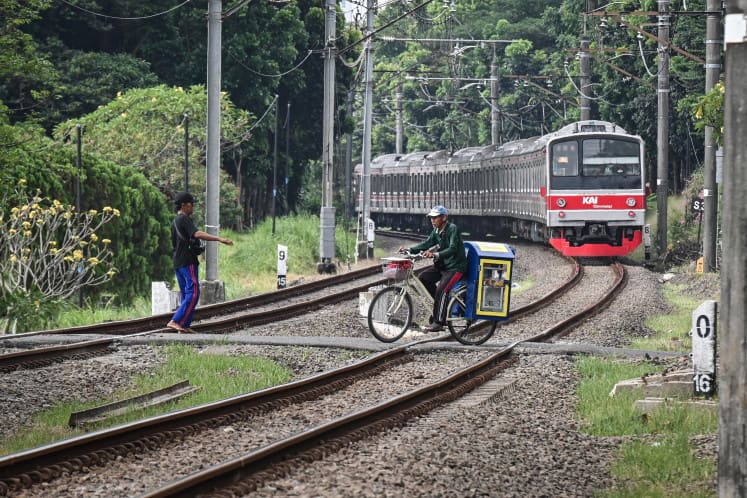
Indonesia is accelerating railway infrastructure development with a new push for cross-island networks, starting with a trans-Sumatra line. President Prabowo Subianto framed the initiative as an instrument of economic democratization, emphasizing its role in connecting lower-income communities and smaller towns that have historically lacked reliable public transport.
The announcement signals a strategic shift in national infrastructure policy, prioritizing rail over road and air for inter-regional connectivity. Sumatra, Indonesia's sixth-largest island globally and home to over 58 million people, has long relied on fragmented road networks and limited aviation links. A rail spine running the length of the island would integrate agricultural production zones in Lampung and South Sumatra with industrial hubs in Medan and export gateways in Palembang.
Prabowo's administration also confirmed that Kalimantan, the Indonesian portion of Borneo, remains on the railway expansion roadmap. Kalimantan's coal-rich interior and coastal palm oil estates currently depend on trucking and barge transport, both vulnerable to weather disruptions and road degradation. A railway corridor could lower logistics costs for commodities destined for Asian markets, particularly China and India, while opening access to remote districts where infrastructure investment has lagged.
Cost Efficiency and Inclusion
The President positioned railways as a cost-efficient alternative to highways and airports, particularly for populations outside Java. Indonesia's transport spending has historically concentrated on the Java corridor, which accounts for less than 7 percent of national land area but more than half of GDP. Extending rail networks to outer islands addresses long-standing regional disparities in access to jobs, education, and healthcare.
Rail projects in Southeast Asia have faced financing and execution challenges, but Indonesia's state railway operator, Kereta Api Indonesia, has accumulated operational experience from the Jakarta-Bandung high-speed rail and the ongoing Jakarta Mass Rapid Transit expansion. The trans-Sumatra project would likely involve lower-speed, heavy-haul configurations suited to freight and intercity passenger service rather than high-speed technology.
Regional Context and Feasibility
Cross-island rail development in Indonesia follows similar initiatives across Southeast Asia. Thailand is advancing its high-speed rail link to Kunming via Laos, while Vietnam continues to study a north-south express line. Malaysia completed its West Coast electrification and is evaluating the East Coast Rail Link's commercial viability. Indonesia's geography presents distinct challenges: volcanic terrain, seismic risk, and dispersed population centers require higher per-kilometer investment than mainland corridors.
Financing remains the critical question. Indonesia's state budget allocation for infrastructure has tightened amid debt service obligations and subsidy pressures. The government has historically relied on public-private partnerships and concessional loans from Japan, China, and multilateral lenders. Sumatra's lower population density compared to Java may make fare revenues insufficient to cover operating costs without sustained fiscal support.
Environmental and land acquisition issues will also shape project timelines. Sumatra's peatlands and rainforest tracts, particularly in Riau and Jambi provinces, are ecologically sensitive and subject to overlapping land claims. Routing decisions will need to balance engineering feasibility, environmental impact, and community displacement.
What Comes Next
The administration has not yet disclosed detailed route alignments, construction timelines, or capital cost estimates for the Sumatra or Kalimantan railways. Industry observers expect feasibility studies to be tendered in the coming months, with construction unlikely to begin before 2027. The scope of the projects and the pace of execution will depend on budget negotiations in parliament and the government's ability to secure external financing on favorable terms.
If implemented, the trans-island railways would represent Indonesia's most ambitious infrastructure pivot in decades, reshaping freight logistics and passenger mobility across the archipelago. Success will hinge on disciplined project management, transparent procurement, and sustained political commitment beyond a single presidential term.
RELATED STORIES

Indonesia Charges Toba Pulp Lestari in $113 Million Tax Fraud Probe
Siti Nuraini · 3 min
Indonesia's Wildfires Push Air Quality to World's Worst Levels
Siti Nuraini · 2 min

Indonesia's Instant Noodle Consumption Falls for First Time in Five Years
Priyanka V. Rao · 3 min
Indonesia's Renewable Energy Capacity Faces AI Data Centre Test
Tran Quoc Bao · 3 min
Spot something wrong? Email editor@briefasia.com. We log every correction publicly.