Asia · Business
Hyundai Workers Launch First Full-Day Strike in a Decade
Wage negotiations collapse at South Korea's largest automaker as 39,000 union members halt production across three major plants
KEY TAKEAWAYS
- ·Hyundai Motor's labor union executed an eight-hour strike Friday, idling production at Ulsan, Jeonju, and Asan plants with 39,000 workers participating.
- ·The walkout marks the first full-day strike in ten years and follows collapsed wage negotiations amid weakening vehicle sales.
- ·The dispute could set wage benchmarks across South Korea's automotive sector if prolonged or if additional strikes follow.
Production Grinds to a Halt
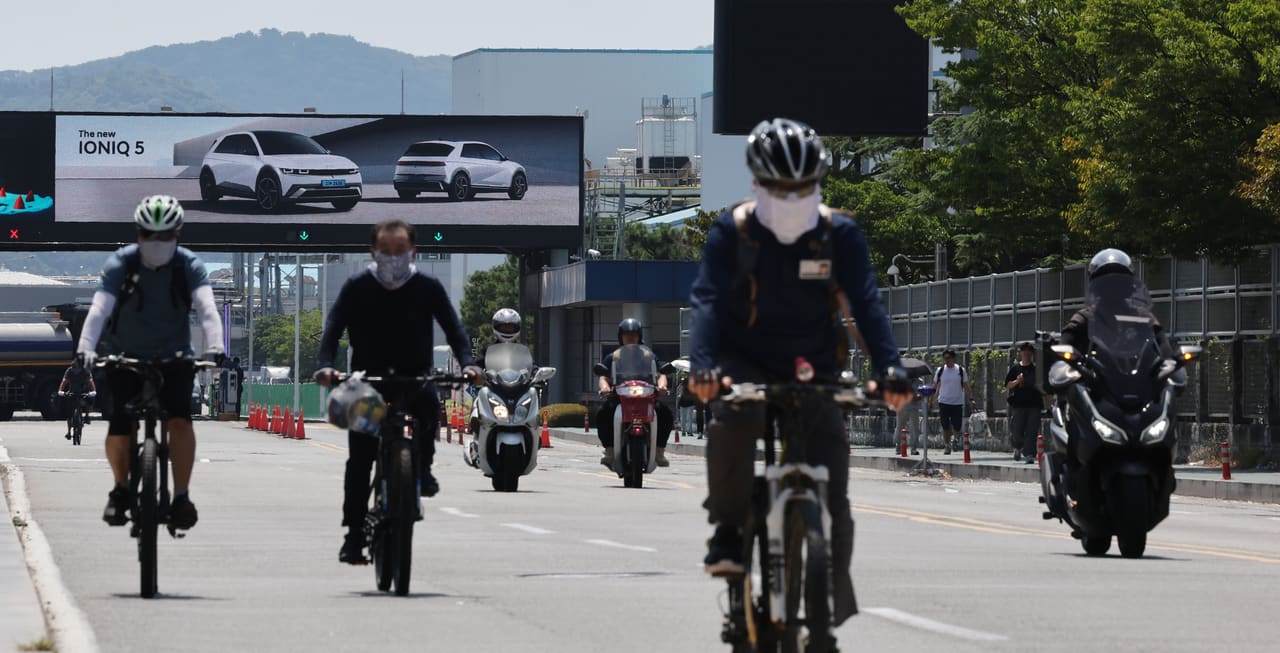
Hyundai Motor faced a complete work stoppage Friday as its labor union executed an eight-hour strike, the first full-day action in a decade. The walkout idled assembly lines at the automaker's three South Korean manufacturing hubs in Ulsan, Jeonju, and Asan for a total of 16 hours spanning two shifts.
Roughly 39,000 union members participated in the action, which Hyundai Motor announced followed the breakdown of wage negotiations with management. The timing compounds pressure on South Korea's largest automaker as it navigates a period of weakening vehicle demand.
The Wage Impasse
Contract talks between Hyundai Motor's union and executives have reached a deadlock, though neither side has publicly disclosed the specific wage increase figures under dispute. The union's decision to escalate to a full-day strike signals that the gap between labor's demands and management's offer remains substantial.
South Korea's automotive labor unions have historically wielded significant bargaining power, particularly at Hyundai Motor, where production disruptions carry immediate financial consequences. The company's Ulsan complex alone ranks among the world's largest integrated auto manufacturing facilities, capable of producing more than 1.4 million vehicles annually when operating at full capacity.
Sales Headwinds Add Urgency
The strike arrives as Hyundai Motor contends with softer sales momentum in key markets. Global automotive demand has moderated following post-pandemic peaks, and intensifying competition in the electric vehicle segment has squeezed margins across the industry.
For Hyundai Motor, production interruptions threaten to compound inventory challenges and delay vehicle deliveries during a critical sales period. The company has invested heavily in electrification and premium models to defend market share, making stable production flows essential to its strategic execution.
Regional Labor Dynamics
Labor relations at South Korean industrial giants have grown increasingly complex as workers seek wage gains that keep pace with inflation while companies face margin pressure from global competitors. Hyundai Motor's union has historically secured above-inflation wage increases, but recent economic uncertainty has made negotiations more contentious.
The automaker's last major labor dispute occurred in 2016, when partial strikes disrupted output and cost the company an estimated 1.3 trillion won in lost production. That episode underscored the financial stakes of prolonged work stoppages at Hyundai Motor's sprawling manufacturing footprint.
What Comes Next
Both parties have indicated willingness to return to the bargaining table, though no new negotiation dates have been announced. The union retains the option to stage additional strikes if talks remain deadlocked, a prospect that could extend production losses and strain Hyundai Motor's supply commitments to dealers.
Industry observers will watch closely to see whether the dispute spreads to other South Korean automakers or remains contained to Hyundai Motor. Kia Corporation, a sister company within the Hyundai Motor Group, operates under separate labor agreements but often faces similar wage pressures.
The outcome of these negotiations will likely set a benchmark for labor deals across South Korea's automotive sector, influencing how other manufacturers approach their own contract talks in the coming months.
RELATED STORIES
Celltrion Launches IV Version of SteQeyma in Japan's Growing Biologics Market
Cheng Wei-Lun · 3 min
South Korea Channels AI Tax Windfall Into New Growth Fund
Cheng Wei-Lun · 3 min
Seoul's New President Opens Business Talks with SK Chairman Amid Chip Investment Debate
Cheng Wei-Lun · 3 min
South Korea's August Exports Jump on Record Chip Sales
Cheng Wei-Lun · 3 min
Spot something wrong? Email editor@briefasia.com. We log every correction publicly.