Asia · Business
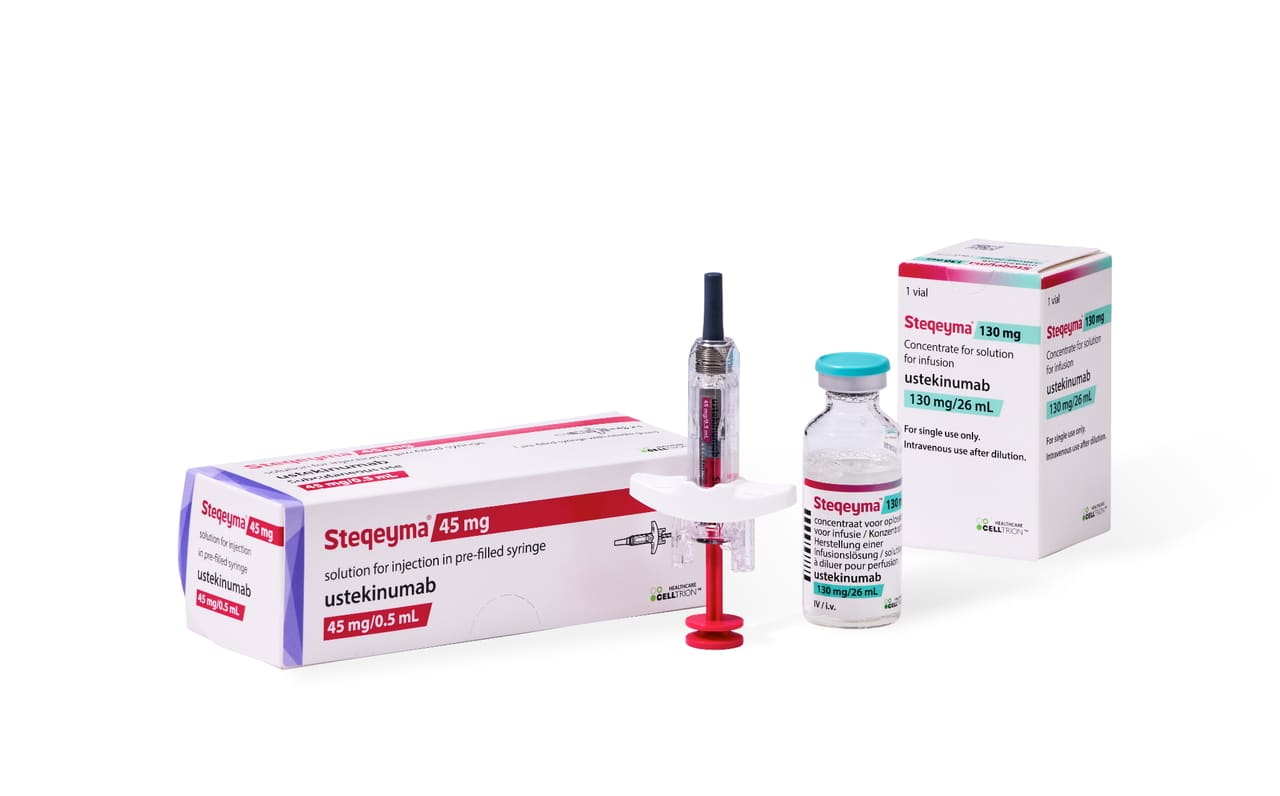
Celltrion Launches IV Version of SteQeyma in Japan's Growing Biologics Market
South Korean biotech adds Crohn's disease indication to autoimmune treatment four months after regulatory approval
KEY TAKEAWAYS
- ·Celltrion launched the IV formulation of SteQeyma in Japan four months after April approval, adding Crohn's disease to psoriasis and psoriatic arthritis indications.
- ·Japan represents Asia's second-largest pharma market, where biologics demand is rising due to aging demographics and increasing autoimmune disease prevalence.
- ·The launch tests Celltrion's ability to scale proprietary biologics beyond biosimilars and compete in a market known for stringent regulatory and commercial barriers.
Expanded Treatment Portfolio
Celltrion introduced the intravenous formulation of SteQeyma in Japan on Friday, roughly four months after securing approval from Japan's Ministry of Health, Labour and Welfare in April. The launch marks a significant expansion for the South Korean biologics maker, which had already established a foothold with earlier versions of the drug.
The IV formulation now treats Crohn's disease alongside its existing indications for psoriasis and psoriatic arthritis. That broader scope positions SteQeyma to compete across multiple autoimmune segments in a market where treatment adherence and administration flexibility often determine prescriber preference.
Celltrion's Japanese subsidiary intends to draw on sales infrastructure and relationships built during earlier product rollouts, a strategy that has proven effective for Korean biotechs navigating Japan's rigorous approval and reimbursement landscape.
Japan's Strategic Weight
Japan remains the second-largest pharmaceutical market in Asia after China, with biologics representing one of the fastest-growing segments. The country's aging population and rising incidence of autoimmune conditions have driven demand for next-generation therapies, particularly those offering dosing convenience and safety profiles suitable for long-term use.
For Celltrion, Japan is a key testing ground. The company has invested heavily in local regulatory expertise and clinical trial capacity to meet the stringent requirements of Japanese health authorities. Approval timelines in Japan can stretch beyond those in South Korea or Europe, making the April green light a milestone that reflects both the drug's safety data and Celltrion's operational maturity.
The addition of Crohn's disease to the label is especially notable. Inflammatory bowel disease prevalence in Japan has climbed over the past two decades, and the segment has attracted attention from global pharma giants and regional biosimilar developers alike. Celltrion's move into this indication puts it in direct competition with established brands and opens a revenue stream that complements its psoriasis franchise.
Competitive Dynamics
Celltrion is no stranger to the biologics arena. The company built its reputation on biosimilars, offering lower-cost alternatives to blockbuster drugs whose patents have expired. SteQeyma, however, is part of a newer wave of proprietary biologics designed to differentiate on efficacy, safety, or administration route.
The IV formulation offers a practical edge in settings where subcutaneous delivery is less feasible or where patients prefer infusion-based therapy. Hospital and clinic infrastructure in Japan is well equipped for IV administration, and reimbursement frameworks typically cover infusion services, reducing out-of-pocket barriers for patients.
Celltrion's Japanese unit has been active in building relationships with prescribers, payers, and patient advocacy groups. That groundwork is critical in a market where brand loyalty runs deep and switching costs, both financial and procedural, can be high.
Regional Implications
Success in Japan often serves as a springboard for broader Asian expansion. Regulatory approvals in Tokyo carry weight with authorities in Taiwan, South Korea, and Southeast Asian nations, where harmonization efforts have made Japanese clinical data more portable.
Celltrion's performance in Japan will be watched closely by investors and competitors. The company has ambitions to scale its proprietary pipeline beyond biosimilars, and demonstrating commercial traction in a market as demanding as Japan would validate that strategic pivot.
The IV launch also underscores a broader trend: Asian biotech firms are no longer content to serve as contract manufacturers or regional distributors. They are building end-to-end capabilities, from discovery and development through to commercialization in high-value markets.
For Celltrion, the SteQeyma rollout is both a revenue opportunity and a proof point. The company's ability to navigate Japan's complex regulatory, reimbursement, and commercial landscape will shape its standing in the global biologics hierarchy and influence how other Korean and Chinese biotechs approach their own international expansion strategies.
RELATED STORIES

SK Hynix Eyes Miyagi Memory Fab as Japan Push Takes Shape
Cheng Wei-Lun · 3 min

Kubota Expands Indian Production to Target Western Markets
Priyanka V. Rao · 3 min

Japan Scrambles to Fund $63 Billion Budget Gap From Food Tax Cut and Defense Push
Cheng Wei-Lun · 3 min

Korean Coffee Chain Paik's Opens First Tokyo Locations
Cheng Wei-Lun · 3 min
Spot something wrong? Email editor@briefasia.com. We log every correction publicly.