Asia · Business
Kubota Expands Indian Production to Target Western Markets
Japanese machinery maker breaks ground on $200 million Uttar Pradesh facility to leverage cost advantages in Europe and North America
KEY TAKEAWAYS
- ·Escorts Kubota is constructing a $200 million facility in Uttar Pradesh with phase-one capacity of 60,000 tractors and 15,000 construction units annually.
- ·The Indian production base aims to deliver cost advantages in Europe, North America, and Africa where price competition has intensified for farm machinery.
- ·The expansion reflects Japan's broader shift of mid-range manufacturing to South Asia to balance cost structures and diversify supply chains.
Manufacturing Push in Uttar Pradesh
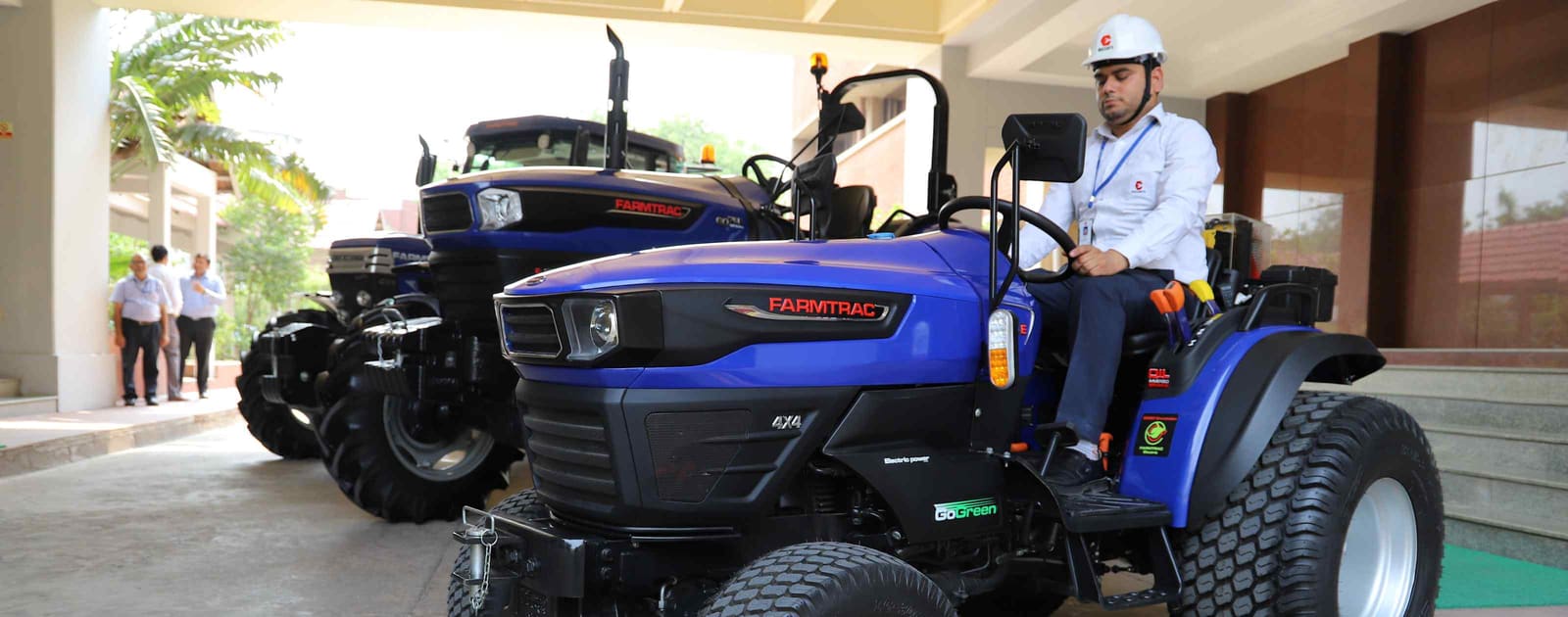
Kubota's India-based joint venture is ramping up its manufacturing footprint with a $200 million plant in Uttar Pradesh state. The facility, developed through Escorts Kubota, will produce up to 60,000 tractors and 15,000 construction equipment units annually once the first phase reaches completion.
The expansion represents a strategic shift for the Japanese agricultural and construction machinery specialist. Rather than serving only domestic Indian demand, the new capacity is designed to supply price-sensitive markets in Europe, Africa, and North America where Indian manufacturing costs offer a competitive edge.
Escorts Kubota announced the groundbreaking in late August 2026. The joint venture combines Kubota's engineering expertise with Escorts' established distribution networks across South Asia. India has emerged as a key production base for global equipment makers seeking alternatives to higher-cost manufacturing hubs in East Asia.
Cost Advantage for Export Markets
The Uttar Pradesh facility targets markets where price competition has intensified. European and North American buyers increasingly weigh total cost of ownership against traditional brand loyalty, creating an opening for competitively priced equipment manufactured in lower-cost regions.
Indian production offers labor and operational cost advantages that can translate to double-digit percentage savings on landed prices in Western markets. The country's tractor manufacturing sector has matured significantly over the past decade, with quality standards approaching those of established producers in Japan and Europe.
Escorts Kubota plans to leverage these economics while maintaining technical specifications suitable for developed-market agriculture. The joint venture's tractors already meet emission and safety standards required in Europe and North America, removing a key barrier to export growth.
Regional Production Strategy
The expansion aligns with broader trends in Asian manufacturing. Japanese industrial groups are diversifying production away from concentrated domestic facilities, spreading capacity across South and Southeast Asia to balance cost structures and supply chain risks.
For Kubota specifically, the Indian investment complements existing operations in Japan, Thailand, and other markets. The company has signaled that India will play a growing role in its global production network, particularly for mid-range equipment where price sensitivity is highest.
Uttar Pradesh offers logistical advantages for both domestic distribution and export. The state's improving infrastructure connects manufacturers to major ports on India's west and east coasts, facilitating shipments to Africa, the Middle East, and beyond.
Competitive Landscape
The move comes as global farm equipment demand shows uneven patterns. Developed markets face pressure from consolidation in agriculture and volatile commodity prices, while emerging economies continue to mechanize. Indian manufacturers are positioning to serve both segments.
Escorts Kubota competes with established players including John Deere, CNH Industrial, and AGCO in export markets. The joint venture's cost structure allows it to undercut premium brands while offering reliability that exceeds lower-tier Chinese competitors.
African markets represent a particular growth opportunity. Many countries across the continent are investing in agricultural modernization, creating demand for affordable mechanization. Indian equipment makers have gained share in these markets over the past five years, aided by favorable financing terms andAfDB-backed development programs.
Construction equipment exports face a more crowded field, with Chinese manufacturers holding strong positions in price-sensitive segments. Kubota's differentiation rests on durability and service networks, areas where Japanese engineering retains an advantage even when production shifts to India.
The Uttar Pradesh plant's phased construction allows Escorts Kubota to scale output based on export demand. Initial production will focus on tractor models already proven in Indian conditions, with construction equipment following as the facility reaches full capacity. The joint venture has not disclosed a timeline for subsequent phases beyond the initial 75,000-unit annual capacity.
RELATED STORIES

Japan Scrambles to Fund $63 Billion Budget Gap From Food Tax Cut and Defense Push
Cheng Wei-Lun · 3 min

Japan's Factory Orders Jump to Eight-Year High on Chip and AI Demand
Aiko Nakamura · 3 min

Lenskart Founder Peyush Bansal Joins Billionaire Ranks on India Eyewear Boom
Priyanka V. Rao · 4 min

Tokyo Holds Fire After Putin's Island Visit Amid US Policy Uncertainty
Cheng Wei-Lun · 3 min
Spot something wrong? Email editor@briefasia.com. We log every correction publicly.