Real Estate · Land
Hong Kong's Brownfield Exodus Fuels Industrial Property Demand
Northern Metropolis development drives warehouse and storage operators from New Territories sites into formal industrial estates, reshaping the city's property landscape
KEY TAKEAWAYS
- ·Businesses displaced from New Territories brownfield sites by the Northern Metropolis project accounted for nearly 20 per cent of new industrial leases in the first eight months of 2026.
- ·Industrial estates in Kwai Chung, Fo Tan, and Tseung Kwan O are experiencing tighter vacancy and rental increases as brownfield operators seek formal space with vehicle access and storage capacity.
- ·Land clearance is expected to continue through 2028, sustaining upward rent pressure while formalising Hong Kong's industrial sector and pushing some operators toward Greater Bay Area relocation.
Displacement Drives Market Shift
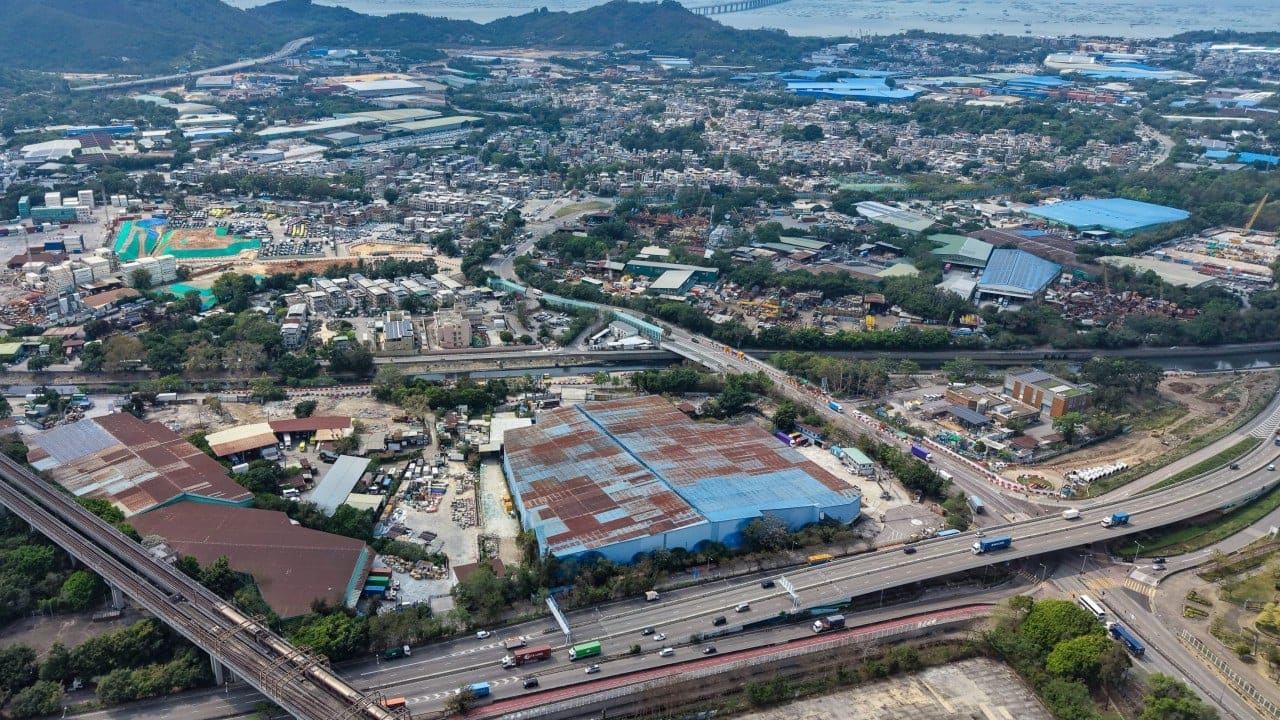
Hong Kong's industrial property market is absorbing a wave of demand from an unexpected source: businesses forced out of New Territories brownfield sites. The Northern Metropolis project, a sprawling development initiative covering 30,000 hectares near the mainland border, is clearing land that for decades housed storage yards, recycling operations, and vehicle scrapyards that relied on cheap, informal space.
The displacement has created measurable pressure on formal industrial estates. Brownfield relocations accounted for nearly 20 per cent of new industrial leases signed in the first eight months of 2026, according to property sector data. That represents a significant shift in tenant composition for a market traditionally dominated by logistics operators, light manufacturers, and e-commerce fulfilment centres.
From Informal to Formal
Brownfield sites, typically agricultural land converted for industrial use without formal development, offered businesses rates well below market for decades. Operators of container storage facilities, construction material depots, and auto dismantling yards clustered in areas like Yuen Long, Fanling, and Sheung Shui, where enforcement was lax and land abundant.
The Northern Metropolis blueprint changes that calculus. The project envisions transforming the northern New Territories into an innovation and technology corridor, with targets for 650,000 jobs and housing for 2.5 million residents by 2048. Land clearance began in phases starting 2025, with priority given to sites closest to planned transport links and residential zones.
Displaced tenants face limited options. Remaining brownfield sites carry uncertainty over clearance timelines, pushing businesses toward regulated industrial buildings and estates in Kwai Chung, Tsuen Wan, Fo Tan, and Tseung Kwan O. The shift means higher rents, formal lease terms, and compliance with building codes many brownfield operators previously sidestepped.
Pressure Points Across Districts
Industrial landlords are seeing the impact in occupancy and rental trends. Kwai Chung, home to Hong Kong's largest concentration of industrial buildings, has recorded tighter vacancy rates in the 12 months through August 2026. Ground-floor units suitable for vehicle access and heavy goods storage, the closest substitute for brownfield yards, are particularly sought after.
Fo Tan, traditionally a hub for creative studios and small manufacturers, is also drawing brownfield refugees. The district's mix of older, lower-rent buildings and proximity to road networks makes it attractive to logistics and warehousing firms priced out of prime locations. Landlords in the area have reported stronger negotiating positions, with some achieving rent increases of 8 to 12 per cent on lease renewals.
Tseung Kwan O Industrial Estate, government-managed and purpose-built, is seeing demand from larger operators seeking long-term certainty. The estate's structured environment appeals to businesses that need formal addresses for licensing and client relationships, a shift from the informal arrangements common on brownfield sites.
Supply Constraints Loom
The influx comes at a time when Hong Kong's industrial property supply remains constrained. New completions of industrial space have slowed, with the government prioritising residential and commercial development on available land. Revitalisation schemes allow conversion of older industrial buildings into offices or creative spaces, further reducing stock available for traditional industrial use.
Some brownfield operators are exploring alternatives outside Hong Kong entirely. The Greater Bay Area offers lower-cost industrial land in Shenzhen, Dongguan, and Foshan, with improved cross-border logistics making relocation feasible for businesses not tied to Hong Kong-based clients. However, licensing requirements, language barriers, and operational differences pose obstacles for smaller firms.
Market Outlook
The brownfield displacement is expected to continue through at least 2028 as Northern Metropolis land clearance proceeds. Property consultants anticipate sustained upward pressure on industrial rents, particularly for ground-floor and yard space that can accommodate heavy equipment and vehicle movements.
For landlords, the trend represents a shift in tenant risk profile. Brownfield operators often lack the credit history and operational transparency of established logistics or manufacturing tenants, potentially complicating lease approvals and rent collection. Some property managers are adjusting due diligence processes to assess these incoming tenants.
The broader implication is a formalisation of Hong Kong's industrial sector. Businesses that thrived in the regulatory grey zone of brownfield sites must now operate within the structured framework of industrial estates, with attendant costs and compliance burdens. How many can make that transition, and how many will relocate or close, will shape the city's industrial landscape in the years ahead.
RELATED STORIES
Expat Retirees Return to Hong Kong, Fueling Premium Property Sales
Priyanka V. Rao · 3 min
Owner-Occupiers Snap Up Hong Kong Office Space at Steep Discounts
Priyanka V. Rao · 4 min
Ping An Eyes Hong Kong ETF Market as Beijing Opens Cross-Border Insurance Capital
Cheng Wei-Lun · 4 min

Alibaba Raises $13 Billion in Hong Kong to Accelerate AI Infrastructure Push
Cheng Wei-Lun · 3 min
Spot something wrong? Email editor@briefasia.com. We log every correction publicly.