Sustainability · Energy
HD Construction Equipment Pushes Renewable Power to 44% at Incheon Plant
South Korean heavy machinery maker signs fresh power purchase agreements covering 12.4 MW-peak capacity across three manufacturing sites
KEY TAKEAWAYS
- ·HD Construction Equipment signed renewable power purchase agreements for 12.4 megawatt-peak capacity, raising the renewable share at its Incheon plant from 19 percent to 43.9 percent by January 2027.
- ·The agreements also cover the company's Ulsan and Gunsan facilities, where renewable electricity will account for 42 percent and 53.1 percent of consumption respectively.
- ·The move positions the South Korean heavy equipment maker ahead of domestic peers as Asian manufacturers face growing pressure to decarbonize industrial operations.
Manufacturing Sites Shift to Green Power
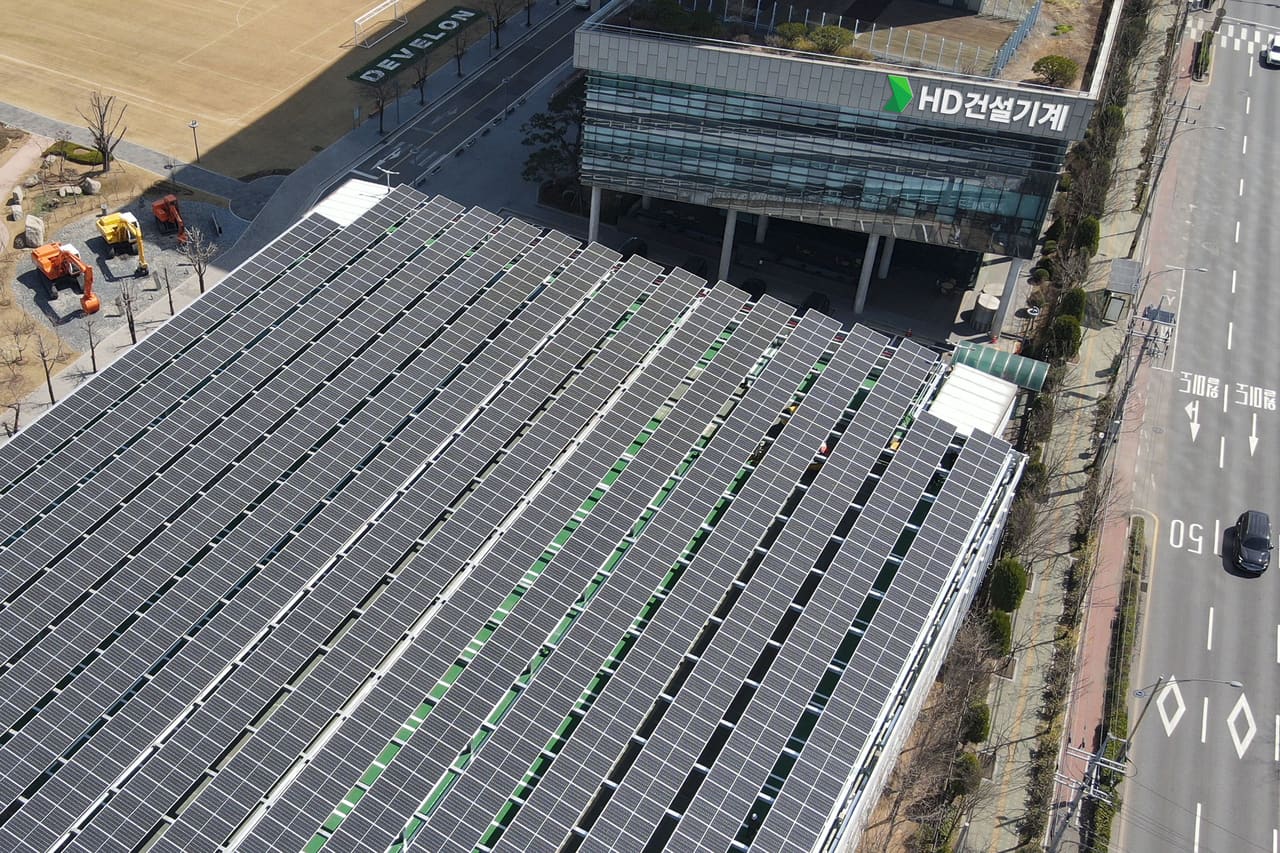
HD Construction Equipment has locked in renewable power purchase agreements totaling 12.4 megawatt-peak capacity, a move that will lift the renewable electricity share at its Incheon manufacturing plant from 19 percent to 43.9 percent by January 2027, according to the company.
The South Korean heavy equipment maker announced the agreements Thursday, part of a broader effort to decarbonize operations across its domestic production footprint. The contracts span multiple renewable energy developers, though the company did not disclose counterparty names or pricing terms.
The Incheon plant, a key production hub for excavators and loaders, will see its renewable share more than double under the new arrangements. That brings the facility closer to parity with power grids in markets where corporate renewable procurement has become table stakes for industrial buyers.
Ulsan and Gunsan Sites Also Covered
The power purchase agreements extend beyond Incheon. HD Construction Equipment said renewable electricity will account for 42 percent of consumption at its Ulsan plant and 53.1 percent at its facility in Gunsan, North Jeolla Province, once the contracts take effect.
The Gunsan site will become the company's highest-renewable operation by share, crossing the halfway mark for green power. Ulsan, a major industrial zone on South Korea's southeast coast, will lag slightly but still achieve a substantial renewable mix.
The company did not specify whether the agreements are structured as physical power purchase agreements tied to specific generation assets or virtual PPAs settled financially. South Korea's corporate renewable procurement market has grown in recent years as the government expanded pathways for direct deals between generators and industrial users, moving beyond the traditional utility-dominated model.
Asia's Industrial Decarbonization Push
HD Construction Equipment's move reflects broader momentum across Asian heavy industry. Manufacturers in South Korea, Japan, and China face mounting pressure from global customers and investors to demonstrate credible emissions reduction pathways, particularly as supply chain transparency requirements tighten in Europe and North America.
For construction equipment makers, the calculus is especially acute. The sector's products are energy-intensive to manufacture, and end-use emissions from diesel-powered machinery remain a persistent challenge. Decarbonizing manufacturing operations through renewable electricity is one of the more straightforward levers available, even as the industry grapples with longer-term questions around electrification and alternative fuels for the machines themselves.
South Korea's renewable energy market is still catching up to peers in scale and speed. The country relies heavily on natural gas and coal for baseload power, and renewable capacity additions have been slower than in Japan or China. Corporate PPAs offer a workaround, allowing large industrial users to secure renewable electricity directly while the grid transition unfolds.
What Comes Next
The agreements position HD Construction Equipment ahead of many domestic peers in renewable adoption, but the company has not disclosed longer-term targets or a timeline for reaching majority renewable power across all sites. The January 2027 implementation date suggests the contracted capacity is either already online or nearing completion, a sign that developers are lining up supply to meet rising corporate demand.
For now, the focus remains on execution. Whether the company expands renewable procurement further will depend on cost dynamics, grid infrastructure, and regulatory support. But the initial commitments signal that even in a market where fossil fuels still dominate, industrial buyers are finding ways to lock in green electrons.
RELATED STORIES
Posco Future M Lands 190,000-Ton LFP Cathode Contract in Energy Storage Push
Jun-ho Seo · 3 min
Washington's Polysilicon Tariffs Set to Squeeze Korean Solar Producers
Cheng Wei-Lun · 3 min

South Korea's Food Costs Surge as Summer Heat Ravages Farms
Jun-ho Seo · 5 min
Seoul Market Climbs on Tech Rally After US Jobs Data
Cheng Wei-Lun · 3 min
Spot something wrong? Email editor@briefasia.com. We log every correction publicly.