Real Estate · Land
Guangzhou Court Accepts Liquidation Petition for Evergrande's Main Onshore Unit
The move against Hengda Real Estate comes one day after founder Xu Jiayin received a life sentence, marking the final collapse of China's once-largest property developer.
KEY TAKEAWAYS
- ·The Guangzhou Intermediate People's Court accepted a bankruptcy liquidation petition filed by Guangzhou Rural Commercial Bank against Hengda Real Estate, Evergrande's main onshore unit.
- ·The court decision came one day after Evergrande founder Xu Jiayin received a life sentence for fraud, marking the final collapse of China's once-largest property developer.
- ·Evergrande now faces simultaneous liquidation in Hong Kong and mainland China, complicating creditor recoveries as foreign bondholders have limited access to onshore assets under Chinese law.
Court Moves Forward on Liquidation
The Guangzhou Intermediate People's Court accepted a bankruptcy liquidation petition against Hengda Real Estate on Friday, according to an official court announcement. Guangzhou Rural Commercial Bank's Huaxia branch filed the petition, which the court determined met the legal requirements under China's Enterprise Bankruptcy Law.
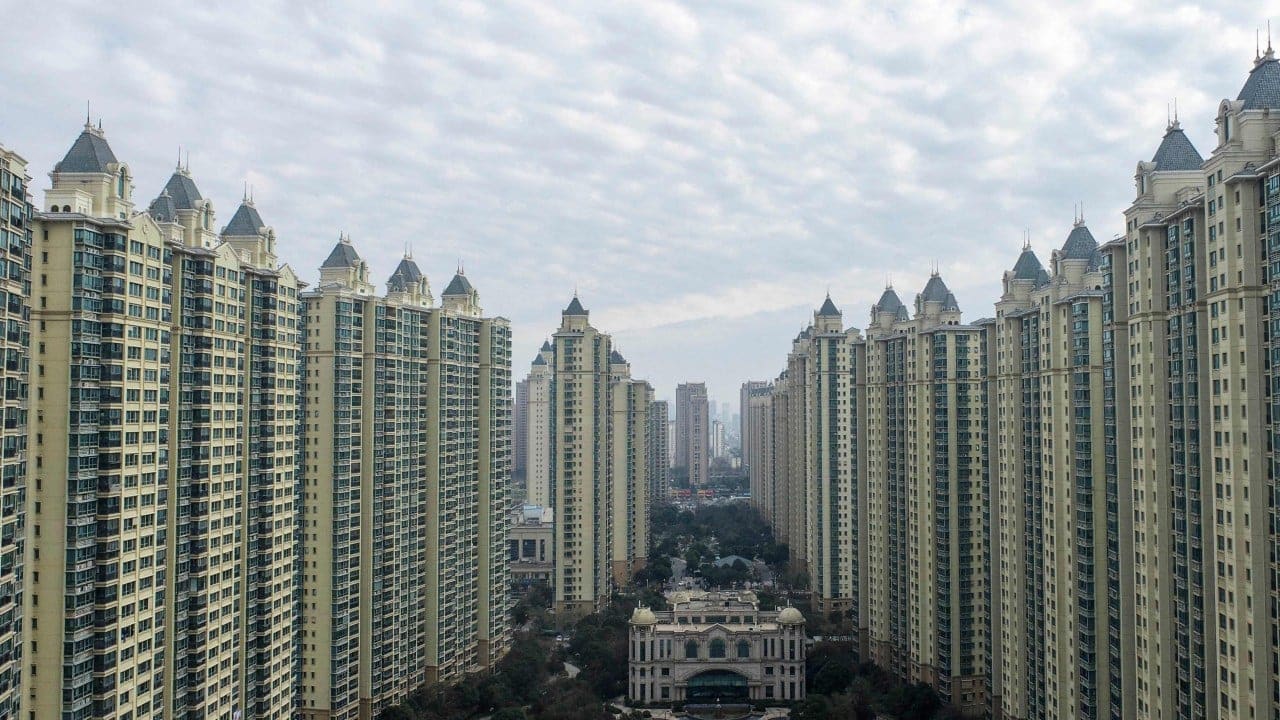
Hengda Real Estate serves as China Evergrande Group's principal onshore operating entity. The court's decision represents the procedural end for what was once the country's largest property developer by sales volume.
The timing is stark. Just one day earlier, Evergrande founder Xu Jiayin received a life sentence for fraud and other financial crimes. The sentencing and liquidation petition together close out a corporate collapse that has rippled through China's real estate sector since 2021.
The Creditor Behind the Petition
Guangzhou Rural Commercial Bank's Huaxia branch initiated the liquidation process. The bank established it had legal standing as a creditor with unpaid claims against Hengda Real Estate. Chinese bankruptcy law permits creditors to force liquidation when a debtor is insolvent and unable to meet obligations as they come due.
The court's acceptance does not automatically trigger asset sales. It opens a formal review period during which the court will appoint administrators, verify claims, and determine whether restructuring remains feasible or whether liquidation is the only path forward.
Evergrande defaulted on dollar bonds in late 2021, triggering a wave of defaults across China's property sector. The company's liabilities exceeded 2.4 trillion yuan at the time of its offshore liquidation order in January 2024, according to court filings in Hong Kong.
Parallel Proceedings in Hong Kong
Evergrande's offshore arm entered liquidation in Hong Kong earlier this year after the company failed to present a viable restructuring plan. The Hong Kong High Court appointed liquidators from Alvarez & Marsal to oversee the process for the offshore entity.
The Guangzhou court's acceptance of the onshore petition means Evergrande now faces simultaneous liquidation proceedings in two jurisdictions. The division between onshore and offshore assets complicates creditor recoveries. Mainland Chinese courts do not automatically recognize Hong Kong liquidation orders, and vice versa.
Foreign bondholders, who are owed more than 20 billion US dollars, have limited recourse to onshore assets under Chinese law. Domestic creditors, including banks, suppliers, and homebuyers, hold claims primarily against the onshore entities like Hengda Real Estate.
What Happens Next
The Guangzhou court will now move through the statutory liquidation process. Administrators will catalogue assets, verify creditor claims, and propose a distribution plan. Chinese bankruptcy law prioritizes employee wages and social insurance contributions, followed by secured creditors, then unsecured creditors.
Hengda Real Estate holds land parcels, partially completed residential projects, and contractual obligations to deliver homes to buyers who have already paid deposits. The liquidation process will determine whether these projects can be completed or whether buyers will join the creditor queue.
The broader question is whether the liquidation will provide any template for the dozens of other distressed Chinese developers still trying to restructure. Country Garden, Sunac, and Shimao have all defaulted and are negotiating with creditors. The speed and recovery rates in the Evergrande liquidation will signal how much creditors can expect elsewhere.
Regional Implications
Evergrande's collapse has already reshaped China's property sector. New home sales fell sharply in 2022 and 2023, and the government has rolled out multiple stimulus measures to stabilize the market. But the liquidation of the sector's former giant underscores the limits of those interventions.
For Asia's financial system, the Evergrande case is a stress test of cross-border insolvency frameworks. Hong Kong and mainland China operate under different legal systems, and coordination between liquidators has been uneven. The outcome will influence how international investors price risk in Chinese corporate debt.
Banks across the region have exposure to Chinese property developers, either through direct loans or through wealth management products sold to retail clients. The recovery rate in the Evergrande liquidation will determine how those exposures are marked and whether further provisioning is required.
The court's acceptance of the petition is procedural, but the consequences are concrete. Thousands of unfinished apartments, billions in unpaid invoices, and a generation of homebuyers waiting for keys now enter the formal machinery of Chinese bankruptcy law.
RELATED STORIES

China's First Gaming Billionaire Acquires Shanghai Hotel for $33 Million
Cheng Wei-Lun · 2 min
Evergrande Founder's Life Sentence Adds New Layer to $57 Billion Debt Recovery
Cheng Wei-Lun · 3 min
Evergrande Founder Fined $1.31 Billion as China's Treasury Holdings Decline
Cheng Wei-Lun · 3 min

Guotai Haitong Asset Arm Fined $7.8 Million Over Offshore Capital Breaches
Cheng Wei-Lun · 3 min
Spot something wrong? Email editor@briefasia.com. We log every correction publicly.