Real Estate · Hotels
China's First Gaming Billionaire Acquires Shanghai Hotel for $33 Million
Chen Tianqiao's below-market purchase of Mia Hotel signals opportunistic capital entering China's distressed property sector

KEY TAKEAWAYS
- ·Chen Tianqiao paid 220 million yuan for Shanghai's Mia Hotel from GLP at a below-market price amid China's property downturn.
- ·The deal reflects opportunistic capital entering tier-one city commercial real estate as foreign funds reduce China exposure.
- ·Wealthy domestic investors are testing selective entry points in hard assets while institutional buyers remain cautious on China property.
A Rare Bet on Chinese Real Estate
Chen Tianqiao, the entrepreneur behind China's first online gaming fortune, has purchased the Mia Hotel in central Shanghai for approximately 220 million yuan, equivalent to $32.6 million. The transaction positions Chen among a small group of prominent investors willing to enter China's property market after years of contraction and distress.
The seller, Singapore-based investment firm GLP, offloaded the asset at what market observers describe as a below-market valuation. Chen's acquisition comes as China's real estate sector continues to grapple with a prolonged downturn that has seen major developers default, projects stall, and property values compress across tier-one cities.
The Buyer's Profile
Chen built his wealth in the early 2000s through Shanda Interactive Entertainment, which dominated China's nascent online gaming landscape before the rise of Tencent and NetEase. He later shifted focus to global investments and neuroscience research, maintaining a low public profile while managing a diversified portfolio spanning technology, healthcare, and now hospitality assets.
The billionaire's move into Shanghai commercial real estate represents a calculated entry point. Analysts note that distressed sellers, particularly foreign funds seeking to reduce China exposure, have created pricing anomalies in select urban markets. Downtown Shanghai hotels, despite occupancy challenges, retain long-term value tied to the city's status as a financial and logistics hub.
Market Context
China's property market has contracted sharply since mid-2021, when regulatory tightening triggered a liquidity crisis among leveraged developers. Residential sales volumes fell, construction slowed, and commercial real estate valuations followed. Foreign institutional capital has largely retreated, leaving domestic investors and opportunistic buyers to pick through distressed inventory.
The Mia Hotel transaction reflects this dynamic. GLP, a logistics and real estate specialist with significant Asia exposure, has been streamlining its China holdings amid broader investor caution. The sale price suggests the firm prioritized liquidity over holding for a recovery.
For Chen, the acquisition offers exposure to potential upside if China's economy stabilizes and travel demand returns to pre-pandemic trajectories. Shanghai's hospitality sector has seen uneven recovery, with business travel lagging leisure segments. However, the city's position as a gateway for international commerce provides a structural demand floor that speculative buyers are beginning to recognize.
Strategic Implications
The deal underscores a broader pattern: wealthy Chinese entrepreneurs are deploying capital into hard assets at valuations that may prove favorable over a multi-year horizon. While institutional investors remain wary, individuals with patient capital and local market knowledge are testing selective entry points.
Chen's purchase also highlights the divergence within China's real estate landscape. Tier-one city commercial properties, particularly those in prime locations, are attracting interest even as residential markets in lower-tier cities remain oversupplied. Investors distinguish between systemic risk in the development sector and localized opportunities in stabilized assets.
The transaction's completion signals that despite ongoing macroeconomic headwinds, certain segments of China's property market are finding price levels that clear. Whether this marks an inflection point or an isolated opportunistic play will depend on broader economic trends, policy support, and the trajectory of domestic consumption.
RELATED STORIES
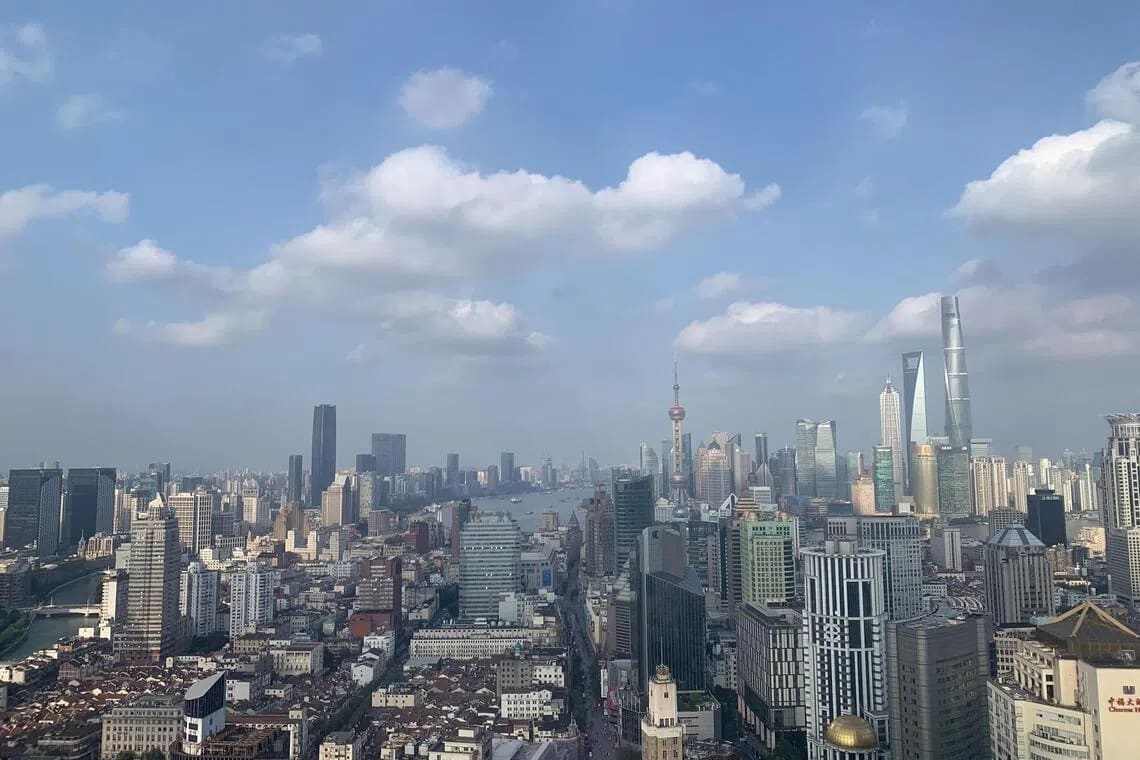
Shanghai and Guangzhou Move to Clarify Commercial Lease Extensions
Cheng Wei-Lun · 4 min

Washington Pushes Allies to Choose Sides as AI Competition With Beijing Intensifies
Cheng Wei-Lun · 4 min
Singapore Tightens Transshipment Rules Amid US Tariff Scrutiny
Lim Hui Ying · 4 min
China-ASEAN Trade Jumps to $643 Billion in First Half of 2026
Cheng Wei-Lun · 3 min
Spot something wrong? Email editor@briefasia.com. We log every correction publicly.