Real Estate · Land
Shanghai and Guangzhou Move to Clarify Commercial Lease Extensions
New guidelines on expiring land tenures aim to stabilize a market frozen by uncertainty over more than $190 billion in aging properties
KEY TAKEAWAYS
- ·Shanghai and Guangzhou have released guidelines on extending commercial land leases, with extension costs set at 70 percent of a benchmark land price.
- ·More than one trillion yuan in non-residential property in China now has 20 years or less remaining on land leases, affecting transactions and financing.
- ·Investors are awaiting a nationwide policy from Beijing to provide uniform criteria for lease extensions across all cities.
The Problem That Froze Deals
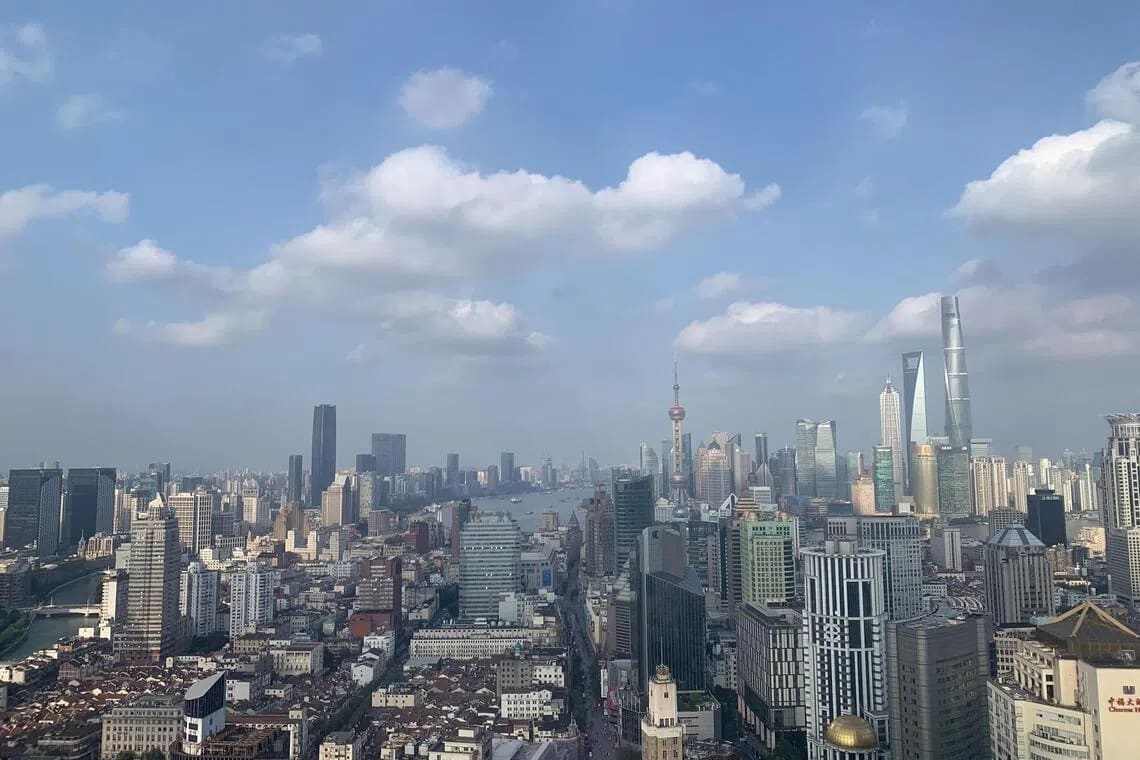
Local officials in Shanghai recently distributed guidelines detailing how property owners can extend land leases on commercial buildings, establishing both the procedure and the cost structure for renewals. Guangzhou released similar rules earlier in 2026. The moves mark the first concrete steps toward resolving an issue that has stalled transactions and eroded confidence in China's commercial real estate market for years.
More than one trillion yuan ($190 billion) worth of non-residential property in China now sits on land with 20 years or fewer remaining on the lease, according to Andrew Chan, head of valuation and advisory services for Greater China at Cushman & Wakefield. Under China's system, nearly all urban land belongs to the state. Leases granted in the early 1990s run for 40 years on retail plots, 50 years for industrial and office land, and 70 years for residential sites. When those leases expire, owners face the prospect of returning the land to local governments.
The uncertainty has had direct economic consequences. Developers including Parkview Group and New World Development have struggled to sell assets hampered by short remaining tenures. Local insurers and developers typically require land terms exceeding 20 years before entering transactions, according to Jones Lang LaSalle. Many banks refuse to extend or refinance loans on properties with less than a decade left on the lease.
Scale of the Exposure
By 2030, roughly 30 million square meters of office and retail space across 18 major Chinese cities will have less than 20 years remaining on land leases, CBRE Group estimated. That figure counts only properties with single owners, suggesting the actual total is higher.
The issue has weighed heavily on foreign investors and regional funds with significant mainland exposure. CapitaLand Investment manages or holds stakes in over two million square meters of real estate with 20 years or less remaining on the tenure, including offices and shopping malls. One of its oldest projects, Raffles City Shanghai, has a lease ending in 2045. The mall, located in Shanghai's financial district, is majority-owned by the life insurance arm of Ping An.
Executives at CapitaLand, including Lee Chee Koon, chief executive of its listed investment arm, have raised concerns with senior Chinese officials, according to people familiar with the discussions. Brookfield Asset Management has also engaged local government officials about land tenures and potential extensions for their properties.
Parkview Group has spent months attempting to sell a Beijing shopping center affected by short land tenure. One parcel on the site has less than a decade remaining on its lease, prompting the Hong Kong conglomerate to explore offering buyers a partial stake in the Parkview Green property. New World Development faces similar challenges with an office tower atop its Shanghai K11 Art Mall, where short tenure has complicated sale efforts.
What the New Rules Offer
Both Shanghai and Guangzhou propose lease extension costs of at least 70 percent of a relevant benchmark, payable over more than a year in some cases. The benchmark reflects land prices before accounting for the value of structures built on top, meaning extension fees will likely represent a fraction of total project costs.
Several other areas have released similar frameworks for industrial land, including Xiamen and a district in Hangzhou, though with less detail than the Shanghai and Guangzhou guidelines.
Song Hongwei, research director at Tospur Real Estate Consulting, noted that policy uncertainty over lease renewals has depressed appraisal values, hurt fundraising, and blocked transactions. The new guidelines should help address all three problems.
Lingering Questions
Investors remain concerned about the absence of clear criteria for applying for lease extensions well before expiry. Some cities suggest that applicants must demonstrate future investment plans or capacity expansion, but local governments retain broad discretion in interpreting those requirements, according to Lillian Duan, who leads the real estate practice at Chinese law firm Kaiman Legal.
Hong Kong, which maintains a separate legal system from the mainland until 2047, has adopted a standardized approach. Leases there can roll over for 50 years upon expiry, with property owners paying annual rent to the government.
Beijing acknowledged the issue earlier in 2026, stating for the first time that it would refine laws governing the renewal of land-use rights for industrial and commercial purposes and advance extension work in a steady and lawful manner. Local rules in cities like Shanghai and Guangzhou may serve as pilot programs, but a nationwide policy will eventually be necessary to establish consistency across the market.
Office values in some major Chinese cities have fallen more than 40 percent from peak levels. Developers across the sector have defaulted on approximately $130 billion in debt. The new lease extension guidelines offer a measure of clarity, but property owners and investors are watching to see whether Beijing will issue broader rules that apply uniformly across the country.
RELATED STORIES
CapitaLand China Trust Reports Modest Decline in First-Half Earnings Amid Portfolio Shifts
Cheng Wei-Lun · 4 min

Crude Surges Past $90 as Hormuz Talks Stall
Cheng Wei-Lun · 3 min
ModelBest Begins Pre-IPO Tutoring for Mainland China Listing
Cheng Wei-Lun · 3 min

Chinese Quant Funds Hold Local Advantage Despite Speed Trading Restrictions
Cheng Wei-Lun · 3 min
Spot something wrong? Email editor@briefasia.com. We log every correction publicly.