Finance · Deals
Tata Group Shares Sink More Than 5% Following Chandrasekaran Resignation
The chairman's decision not to seek reappointment triggers sharp selloff across India's sprawling conglomerate, with TCS leading the decline
KEY TAKEAWAYS
- ·Tata Group shares fell more than 5% on August 12 after Chairman N. Chandrasekaran said he will not seek reappointment in February 2027, with TCS down 5.3%.
- ·Chandrasekaran cited lack of board support and tensions with Tata Trusts over Air India losses, a potential Tata Sons listing, and board representation issues.
- ·Analysts expect market stability once a successor is named, pointing to the conglomerate's history of navigating leadership transitions successfully.
Market Reaction Widens Across Portfolio
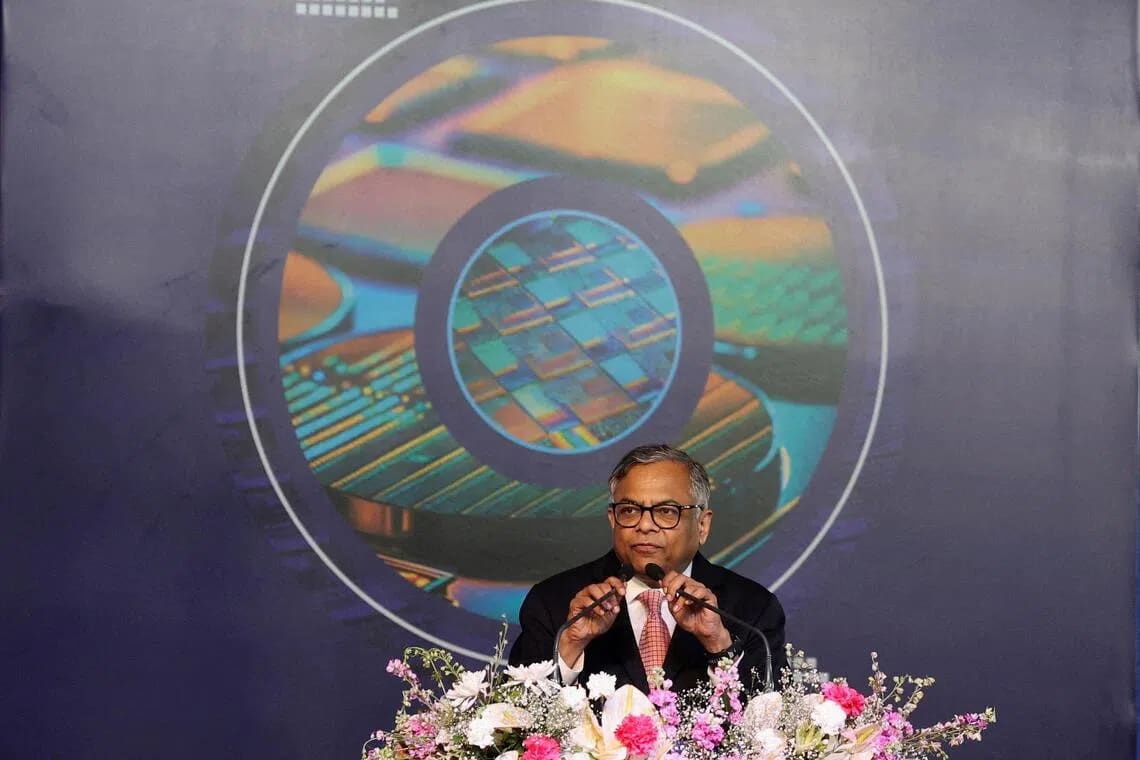
Shares of Tata Group companies tumbled more than 5% on August 12, pulling down India's benchmark indices after Chairman N. Chandrasekaran confirmed he will not pursue reappointment when his current term concludes in February 2027. The selloff rippled through the conglomerate's listed entities, with Tata Consultancy Services bearing the heaviest losses at 5.3%, making it the largest decliner on the Nifty 50 index.
Tata Motors, the parent company of Jaguar Land Rover, dropped 3.3%, while luxury goods retailer Titan and steelmaker Tata Steel each slid more than 2%. The decline accelerated after Chandrasekaran's formal statement, compounding losses that had already begun on earlier reports of his potential departure.
Chandrasekaran cited insufficient board backing as the reason for stepping down, following sustained friction with Tata Trusts, the philanthropic entity that holds a 66% stake in Tata Sons. The holding company oversees more than 30 operating businesses spanning information technology, automotive manufacturing, aviation, and heavy industry.
Underlying Tensions Surface
Disagreements between Chandrasekaran and Tata Trusts have centered on several operational and strategic matters. Chief among them has been the question of listing Tata Sons publicly, mounting losses at Air India, the planned departure of a minority investor, and questions around board composition and representation.
A person familiar with the chairman's decision confirmed that these disputes were the direct catalyst for his resignation. The conflicts have played out against a backdrop of operational challenges across the group's portfolio companies. Air India has faced heightened regulatory scrutiny following a fatal crash, while TCS has contended with pricing headwinds in its core markets. Jaguar Land Rover suffered a cyberattack that disrupted production lines and contributed measurably to a dip in Britain's GDP figures.
Performance Divergence Across Units
The listed Tata entities have posted mixed results in 2026. TCS shares have fallen 26.55% year-to-date, reflecting the pressures on India's IT services sector. Tata Motors has declined 8.5%, weighed down by supply chain disruptions and softening demand in key export markets. In contrast, Tata Steel has gained 2.6%, and Titan has surged 23.7%, buoyed by resilient domestic consumer spending on jewelry and watches.
The divergence underscores the complexity of managing a conglomerate whose businesses span vastly different cycles and risk profiles. Chandrasekaran has led Tata Sons since early 2017, navigating the group through a prior governance crisis involving former chairman Cyrus Mistry.
Analysts Anticipate Continuity
Mumbai-based market analyst Ambareesh Baliga characterized the market response as a reflexive reaction to leadership uncertainty rather than a fundamental reassessment of the group's prospects. He noted that Tata Group has weathered similar periods of transition, including when Ratan Tata assumed leadership in the early 1990s and during the boardroom battle with Mistry.
"Once the new chairperson is announced, it would be back to business as usual," Baliga said. The expectation among observers is that Tata Trusts will move quickly to identify a successor, minimizing the period of ambiguity that can unsettle investors and employees alike.
The conglomerate's scale and diversification have historically provided ballast during executive transitions. Tata Sons controls businesses with combined annual revenues exceeding $100 billion, employing hundreds of thousands across manufacturing, services, and hospitality.
What Comes Next
The search for Chandrasekaran's replacement will likely focus on candidates with experience managing large, multi-business organizations and navigating the unique governance structure imposed by Tata Trusts' majority ownership. The new leader will inherit unresolved issues, including the strategic direction for Air India, the timing and feasibility of a Tata Sons IPO, and the need to restore growth momentum at TCS amid a cooling global technology spending environment.
Investor attention will remain fixed on how quickly the succession process unfolds and whether the incoming chairman can bridge the differences that led to Chandrasekaran's exit. For now, the market is pricing in uncertainty, but the group's track record suggests that institutional resilience may again carry the day.
RELATED STORIES
India Draws Capital as Asia's AI Stock Rally Stalls
Priyanka V. Rao · 3 min

Manipal Health Jumps 13% on Debut After $975 Million India IPO
Priyanka V. Rao · 3 min
Tata Sons Chairman Chandrasekaran Won't Seek New Term Amid Charity Arm Dispute
Priyanka V. Rao · 3 min
Renminbi Faces Upward Pressure After US-Japan Yen Intervention
Cheng Wei-Lun · 3 min
Spot something wrong? Email editor@briefasia.com. We log every correction publicly.