Asia · Business
Tata Sons Chairman Chandrasekaran Won't Seek New Term Amid Charity Arm Dispute
Six-month board stalemate over reappointment signals deepening rift between Tata's operating company and its controlling charitable trust
KEY TAKEAWAYS
- ·N Chandrasekaran will step down as Tata Sons chairman in February after a six-month board deadlock with Tata Trusts, which controls 66 percent of the holding company.
- ·Disputes over a potential public listing, Air India losses, and board composition drove the rift between Chandrasekaran and the charitable trust led by Noel Tata.
- ·TCS shares fell 5.1 percent and Tata Motors dropped 2.5 percent following the announcement, as the group faces operational pressures at Air India, Jaguar Land Rover, and its electronics arm.
Board Deadlock Forces Exit
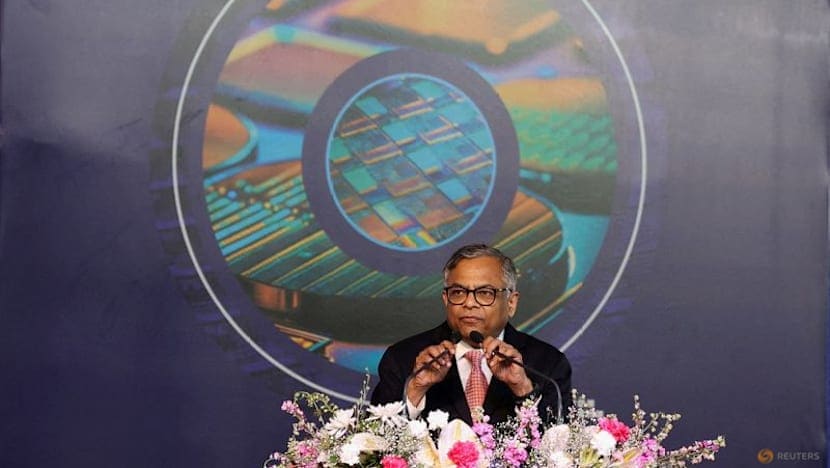
N Chandrasekaran announced Wednesday he will not seek reappointment as chairman of Tata Sons when his term ends in February, citing a lack of board support after six months of unresolved tensions with Tata Trusts, the charitable arm that holds 66 percent of the holding company.
The 63-year-old executive said clarity on leadership had become critical for employees, investors, and partners as strategic projects reached pivotal execution stages. Chandrasekaran will remain in his role until February to ensure continuity across the conglomerate's operations.
According to Tata Sons, the board postponed a decision on Chandrasekaran's reappointment in February after Noel Tata, chairman of Tata Trusts, opposed the move. The standoff has persisted for half a year without resolution, forcing Chandrasekaran's hand.
Flashpoint in a Storied Conglomerate
The dispute centers on several operational and governance issues. Disagreements between Chandrasekaran and Tata Trusts have intensified over whether Tata Sons should pursue a public listing, how to manage mounting losses at Air India, the handling of a minority shareholder's planned exit, and board composition.
This is not the first time friction between Tata Sons and its charitable parent has shaken the 158-year-old empire. In 2016, the board ousted then-chairman Cyrus Mistry after he clashed with group patriarch Ratan Tata, who led the charitable trust, over corporate governance practices.
Tata Sons controls more than 30 operating companies spanning IT services (TCS), automotive (Tata Motors), steel, aviation, and consumer goods. In the most recent financial year, Tata Group entities generated combined revenue of $185 billion. The 26 publicly listed companies held a combined market capitalization of $277 billion as of March 31.
Market Reaction and Operational Pressures
Equity markets reacted sharply to the news. TCS, where Chandrasekaran spent his entire pre-chairman career, fell 5.1 percent. Tata Motors, parent of Jaguar Land Rover, dropped 2.5 percent, while Tata Steel and jewelry brand Titan each declined roughly 2 percent.
The leadership vacuum arrives at an especially challenging moment for the group. Air India, acquired by Tata in 2021, continues to post significant losses and faces regulatory scrutiny following a fatal crash. Jaguar Land Rover has seen sales decline sharply amid pricing pressure and a cyberattack that disrupted production and impacted Britain's economic output. Tata's electronics arm recently suffered a data breach affecting major clients Apple and Tesla.
A Career Built Inside Tata
Chandrasekaran joined Tata Group in 1987 as an intern at TCS and rose through the ranks to become CEO of the IT giant in 2009. He took over as chairman of Tata Sons in 2017, becoming the first non-Parsi to lead the holding company. The Tata family descends from Persian Zoroastrians who arrived in India in the eighth century.
A source with direct knowledge of the decision confirmed that tensions with Tata Trusts were the sole driver of Chandrasekaran's resignation.
What Comes Next
Tata Sons has not announced a succession process or timeline. The leadership transition will test the conglomerate's ability to maintain strategic momentum across its portfolio while navigating operational challenges at several flagship businesses.
The outcome will also clarify whether the charitable trust intends to assert tighter control over operating decisions or seeks a chairman willing to align more closely with its governance preferences. For a group whose products range from table salt to luxury cars and five-star hotels, the stakes extend well beyond the boardroom.
RELATED STORIES
Tata Group Shares Sink More Than 5% Following Chandrasekaran Resignation
Priyanka V. Rao · 3 min
Honda Taps Tata Technologies for Vehicle Platform Development
Priyanka V. Rao · 3 min
Gautam Adani Secures Dismissal of U.S. Securities Fraud Case
Priyanka V. Rao · 3 min
Honda Turns to Tata Technologies for Vehicle Development in India Cost Push
Priyanka V. Rao · 4 min
Spot something wrong? Email editor@briefasia.com. We log every correction publicly.