Finance · Markets
India Draws Capital as Asia's AI Stock Rally Stalls
Foreign investors rotate into Indian equities after months of favoring South Korea and Taiwan's semiconductor-heavy markets, as concerns mount over AI capital expenditure returns.
KEY TAKEAWAYS
- ·India's benchmark stock index has gained 5 percent since mid-June as foreign investors rotate out of South Korea and Taiwan's AI-heavy markets, purchasing $1.7 billion of Indian equities in early July after selling $29 billion in the first half of 2026.
- ·First-quarter real GDP growth of 7.8 percent and policy changes exempting foreign holders of government securities from withholding and capital gains taxes are attracting renewed foreign portfolio inflows to Indian equities and fixed income.
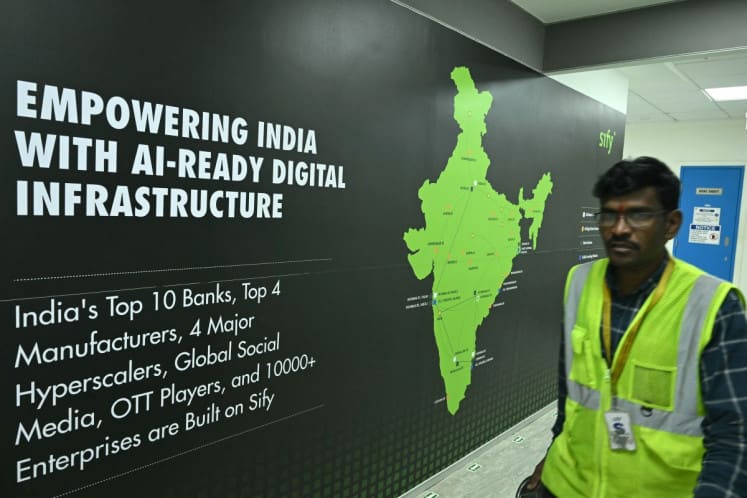
- ·Global technology firms including Google, Microsoft, Amazon, Adani Group and Blackstone have committed over $187 billion in AI infrastructure investment in India over the next five years, positioning the country as a major deployment hub rather than an AI supply chain participant.
Portfolio Shift Underway
Foreign investors are redirecting capital toward Indian equities after months of concentrating on South Korea and Taiwan's technology-heavy markets. India's benchmark stock index has risen 5 percent since mid-June, while equities in Seoul and Taipei have declined during the same period.
The reversal follows growing uncertainty about the profitability of large-scale artificial intelligence infrastructure investments. South Korea and Taiwan's indices had surged approximately 90 percent and 80 percent respectively over the previous 12 months, driven by exposure to semiconductor manufacturing and AI hardware. India's market fell 5 percent during that same period, reflecting limited direct participation in AI supply chains.
Foreign portfolio investors sold $29 billion of Indian equities in the first half of 2026 but reversed course in July, purchasing $1.7 billion in the opening weeks of the month. Fixed-income inflows had already resumed in June, responding to policy changes that exempted foreign holders of government securities from withholding and capital gains taxes.
Domestic Fundamentals Improve
India's first-quarter real GDP growth reached 7.8 percent on an annualized basis, prompting expectations that the economy will exceed the World Bank's 6.6 percent and the International Monetary Fund's 6.4 percent projections for 2026. Bank lending and fixed-asset investment have accelerated, signaling stronger consumption and capital formation.
Consensus earnings-per-share estimates for Indian financials, telecommunications, process industries, consumer services and basic materials have been revised upward over the past month, according to FactSet data. The upgrades end a two-year pattern of consistent downgrades across these sectors.
The government has also introduced measures to mobilize an estimated $50 billion in deposits from non-resident Indians by reducing foreign exchange hedging costs for commercial banks serving overseas accounts. Those inflows could help stabilize the rupee, which has depreciated 6.5 percent against the US dollar year-to-date, despite a brief 2.6 percent recovery following the March ceasefire between the United States and Iran.
Infrastructure Investment Accelerates
While India lacks the concentrated semiconductor and chip design exposure that defines Taiwan and South Korea's markets, the country is emerging as a deployment hub for AI applications. Over 40 percent of Indian employees report daily AI usage, double the global average, driven by widespread smartphone adoption and low-cost data access across a multilingual population with a median age under 30.
Global technology firms have committed substantial capital to Indian infrastructure. Google, Microsoft and Amazon plan to invest a combined $57 billion over the next five years in high-performance servers, power generation and transmission equipment, and industrial cooling systems. Adani Group has allocated $100 billion for similar infrastructure, while Blackstone has committed $30 billion.
These outlays reflect the scale opportunity in the world's most populous country, where AI adoption is expanding rapidly across urban centers. The investment pattern suggests India's market positioning may be better described as diversified technology exposure rather than an anti-AI trade.
Macro Risks Persist
The rupee fell sharply in early July when military conflict resumed between the United States and Iran, accompanied by a 30 percent surge in Brent crude prices. Energy price volatility poses ongoing risk for India as a large net importer. Crude prices have since retreated, but a durable resolution to Middle East tensions remains elusive.
Consumer price inflation reached 4.4 percent in June, above the Reserve Bank of India's 4 percent medium-term target. Food prices drove the increase, and a weak monsoon season threatens to intensify inflationary pressure. Sustained price gains could prompt the central bank to begin raising interest rates.
Whether the recent capital rotation into Indian equities marks a durable shift will depend on the trajectory of AI-concentrated markets in Northeast Asia and how geopolitical and commodity price developments affect India's growth outlook in the months ahead.
RELATED STORIES

Manipal Health Jumps 13% on Debut After $975 Million India IPO
Priyanka V. Rao · 3 min
Asian Equities Climb as Tech Rebound Steadies After Month of Volatility
Cheng Wei-Lun · 3 min

Zepto Shelves IPO Plans as India's Quick Commerce Faces Profitability Test
Priyanka V. Rao · 3 min

Franklin Templeton Restructures Leadership With Two Senior Appointments
Priyanka V. Rao · 4 min
Spot something wrong? Email editor@briefasia.com. We log every correction publicly.