Finance · Deals
Zepto Shelves IPO Plans as India's Quick Commerce Faces Profitability Test
The Mumbai-based delivery startup's decision underscores mounting investor skepticism about ultrafast grocery platforms burning cash to win market share
KEY TAKEAWAYS
- ·Zepto has postponed its initial public offering after reporting fiscal year losses of 59 billion rupees, a 25 percent increase from the prior year.
- ·The decision reflects growing investor skepticism about quick commerce unit economics, as companies struggle to balance ultrafast delivery promises with profitability.
- ·Intensifying competition from Blinkit, Swiggy Instamart, and Amazon is forcing sustained cash burn to retain customers in a market with negligible switching costs.
A Delayed Debut
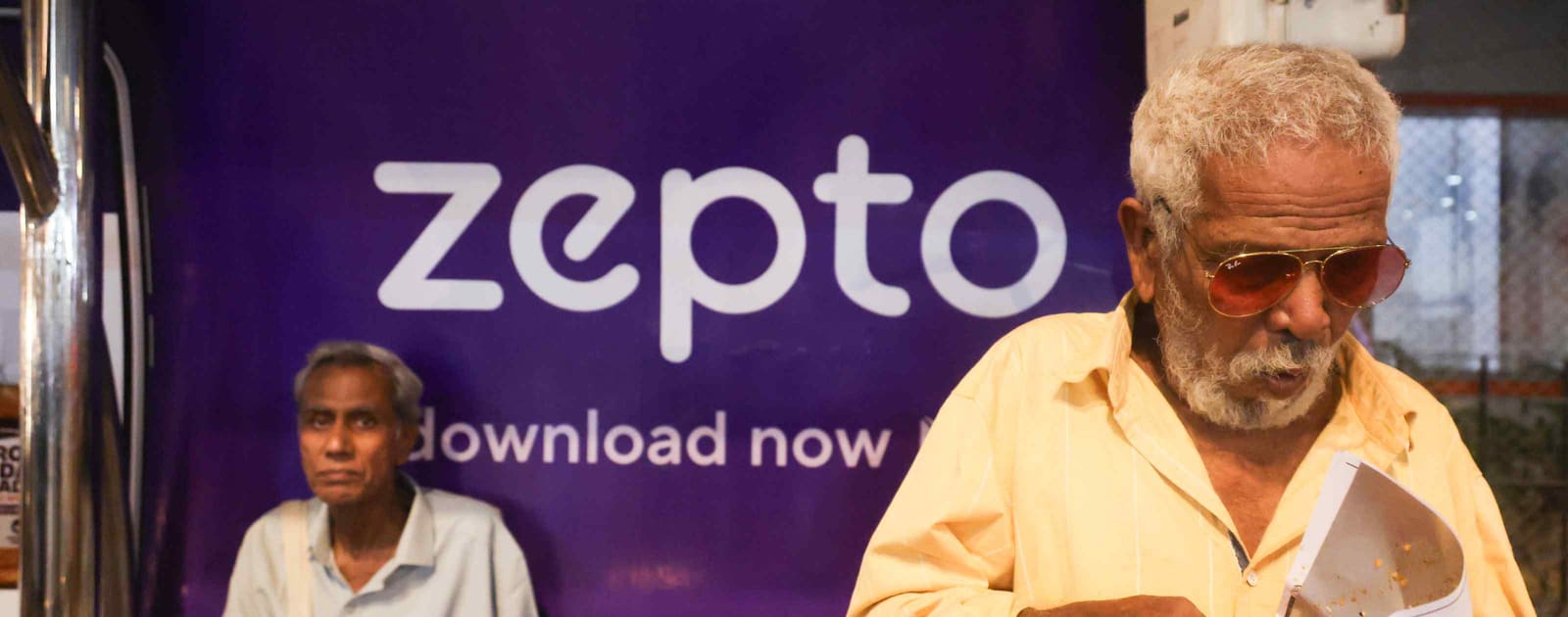
Zepto has put its initial public offering on hold, marking a notable reversal for one of India's most prominent quick commerce startups. The decision comes as the company grapples with mounting losses and faces intensifying scrutiny over the long-term viability of its business model.
The Mumbai-based platform, which promises grocery deliveries within ten to fifteen minutes, saw its losses climb 25 percent year-on-year to 59 billion rupees (approximately $620 million) in the fiscal year ending March, according to company filings. That figure has raised red flags among institutional investors who had been expected to anchor the listing.
Quick commerce has emerged as one of India's most competitive retail battlegrounds, with Zepto competing against well-funded rivals including Swiggy Instamart, Zomato's Blinkit, and e-commerce giant Amazon's rapid delivery service. All are racing to build dense networks of dark stores in urban centers, subsidizing deliveries and offering discounts to capture market share.
The Unit Economics Challenge
The sector's core challenge lies in its unit economics. Operating profitably on orders averaging 300 to 500 rupees while maintaining sub-fifteen-minute delivery windows requires extraordinary operational efficiency. Companies must balance the cost of maintaining hyperlocal inventory across hundreds of micro-warehouses, paying delivery personnel, and absorbing customer acquisition expenses.
Zepto's widening losses suggest those economics remain elusive at scale. The company has been expanding its dark store footprint aggressively, opening facilities in tier-two cities beyond its initial metro focus. But that geographic expansion has come with steep infrastructure and logistics costs that revenues have not yet covered.
Investor appetite for loss-making growth stories has cooled considerably since the funding exuberance of 2021 and early 2022. Public market investors, in particular, have shown reluctance to back companies without clear paths to profitability, especially in sectors where competitive intensity shows no sign of abating.
Competitive Pressure Mounts
The quick commerce space has become increasingly crowded. Zomato's Blinkit has been scaling rapidly, backed by the parent company's willingness to fund expansion. Swiggy, which filed for its own IPO earlier this year, has made Instamart a central pillar of its growth strategy. Both benefit from existing food delivery infrastructure and customer bases that Zepto must build from scratch.
Meanwhile, traditional e-commerce players are testing rapid delivery models, and even brick-and-mortar retailers are experimenting with ultrafast fulfillment. The result is a market where customer loyalty remains low, switching costs are negligible, and differentiation hinges primarily on delivery speed and discount depth rather than sustainable competitive advantages.
This dynamic has forced Zepto and its rivals into a subsidy war that shows little sign of ending. Achieving the density needed for profitable operations requires critical mass in each micro-market, but reaching that threshold demands continued cash burn to retain customers and fend off competitors.
The Innovation Debate
The IPO setback arrives against the backdrop of broader questions about the nature of innovation in India's startup ecosystem. At an industry event last year, a senior government official questioned whether the country's entrepreneurial talent was being channeled into ventures with genuine technological depth or merely replicating Western business models in local contexts.
One of Zepto's co-founders responded publicly to those remarks, defending quick commerce as a legitimate innovation addressing real consumer needs in densely populated Indian cities. The exchange highlighted tensions between policymakers seeking deep-tech breakthroughs and entrepreneurs pursuing immediate market opportunities.
Yet the profitability struggles facing Zepto and its peers lend weight to concerns about sustainability. Unlike semiconductor manufacturing or advanced materials research, quick commerce offers limited intellectual property moats or technology barriers to entry. Success depends more on execution, capital availability, and the willingness to outlast competitors in a war of attrition.
What Comes Next
Zepto's postponed listing does not signal the end of its ambitions, but it does impose constraints. Without access to public market capital, the company will need to rely on private funding rounds to sustain operations and expansion. That may mean accepting higher valuations scrutiny and more stringent milestones from venture investors who themselves face pressure to demonstrate returns.
The broader quick commerce sector faces a reckoning. For the model to prove viable, at least one major player must demonstrate that unit economics can work at scale without perpetual subsidies. Until that happens, investor enthusiasm will remain tempered, and the path to public markets will stay uncertain for companies in this space.
India's urban consumers have embraced the convenience of ten-minute grocery delivery, but whether the startups providing that service can build sustainable businesses remains an open question. Zepto's IPO delay is the latest signal that the answer is not yet clear.
RELATED STORIES

Manipal Health Jumps 13% on Debut After $975 Million India IPO
Priyanka V. Rao · 3 min

Franklin Templeton Restructures Leadership With Two Senior Appointments
Priyanka V. Rao · 4 min
India Draws Capital as Asia's AI Stock Rally Stalls
Priyanka V. Rao · 3 min
Asian Equities Climb as Tech Rebound Steadies After Month of Volatility
Cheng Wei-Lun · 3 min
Spot something wrong? Email editor@briefasia.com. We log every correction publicly.