Finance · Markets
Asian Equities Climb as Tech Rebound Steadies After Month of Volatility
Seoul's chip giants lead regional gains while oil recovers from Monday selloff amid US-Iran diplomatic uncertainty
KEY TAKEAWAYS
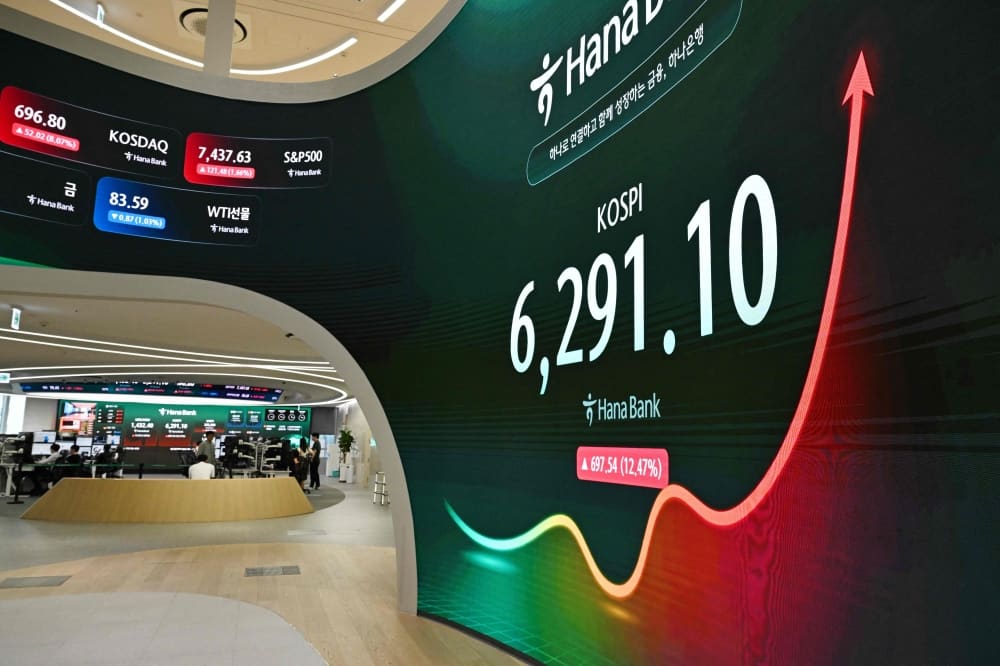
- ·Seoul's Kospi climbed over one percent Tuesday as SK hynix and Samsung recovered, following a month in which the benchmark dropped 17 percent in three days then surged 18 percent.
- ·Oil prices rose roughly one percent after Monday's five percent decline, driven by conflicting signals on US-Iran talks over reopening the Strait of Hormuz, which handles a fifth of global oil flows.
- ·Investors are focused on SpaceX earnings this week and upcoming US jobs data that will inform Federal Reserve interest rate decisions amid debate over economic slowdown depth.
Tech Rally Anchors Regional Gains
Asian equity markets rose Tuesday, extending Wall Street's momentum as semiconductor stocks clawed back losses from a bruising month-long selloff. Seoul's Kospi climbed more than one percent, buoyed by SK hynix and Samsung Electronics, both of which had been at the center of a sharp correction in AI-exposed names.
Tokyo's benchmark advanced on strength in Kioxia and Tokyo Electron, while Shanghai, Sydney, Singapore, Wellington, Bangkok, and Jakarta all closed higher. European bourses in London, Paris, and Frankfurt opened in positive territory. Hong Kong, Taipei, Mumbai, and Manila edged lower.
The session followed a record close for the Dow Jones Industrial Average, which crossed fresh highs Monday after Amazon surged past the $3 trillion market capitalization threshold. The e-commerce and cloud computing giant's rally helped ease investor anxiety over the scale of capital expenditure flowing into artificial intelligence infrastructure.
Seoul's benchmark has whipsawed in recent sessions, dropping approximately 17 percent over three days last week before surging nearly 18 percent Friday, then retreating Monday. The Tuesday advance suggests some stabilization, though sentiment remains fragile.
Earnings and Economic Data in Focus
Market participants are now awaiting earnings from SpaceX later this week, alongside US employment figures that will offer fresh insight into the Federal Reserve's interest rate trajectory. The jobs report is expected to clarify whether the American economy is experiencing a measured slowdown or facing deeper structural weakness.
According to SPI Asset Management, corporate earnings remain supportive and AI infrastructure investment shows no sign of abating, while the US economy appears to be slowing at the margins rather than entering a sharp contraction. The combination provides a more credible foundation for the recent rebound, though volatility is likely to persist.
Oil Edges Higher on Strait of Hormuz Signals
Crude prices rose around one percent Tuesday after tumbling five percent the previous session. West Texas Intermediate traded at $80.78 per barrel, while Brent North Sea Crude climbed 1.4 percent to $84.93.
The recovery followed mixed signals on US-Iran negotiations over the Strait of Hormuz, the chokepoint through which a fifth of global oil and liquefied natural gas transit. US President Donald Trump told reporters Monday that talks were ongoing and that reopening the waterway could happen "literally by tomorrow," with denuclearization discussions to follow over a longer timeframe.
Iran's foreign ministry denied Monday that direct negotiations with Washington were taking place, though Trump insisted otherwise. Tehran confirmed it was in separate talks with Oman to secure passage through the strait.
Trump had previously threatened what he described as "the biggest attack since World War II" against Iran, but pulled back from that stance over the weekend, contributing to Monday's oil price decline.
Currency Markets Adjust After Intervention
The yen weakened to 157.79 against the dollar, retreating from the sharp gains that followed a rare joint intervention by Japanese and US authorities Friday. The currency had strengthened from a four-decade low near 163 per dollar to 155.23 by Monday, its strongest level since May, before giving back some of those gains.
Finance ministers from both countries pledged continued support for the yen, signaling that coordinated action remains on the table if further depreciation threatens financial stability.
The euro slipped to $1.1511, while the pound edged up to $1.3437. European equity indices tracked Asian gains, with London's FTSE 100 rising 0.4 percent to 10,899.29 in morning trading.
Outlook Remains Uncertain
Despite Tuesday's advance, the past month has delivered exceptional volatility across equity and commodity markets. Technology stocks, particularly those tied to artificial intelligence, have experienced sharp drawdowns as investors reassess valuations and capital intensity. The semiconductor sector, concentrated in South Korea, Taiwan, and Japan, has borne the brunt of the correction.
Geopolitical risk around the Strait of Hormuz continues to inject uncertainty into energy markets, with crude prices liable to swing on diplomatic developments. The trajectory of US monetary policy, clarified by incoming labor market data, will shape risk appetite in the weeks ahead.
For now, regional markets are finding footing after a disorienting stretch, though the underlying drivers of volatility have not dissipated.
RELATED STORIES
Seoul Stocks Drop on Mideast Tensions and Oil Price Surge
Tran Quoc Bao · 3 min

Japan Deploys $96.5 Billion in Currency Intervention to Halt Yen's Slide
Aiko Nakamura · 3 min

Samsung Electronics Drops 8% as Market Questions Buyback Strategy
Cheng Wei-Lun · 2 min

LG Pivots to AI-Defined Vehicle Platform as Korea Chases China's Self-Driving Lead
Jun-ho Seo · 3 min
Spot something wrong? Email editor@briefasia.com. We log every correction publicly.