Asia · Trade
Singapore Tightens Transshipment Rules Amid US Tariff Scrutiny
The city-state reaffirms zero tolerance for fraudulent origin declarations after White House report flags it as part of China's rerouting network
KEY TAKEAWAYS
- ·Singapore's Ministry of Trade and Industry requires accurate country-of-origin declarations for all transshipped goods, with penalties for violations under the Customs Act and Regulation of Imports and Exports Act.
- ·A White House report estimates tariff-evading transshipments range from $40 billion to $303 billion annually and names Singapore in Tier 3 of a shadow transshipment network alongside Cambodia, Laos, Myanmar, and the Philippines.
- ·Singapore charged a company and three individuals on 14 August for allegedly falsifying bedding product origins bound for the US, signaling firm enforcement to protect its trade hub reputation.
Singapore Draws a Line on Trade Fraud
Singapore's Ministry of Trade and Industry issued a clear warning on 15 August: companies routing goods through the city-state must accurately declare their true country of origin or face enforcement action. The statement came two days after the White House released a report naming Singapore among roughly 40 economies at risk of facilitating Chinese exports designed to sidestep US tariffs.
The ministry underscored that Singapore's competitive edge rests on rule of law, transparent regulation, and zero tolerance for fraud. "Singapore does not condone businesses using their association with Singapore and using fraudulent and dishonest means to circumvent or violate the laws and regulations of other countries," the ministry said.
Companies engaged in transshipment - moving goods through Singapore without substantial transformation - are governed by the Regulation of Imports and Exports Act 1995 and the Strategic Goods (Control) Act 2002. A June 2025 Singapore Customs circular reminded all traders and declaring agents that permit applications must contain accurate country-of-origin data; false declarations constitute an offence and trigger penalties under the Customs Act.
Traders are required to retain purchase, import, sale, and export documents, including proof of origin, for at least five years from the date a permit is approved.
The White House Accusation
The White House report, titled "The Great Transshipment Scam," alleged that Chinese exporters have rerouted goods through intermediate jurisdictions to mask their origin and avoid tariffs imposed in 2018. According to the administration, China's share of US goods imports fell after the levies took effect, while imports from transshipment hubs climbed in tandem.
The report acknowledged that some of the shift reflects legitimate changes in production and sourcing, but the timing and scale warrant investigation. Drawing on government and private-sector estimates, the White House put the range of potential tariff-evading transshipments at between $40 billion and $303 billion per year.
Washington grouped the flagged economies into three tiers. Tier 1 - comprising Canada, the European Union, India, Israel, Japan, and Taiwan - represents major export platforms where transshipment risk is embedded in broad legitimate flows. Tier 2 includes Brazil, Indonesia, Malaysia, Thailand, Turkey, and Vietnam, all of which have significant economic integration with China.
Singapore landed in Tier 3, described as "small, opportunistic Chinese targets." Others in this bracket include Cambodia, Laos, Myanmar, and the Philippines. The report characterized Tier 3 jurisdictions as smaller economies with niche advantages such as free zones, bonded warehousing, and limited customs enforcement capacity that make them attractive for rerouting.
The administration said it will deploy an artificial intelligence-powered "Detective Border" system, among other tools, to identify illegal transshipments. In August 2025, the US announced an additional 40 percent tariff on goods found to have been illegally transshipped.
Enforcement in Action
Singapore pointed to a recent case to illustrate its commitment. On 14 August, authorities charged a Singapore-registered company and three individuals - two Singaporean residents and one Chinese national - for allegedly falsifying the origin of bedding products destined for the US. The investigation began in February 2026.
The ministry did not disclose the potential penalties, but the move signals that Singapore intends to protect its reputation as a trusted trade hub. The city-state handles a significant volume of re-exports, much of it legitimate transshipment that involves no processing or assembly, and any perception of lax enforcement could jeopardize bilateral trade relationships.
Regional Implications
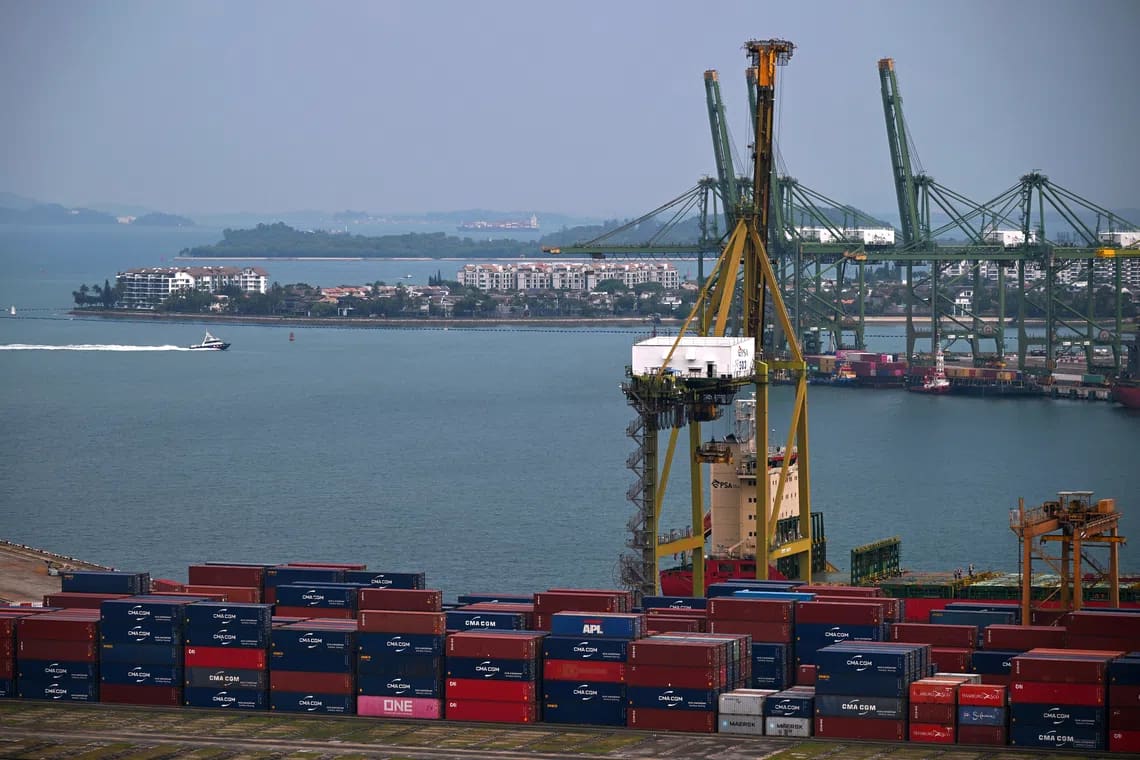
Singapore's position in the Tier 3 category is notable given its role as Southeast Asia's logistics and financial nerve center. The port of Singapore is one of the world's busiest, handling containerized cargo from across Asia. While the White House framed Tier 3 as "opportunistic," the reality is that Singapore's infrastructure, legal framework, and connectivity make it a natural hub for regional trade.
Other Southeast Asian economies named in the report - Cambodia, Laos, Myanmar, Thailand, Vietnam - face similar scrutiny. Vietnam, in particular, has seen a surge in foreign direct investment from Chinese manufacturers seeking to diversify supply chains. The question for regional policymakers is whether tighter US enforcement will accelerate factory relocations or simply prompt more sophisticated compliance regimes.
For Singapore, the calculus is straightforward: maintain stringent enforcement to preserve its standing with both Washington and Beijing, even as the two powers compete for influence in Asia. The ministry's statement and the August charges suggest the government is prepared to prosecute violations, a stance consistent with its broader regulatory philosophy.
What Comes Next
The White House report did not outline immediate policy changes beyond the existing 40 percent surcharge on confirmed illegal transshipments. However, the deployment of AI-powered customs tools and the public naming of dozens of economies indicate that Washington intends to sustain pressure on intermediary jurisdictions.
For firms operating in Singapore, the message is unambiguous: due diligence on country-of-origin documentation is no longer optional. Companies that fail to verify the provenance of goods face not only Singaporean penalties but also the risk of punitive US tariffs and reputational damage.
Singapore's dual emphasis on rule of law and international reputation means it is unlikely to tolerate practices that undermine either. As US-China trade tensions continue, the city-state's role as a neutral, compliant hub will be tested, but its regulatory track record suggests it will prioritize enforcement over short-term commercial gain.
RELATED STORIES
Asian Routes Become Conduit for Billions in Tariff Evasion
Cheng Wei-Lun · 3 min
ComfortDelGro Pivots to Premium Transport as Taxi Profits Slide 40 Percent
Priyanka V. Rao · 3 min
Singapore Rolls Out Cash Payouts to 2.4 Million Citizens Amid Rising Costs
Priyanka V. Rao · 3 min
Guocoland Malaysia Set to Exit Bursa Securities This Week
Priyanka V. Rao · 3 min
Spot something wrong? Email editor@briefasia.com. We log every correction publicly.