Asia · Business
ComfortDelGro Pivots to Premium Transport as Taxi Profits Slide 40 Percent
Singapore's largest land transport operator reports a 19.7 percent drop in first-half profit, betting its future on corporate contracts and autonomous vehicles rather than competing head-on with ride-hailing apps
KEY TAKEAWAYS
- ·ComfortDelGro reported net profit of S$85.1 million for H1 2026, down 19.7 percent, as its taxi and private hire operating profit fell more than 40 percent to S$35.5 million.
- ·The company is shifting strategy away from competing with ride-hailing platforms on volume, targeting premium travelers, hospital transfers, and corporate contracts in Europe, the UK, and Australia instead.
- ·ComfortDelGro plans to enter the Beijing or Shenzhen autonomous vehicle market later this year, building on a sandbox program in Guangzhou launched in March 2025.
The Numbers Tell a Harder Story
ComfortDelGro posted a net profit of S$85.1 million for the six months ending June 30, 2026, down 19.7 percent from S$106 million in the same period last year. Revenue climbed 5.7 percent to S$2.6 billion, driven largely by international public transport operations across Australia, New Zealand, the United Kingdom, Sweden, and France, according to the company.
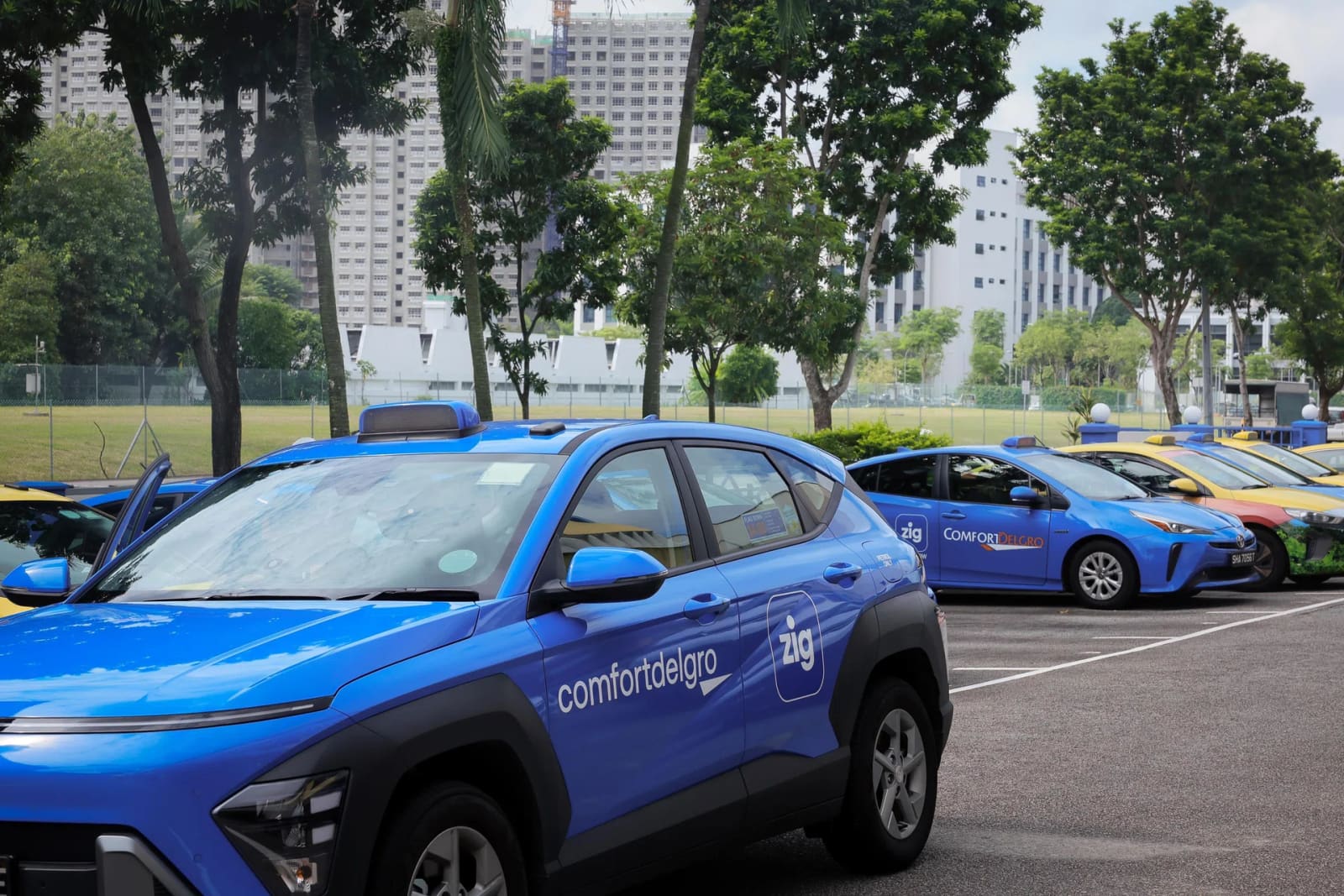
The real trouble sits in the taxi and private hire division. Operating profit in that segment dropped more than 40 percent year on year to S$35.5 million, now representing just under a quarter of group operating profit. ComfortDelGro cited cost-of-living pressures and travel disruptions linked to conflict in the Middle East as contributing factors. The company operates taxi and private hire services in Singapore, China, Australia, and the UK.
Public transport, by contrast, delivered operating profit of S$79.7 million, up 4 percent and accounting for 55.9 percent of the group total. But margins in that segment remain in the mid-single digits, while taxi and private hire historically deliver mid-teens margins, making the latter far more valuable per dollar of revenue.
The board declared an unchanged interim dividend of S$0.0391 per share. Shares closed flat at S$1.35 on August 14 ahead of the results announcement; the stock is down 9 percent year to date.
A Strategy Pivot, Not a Retreat
CEO Cheng Siak Kian made clear that the company has abandoned any ambition to match ride-hailing platforms on vehicle count. Instead, ComfortDelGro is carving out niches where a traditional operator's scale and reliability matter more than app interfaces and surge pricing.
"We're not looking to compete with ride-hailing platforms in terms of the number of vehicles they have, but what we want to do is to be very focused on the specific areas we do well," Cheng said.
Those specific areas include premium traveler segments, hospital transfers, and corporate contracts in Europe, the UK, and Australia. Recent acquisitions position the group to execute that playbook. Addison Lee, a UK black cab operator, and CMAC, a ground transport and accommodation specialist serving airlines, are being integrated so that CMAC's airline crew transfer contracts can flow directly to Addison Lee's fleet. Addison Lee also holds contracts with corporations for airport-to-hotel transfers, and the company is actively pursuing more.
In Australia, ComfortDelGro runs a2b, the country's largest taxi network with roughly 7,500 vehicles including premium cabs. The company sees opportunity to replicate the Europe and UK strategy, particularly by working with medical providers to handle hospital transfers.
Singapore's Shifting Driver Economics
The home market presents its own complications. Cheng acknowledged that driver preferences in Singapore are changing, and the company has responded by expanding its private car rental fleet as demand for traditional taxi rentals slows. ComfortDelGro's private hire driver base on its Zig platform grew 28 percent over the past year, surpassing 4,000 active drivers.
Cheng framed these moves as early steps in a transformation that could take up to 36 months to fully play out.
Autonomous Vehicles Enter the Mix
ComfortDelGro is also accelerating its push into autonomous vehicles. The company has been running a sandbox program in Guangzhou since March 2025 and plans to enter either the Beijing or Shenzhen market later this year.
Cheng argued that ComfortDelGro's experience managing large fleets and the supporting infrastructure gives it an edge in the emerging AV market. The company views its pure-play transport operator status as a structural advantage over tech-first competitors who lack hands-on fleet operations experience.
The Margin Imperative
The strategic shift is driven by cold arithmetic. Public transport contracts deliver stable, recurring revenue but razor-thin margins. Taxi and private hire, despite current headwinds, offer significantly higher returns when operating conditions normalize and the business model adapts.
Cheng emphasized that the transformation will not happen overnight, but getting it right is essential for sustaining shareholder returns. The company is not trying to copy competitors wholesale; instead, it is identifying where its operational strengths create defensible positions in higher-margin segments.
For a company built on moving people reliably and at scale, the next three years will test whether those core competencies translate into premium markets that ride-hailing apps have largely overlooked.
RELATED STORIES

Guocoland Malaysia Set to Exit Bursa Securities This Week
Priyanka V. Rao · 3 min

Indonesia's Food Exports Reach $6.25 Billion, Fourth in ASEAN Behind Thailand and Vietnam
Siti Nuraini · 3 min

Singapore Rolls Out Cash Payouts to 2.4 Million Citizens Amid Rising Costs
Priyanka V. Rao · 3 min
Singapore's SBS Transit Posts Flat Half-Year Earnings as Energy Bills Surge
Lim Hui Ying · 5 min
Spot something wrong? Email editor@briefasia.com. We log every correction publicly.