Sustainability · Energy
Gates-Backed TerraPower Pulls Korean Firms Into Small Nuclear Reactor Supply Chain
The Microsoft co-founder's Seoul visit last week resulted in new agreements with SK Innovation and HD Hyundai, signaling deeper Korean involvement in the emerging SMR market
KEY TAKEAWAYS
- ·TerraPower signed preliminary joint development agreements with SK Innovation and held discussions with HD Hyundai during Bill Gates' visit to Seoul last week.
- ·South Korea operates 26 commercial nuclear reactors but has limited private-sector involvement in the small modular reactor segment, which has yet to achieve commercial scale globally.
- ·The agreements position Korean industrial conglomerates as supply-chain partners in a sector backed by billions in capital but facing regulatory hurdles and unproven economics.
Korean Industrial Groups Enter U.S. Nuclear Developer's Orbit
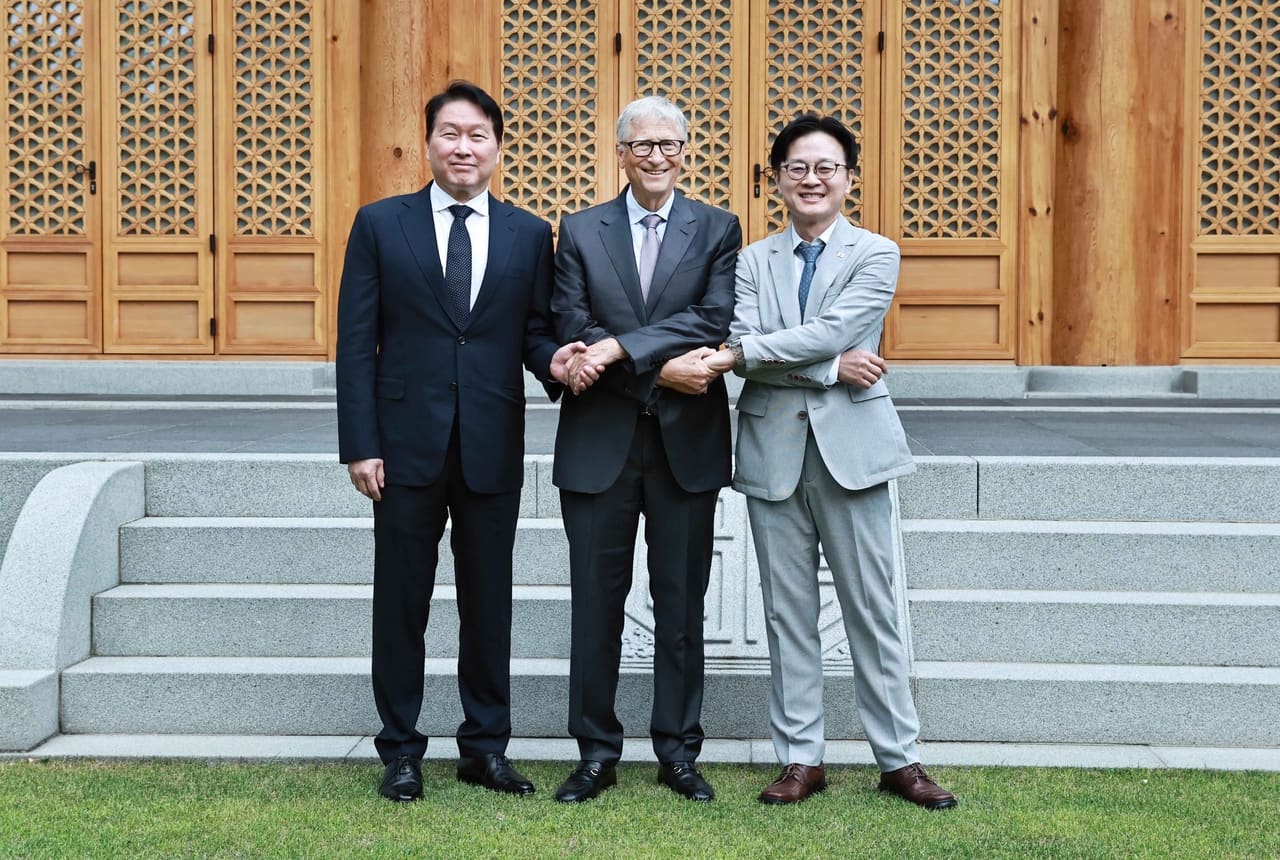
Bill Gates traveled to Seoul last week, and the trip produced a set of preliminary agreements that deepen South Korea's engagement in small modular reactor development. The TerraPower founder held meetings with senior government officials, SK Group leadership, and the head of HD Hyundai, according to TerraPower.
SK Innovation, the country's largest refiner, signed a preliminary joint development agreement with the U.S. nuclear developer. HD Hyundai also entered discussions around potential collaboration, though the scope of that involvement remains under negotiation. The agreements position Korean industrial conglomerates as supply-chain partners in a sector that has drawn billions in venture capital and government backing but has yet to deliver a commercial reactor at scale.
Seoul's Nuclear Ambitions Meet Silicon Valley Capital
South Korea operates 26 commercial nuclear reactors and exports nuclear plant construction expertise, but its presence in the SMR segment has been limited. The country's state-owned Korea Hydro & Nuclear Power has pursued its own small reactor design, yet private-sector participation has lagged behind competitors in the United States, Canada, and China.
TerraPower's outreach to SK and HD Hyundai reflects a strategic calculation. Both conglomerates control manufacturing capacity, engineering talent, and balance sheets capable of supporting multi-year development timelines. SK Innovation runs petrochemical complexes and battery production lines; HD Hyundai builds ships, offshore platforms, and industrial equipment. Neither has operated a nuclear facility, but both possess supply-chain infrastructure that translates across heavy industries.
The preliminary agreements do not specify investment amounts, delivery schedules, or the components Korean firms will manufacture. Industry observers note that early-stage SMR partnerships often involve feasibility studies, component prototyping, and regulatory groundwork rather than immediate production commitments.
A Market Still Searching for Its First Commercial Win
Small modular reactors promise lower upfront capital costs, faster construction timelines, and flexible siting compared to traditional gigawatt-scale nuclear plants. Proponents argue the technology can provide carbon-free baseload power for industrial clusters, data centers, and remote mining operations. Skeptics point to regulatory hurdles, unproven economics, and a decade-long history of delayed timelines across the sector.
TerraPower's Natrium reactor design pairs a sodium-cooled fast reactor with molten-salt energy storage. The company is constructing a demonstration plant in Wyoming, with initial operations targeted for later this decade. Gates has invested more than one billion dollars in the venture, and the U.S. Department of Energy has committed additional funding under its Advanced Reactor Demonstration Program.
No SMR design has yet achieved commercial operation at scale in a liberalized electricity market. Russia's KLT-40S floating reactors supply power to remote Arctic sites, and China has connected an experimental unit to the grid, but Western developers have struggled to move from licensing to construction. NuScale Power, the only U.S. company to receive design certification from the Nuclear Regulatory Commission, has faced project cancellations and cost overruns.
Seoul's Broader Play in Clean Energy Infrastructure
The Korean government has signaled interest in expanding nuclear capacity domestically and supporting reactor exports. President Yoon Suk Yeol's administration reversed a phase-out policy implemented by his predecessor and committed to building additional conventional reactors. Officials view nuclear power as essential to meeting industrial electricity demand while reducing reliance on imported liquefied natural gas.
SK Group and HD Hyundai both operate divisions focused on hydrogen production, carbon capture, and renewable energy. Integrating SMR supply chains into their portfolios offers a hedge against regulatory shifts in Asia and Europe, where grid decarbonization mandates are tightening. Whether those bets pay off depends on factors beyond Korean control: U.S. regulatory timelines, construction costs in Wyoming, and the willingness of utilities to sign long-term power purchase agreements for unproven technology.
Gates' visit underscores a pattern in the SMR sector. Developers with deep-pocketed backers are globalizing their supply chains early, distributing technical risk and political exposure across multiple jurisdictions. For South Korea, participation offers a potential entry point into a market that may eventually be measured in hundreds of reactors, or may remain a niche segment serving specialized industrial customers. The preliminary agreements signed last week represent an option, not a guarantee.
RELATED STORIES
Korean Conglomerates Stake Claims in TerraPower's Small Reactor Supply Chain
Cheng Wei-Lun · 3 min
South Korea Extends Fuel Price Caps as Middle East Tensions Lift Oil Markets
Cheng Wei-Lun · 3 min
Hyundai Motor Faces First Full-Day Strike in a Decade as Wage Talks Stall
Jun-ho Seo · 2 min

South Korea's Alcohol Production Hits 27-Year Low as Wellness Trends Reshape Drinking Culture
Cheng Wei-Lun · 3 min
Spot something wrong? Email editor@briefasia.com. We log every correction publicly.