Asia · Politics
Former White House Official Urges Seoul to Resist EU-Style Digital Regulation
Alexander Gray calls for deeper US-South Korea supply chain ties while warning against European regulatory approach to tech governance
KEY TAKEAWAYS
- ·Alexander Gray, former White House National Security Council chief of staff, advised South Korea to strengthen supply chain ties with the US and avoid the European Union's digital regulation model.
- ·The European Union has implemented comprehensive digital frameworks including the Digital Markets Act and AI Act, which critics argue impose compliance burdens that slow innovation and disadvantage smaller firms.
- ·South Korea faces a strategic choice between regulatory alignment with Washington and maintaining commercial flexibility with China, its largest export market, as technology decoupling accelerates.
A Call for Strategic Alignment
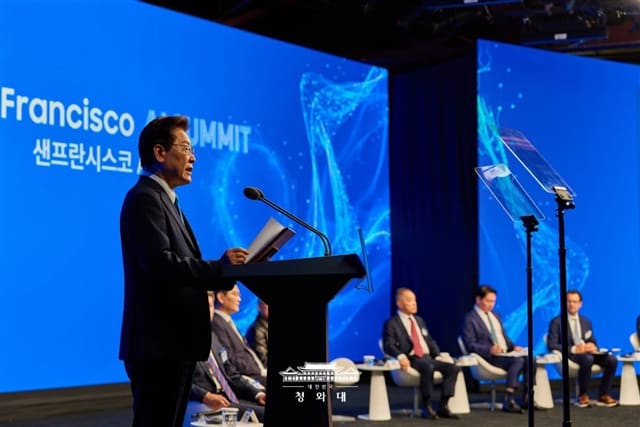
Alexander Gray, who served as chief of staff at the White House National Security Council, has urged South Korea to deepen its supply chain partnership with the United States while avoiding the regulatory framework adopted by the European Union for digital industries.
The comments come as Seoul navigates competing pressures in the global technology landscape. South Korea sits at the center of critical semiconductor and electronics supply chains, hosting major players like Samsung and SK Hynix, while facing decisions about how to regulate its rapidly evolving digital economy.
Gray's intervention reflects broader US concerns about regulatory divergence among allies. Washington has grown increasingly vocal about the need for aligned approaches to technology governance among democratic partners, particularly as competition with China intensifies across semiconductor, AI, and telecommunications sectors.
The European Regulatory Model Under Scrutiny
The European Union has implemented a series of sweeping digital regulations in recent years, including the Digital Markets Act, Digital Services Act, and AI Act. These frameworks impose strict compliance requirements on technology platforms, mandate interoperability, and establish comprehensive oversight mechanisms.
Critics of the EU approach argue that heavy regulatory burdens slow innovation and disadvantage domestic companies while multinational tech giants can absorb compliance costs more easily. The debate has taken on new urgency as artificial intelligence development accelerates and governments worldwide grapple with how to balance innovation incentives against concerns about market concentration, data privacy, and algorithmic transparency.
For South Korea, the regulatory choice carries particular weight. The country's economy depends heavily on technology exports, and its companies compete directly with American and Chinese firms in memory chips, displays, and consumer electronics. Any regulatory framework that increases compliance costs or limits operational flexibility could affect competitiveness in global markets.
Supply Chain Cooperation as Strategic Priority
Gray's emphasis on supply chain cooperation aligns with recent US policy initiatives aimed at building resilient technology networks among allies. The CHIPS and Science Act, export controls on advanced semiconductor equipment to China, and efforts to diversify production away from concentrated geographic nodes all reflect Washington's strategic approach to technology competition.
South Korea has already committed substantial resources to semiconductor expansion, with Samsung announcing plans for new fabrication facilities and memory production capacity. The country's participation in US-led supply chain initiatives could yield access to subsidies, technology sharing arrangements, and coordinated responses to market disruptions.
However, deeper integration with US supply chains also carries risks. South Korea maintains significant trade relationships with China, its largest export market. Regulatory alignment with Washington could complicate those commercial ties, particularly if future US restrictions target additional technology categories or impose stricter controls on dual-use equipment.
Balancing Act for Seoul
South Korean policymakers face a complex calculation. The country's technology sector thrives on export markets and global integration, making regulatory isolation costly. At the same time, domestic political pressures around data privacy, platform power, and algorithmic accountability mirror concerns driving regulation in Europe and elsewhere.
The challenge is compounded by South Korea's position in the broader US-China strategic competition. Seoul has attempted to maintain productive relationships with both powers, but technology decoupling and security concerns increasingly force binary choices. Regulatory decisions about data localization, equipment sourcing, and market access rules all carry geopolitical implications beyond their immediate economic effects.
Gray's public remarks suggest the United States views South Korea's regulatory trajectory as a test case for allied coordination in technology governance. Whether Seoul charts a distinct path, aligns closely with Washington, or adopts elements of the European model will signal broader trends in how democratic technology leaders approach the governance challenges of the digital economy.
RELATED STORIES

Incheon Airport Launches Korea's First Passenger-to-Freighter Conversion Service
Cheng Wei-Lun · 3 min

Homeplus Secures Funding and Resumes Operations as Court Deadline Looms
Jun-ho Seo · 4 min

Washington's Polysilicon Tariffs Set to Squeeze Korean Solar Producers
Cheng Wei-Lun · 3 min

Seoul Rejects Profit-Sharing Pressure on Samsung and SK Hynix
Cheng Wei-Lun · 3 min
Spot something wrong? Email editor@briefasia.com. We log every correction publicly.