Asia · Business
Incheon Airport Launches Korea's First Passenger-to-Freighter Conversion Service
The facility has begun converting its inaugural Boeing 777, marking South Korea's entry into the Asia-Pacific aircraft conversion market dominated by China and Singapore.
KEY TAKEAWAYS
- ·Incheon International Airport Corp. has started its first Boeing 777 passenger-to-freighter conversion, now 40 percent complete with October delivery scheduled.
- ·The facility marks South Korea's entry into the Asia-Pacific aircraft conversion market, historically dominated by China and Singapore.
- ·Technicians are installing the main-deck cargo door system, one of the most technically demanding phases of the 180-day conversion process.
Korea Enters the Aircraft Conversion Market
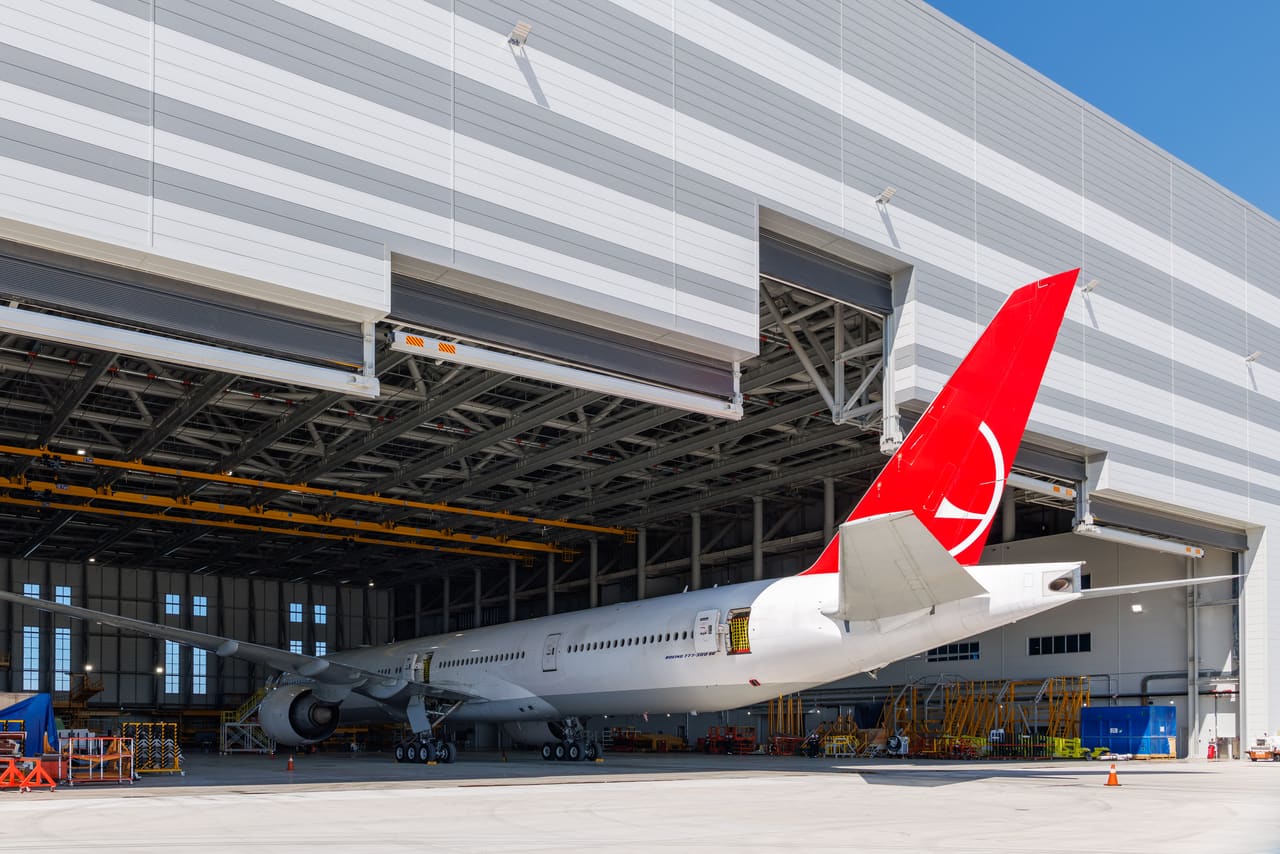
Incheon International Airport Corp. has launched commercial aircraft maintenance, repair, and overhaul operations following the completion of South Korea's first passenger-to-freighter conversion facility. The state-owned operator announced Thursday that its inaugural project, a Boeing 777 widebody conversion, is now underway at the new facility.
The aircraft arrived in May and is currently undergoing a 180-day transformation from passenger configuration to dedicated cargo hauler. Work has progressed to roughly 40 percent completion, with technicians now engaged in one of the project's most complex phases: installing the main-deck cargo door system. Delivery is scheduled for October.
The move positions South Korea to compete in the regional aircraft conversion sector, a market that has historically been concentrated in facilities across China, Singapore, and other established hubs. The timing aligns with persistent demand for air cargo capacity, which has remained elevated since the pandemic-era surge in e-commerce and global logistics requirements.
Regional Context for the Facility
Asia-Pacific accounts for a significant share of global air freight traffic, driven by export-oriented manufacturing economies and cross-border trade flows. Yet the region has faced capacity constraints in specialized MRO services, particularly for heavy conversions that require extensive structural modification and regulatory certification.
Incheon's new capability addresses part of that gap. The facility is designed to handle widebody aircraft conversions, a segment that requires precision engineering to reinforce fuselage structures, install cargo loading systems, and reconfigure cabin interiors while maintaining airworthiness standards set by aviation authorities.
Boeing 777 freighters, whether factory-built or converted, are among the most sought-after cargo aircraft due to their range and payload capacity. Airlines and dedicated cargo operators have placed orders for conversions as lead times for new-build freighters stretch beyond typical planning horizons.
Technical Demands and Timeline
The main-deck cargo door installation represents a critical juncture in the conversion process. Technicians must cut into the fuselage, reinforce the opening with additional structural supports, and integrate hydraulic and electrical systems that enable the door to operate under flight loads. Precision is essential; misalignment or inadequate reinforcement can compromise aircraft integrity.
Beyond the door, the conversion involves removing passenger seats, overhead bins, and cabin fittings, then installing a reinforced floor capable of supporting palletized cargo. Fire suppression systems, cargo restraint tracks, and ventilation must all meet certification standards before the aircraft can return to service.
Incheon International Airport Corp. completed construction of the conversion hangar late last year, equipping it with tooling and workstations tailored to widebody aircraft. The facility is operated by IKCS, a subsidiary focused on aviation maintenance and support services.
Implications for South Korea's Aviation Sector
The launch of conversion operations extends South Korea's aviation value chain beyond its traditional strengths in airline operations and airport infrastructure. The country is home to major carriers and a hub airport that ranks among the world's busiest for international cargo, yet it has lacked domestic capacity for complex airframe modifications.
By bringing conversion work in-house, Incheon can capture revenue that would otherwise flow to offshore MRO providers. The facility also creates technical jobs and builds expertise in airframe engineering, skills that transfer to other segments of aerospace manufacturing and maintenance.
South Korea's government has supported the development of aviation-related industries as part of broader efforts to diversify the economy and reduce reliance on semiconductor and shipbuilding exports. The MRO sector, while smaller in scale, offers stable demand tied to fleet renewal cycles and regulatory maintenance intervals.
The October delivery will serve as a proof point for the facility's capabilities. If the conversion meets schedule and quality benchmarks, Incheon is positioned to attract additional projects from airlines and leasing companies seeking alternatives to incumbent conversion providers.
The first Boeing 777 freighter to emerge from the Incheon facility will enter a market where cargo operators continue to weigh fleet expansion against uncertain trade volumes and freight rate volatility. For Incheon, the project represents both a business opportunity and a strategic bet on the region's long-term logistics infrastructure needs.
RELATED STORIES

Homeplus Secures Funding and Resumes Operations as Court Deadline Looms
Jun-ho Seo · 4 min
Washington's Polysilicon Tariffs Set to Squeeze Korean Solar Producers
Cheng Wei-Lun · 3 min

South Korea's Food Costs Surge as Summer Heat Ravages Farms
Jun-ho Seo · 5 min

Jollibee Brings Compose Coffee to Manila With Five-Year Expansion Plan
Priyanka V. Rao · 3 min
Spot something wrong? Email editor@briefasia.com. We log every correction publicly.