ExclusivePerspectives · Interviews
“We Don’t Simply Follow Tourism Trends, We Help Shape Them”
Three hotel openings in roughly ninety days mark TUI Hotels & Resorts' fastest expansion phase yet in Southeast Asia. Duc Phan, the group's Regional Business Development Director for APAC, tells BriefAsia how the partnerships got built, what TUI's integrated model delivers for owners, and why Vietnam and Cambodia now anchor its Asian ambitions.
KEY TAKEAWAYS
- ·TUI opens three Southeast Asian hotels in roughly ninety days, its fastest phase yet, with Vietnam and Cambodia anchoring a stated course toward more than 50 hotels in Asia.
- ·Duc Phan's pitch to owners is demand, not management: TUI's tour operators, airlines and booking platforms deliver European guests who book earlier, stay longer and spend through shoulder seasons.
- ·The group's playbook is entering under-supplied coastal markets before rivals, Tuy Hoa first, with Quy Nhon, Van Phong Bay and Vinh Hy now on its radar.
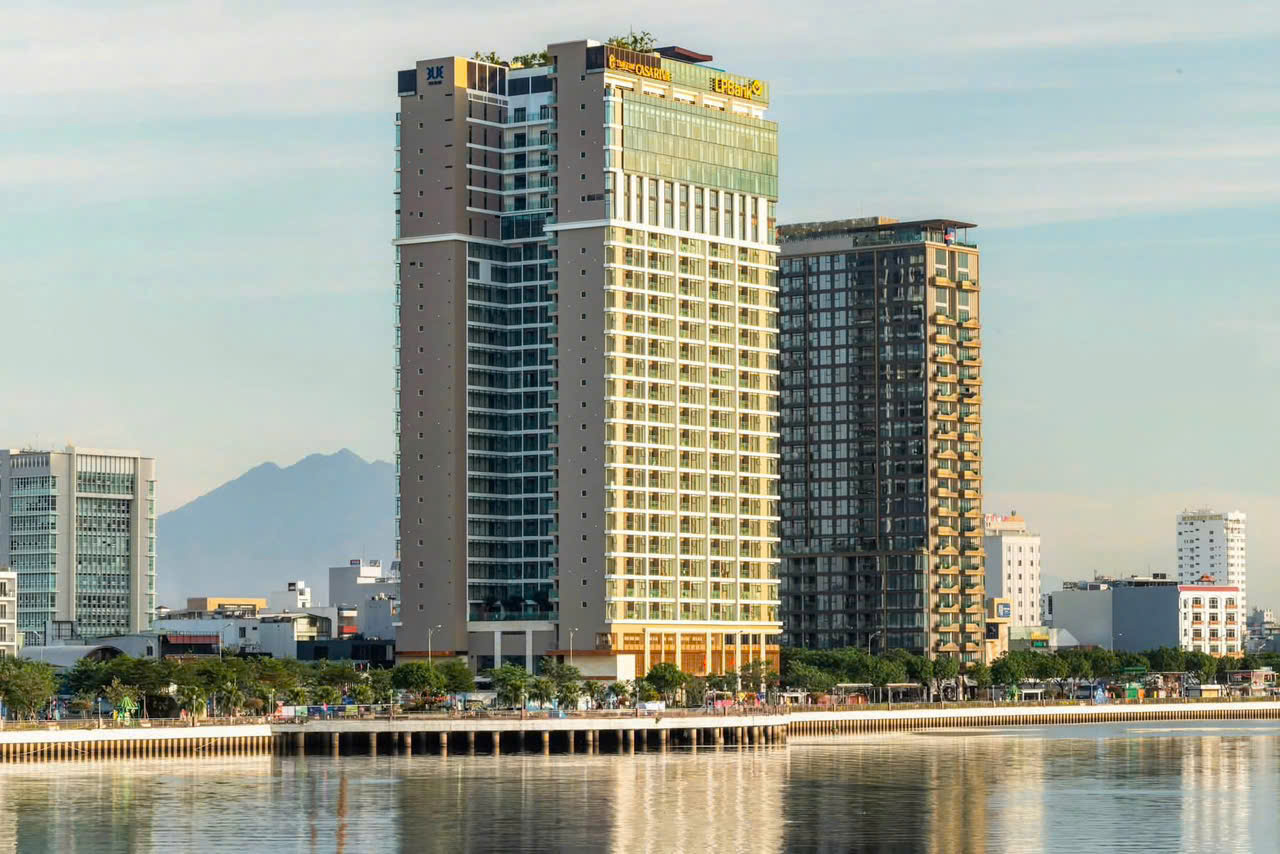
In the space of roughly ninety days this year, TUI Hotels & Resorts is opening three properties across two countries: TUI SUNEO Danang and TUI BLUE Han River in Da Nang, the hub of Vietnam’s central coast, and TUI SUNEO Olympia Phnom Penh, marking the TUI SUNEO brand’s debut in Cambodia. For a German travel group long known in Asia primarily as a tour operator carrying European holidaymakers, it is the clearest statement yet that Southeast Asia has moved to the centre of its hotel strategy.
The timing is deliberate. Vietnam welcomed a record 21.2 million international visitors in 2025, up 20.4 per cent year on year, according to the Vietnam National Authority of Tourism, and TUI has publicly set a course towards more than 50 hotels in Asia. Few people sit closer to how that target turns into signed agreements than Duc Phan, the group’s Regional Business Development Director for APAC, whose remit covers the partnerships behind the current wave of openings.
In this interview with BriefAsia, Mr. Phan explains what the three-opening season represents, how the agreement with TTC Land came together, what TUI’s integrated model actually delivers for a hotel owner, and why the group entered Tuy Hoa before most international operators. The interview was conducted in writing; answers have been reviewed by TUI Hotels & Resorts and are presented in full, lightly edited for style.
I. Setting the Scene: TUI’s 2026 Moment in Vietnam and Cambodia
1. This season, TUI opens three properties in roughly ninety days: TUI SUNEO Danang, TUI BLUE Han River and TUI SUNEO Olympia Phnom Penh. What does this cluster of openings represent for TUI in Southeast Asia?
These three openings mark a defining milestone in TUI Hotels & Resorts’ growth journey in Southeast Asia. They are far more than the addition of new hotels; they represent the acceleration of a long-term strategy to establish TUI as one of the region’s leading international leisure hospitality brands.
Over the past several years, we have invested significant time in building trusted partnerships, understanding local markets, and demonstrating that TUI’s integrated tourism ecosystem creates measurable value for hotel owners. Today, we are beginning to see the momentum of that strategy.
Launching TUI SUNEO Danang, TUI BLUE Han River, and TUI SUNEO Olympia Phnom Penh within just one season sends a strong message to the market. It reflects growing confidence among investors and developers that the future belongs to operators who can deliver not only exceptional hotel management, but also global demand generation through an integrated travel ecosystem.

Rendering of TTC Plaza Da Nang, home of TUI SUNEO Danang. Image: Courtesy of TTC Land
As our regional portfolio expands, every new hotel strengthens the entire network. Owners benefit from greater brand awareness, wider international distribution, stronger marketing capabilities, operational synergies, and access to one of the world’s largest leisure travel customer bases.
This is not simply a period of expansion; it is the beginning of TUI’s next chapter in Southeast Asia, with Vietnam and Cambodia positioned at the heart of that growth.
2. TUI has publicly set a course towards more than 50 hotels in Asia. Where does Vietnam sit within that ambition, and where does Cambodia fit?
Vietnam is unquestionably one of TUI’s most strategic growth markets in Asia.
Few destinations combine such outstanding natural beauty, rich cultural heritage, exceptional cuisine, competitive value, political stability, and rapidly improving tourism infrastructure. More importantly, Vietnam still offers considerable opportunities for internationally branded leisure hotels, particularly outside the traditional gateway cities.
Cambodia plays an equally important role within our regional strategy. With globally recognised attractions such as Angkor, growing air connectivity and increasing international visitor demand, Cambodia perfectly complements Vietnam’s leisure offering.
Together, these two countries are evolving into a highly attractive multi-destination travel corridor, allowing European and international travellers to seamlessly experience beach holidays, cultural exploration and city breaks within a single itinerary.
Looking towards 2030, we expect Vietnam and Cambodia to become two of the strongest pillars of TUI Hotels & Resorts’ Asian portfolio.
3. How has headquarters’ view of Vietnam changed since the first TUI BLUE opened here in 2020?
The transformation has been remarkable.
When we introduced our first TUI BLUE resort in Vietnam in 2020, headquarters viewed the country as a promising emerging destination with significant long-term potential. Today, Vietnam is firmly recognised as one of Asia’s most dynamic tourism markets and a strategic priority for TUI’s future expansion.
The country has demonstrated exceptional resilience following the pandemic, achieving record international arrivals while continuing to invest heavily in airports, expressways and tourism infrastructure. Equally important, our successful hotel partnerships have proven that Vietnam is ready for internationally branded leisure hospitality on a much broader scale.
Today, discussions at headquarters are no longer centred on whether Vietnam represents an opportunity. Instead, the conversation is about how quickly we can responsibly expand our footprint while maintaining the quality, consistency and guest experience that define the TUI brand.
“Discussions at headquarters are no longer centred on whether Vietnam represents an opportunity, but on how quickly we can responsibly expand.”
II. Anatomy of a Deal
4. Take us inside one agreement: how did the partnership with TTC Land come together?
The TTC Land partnership was built on shared vision rather than simply commercial negotiations.
Like every successful long-term relationship, it began with extensive discussions about where the destination is heading, what today’s travellers expect, and how both organisations could create lasting value together.
Throughout the process, we focused not only on management agreements but also on strategic alignment. TTC Land wanted a partner capable of positioning the property internationally, while TUI sought an owner committed to delivering world-class guest experiences.
The discussions were open, transparent and constructive, from investment planning and operational standards to commercial strategy and long-term asset performance.
Ultimately, both parties shared one common objective: creating a hotel that will remain competitive and profitable for decades, not just achieve a successful opening. That alignment laid the foundation for a true partnership.
5. What typically takes the longest during negotiations?
Contrary to what many people assume, commercial terms are rarely the biggest challenge. The most important, and often the longest, part of any negotiation is aligning expectations.
Many owners initially focus on management fees, while our discussions focus on total asset performance, long-term profitability and value creation.
Once the conversation shifts from “What does an international operator cost?” to “How much additional value can the operator create?”, the entire dynamic changes. That is when discussions become strategic rather than transactional, and partnerships become much stronger.
“Once the conversation shifts from ‘What does an international operator cost?’ to ‘How much additional value can the operator create?’, the entire dynamic changes.”

Duc Phan, Regional Business Development Director, APAC. Photo: Courtesy of TUI Hotels & Resorts
6. When does TUI tend to win against other international operators?
We are at our strongest when owners evaluate operators not only by brand recognition, but by their ability to generate business.
Unlike traditional hotel management companies, TUI is part of one of the world’s largest integrated tourism groups, combining hotels, tour operators, airlines, destination services, digital platforms and millions of loyal leisure customers.
For owners, that translates into stronger international visibility, higher-quality leisure guests, earlier booking windows, greater revenue stability and improved long-term profitability.
Ultimately, we don’t compete on management alone. We compete on our ability to deliver sustainable business performance.
7. What happens after the agreement is signed?
Signing the agreement is only the starting point.
From that moment, our teams work closely with the owner across every aspect of the project, from technical services, design review and brand implementation to commercial planning, revenue management, recruitment, staff training and global distribution integration.
For conversion projects, the focus is on repositioning the hotel while maintaining operational continuity. For new developments, we work alongside the owner from concept through opening, ensuring every design decision supports both guest experience and commercial performance.
8. Has TUI ever walked away from a deal?
Absolutely. Growth has never been our objective at any cost.
We believe that every hotel carrying a TUI brand should strengthen, not dilute, the reputation we have built globally. If an owner is unwilling to invest in product quality, maintain international standards or share our commitment to guest satisfaction, we would rather decline the opportunity.
For us, protecting brand integrity always comes before expanding the portfolio. Sustainable partnerships create sustainable success.
III. What the Flag Actually Delivers
9. Strip away the branding: what does TUI’s integrated model actually deliver for an owner?
This is where TUI stands apart from almost every traditional hotel operator.
TUI is not simply a hotel management company; it is one of the world’s largest integrated tourism groups. Every year, millions of travellers choose their holiday through TUI’s tour operators, airlines, online platforms, travel agencies and destination services long before selecting a hotel.
This creates a powerful competitive advantage for our hotel partners.
10. How does TUI decide whether a property becomes a TUI BLUE or a TUI SUNEO?
Every destination has its own character, and every hotel deserves a brand that genuinely fits its market positioning.
TUI BLUE offers experience-oriented lifestyle travellers a hotel product tailored to their individual needs and wishes: for adults, families or holidaymakers interested in local culture and authentic experiences. The leisure hotel brand TUI SUNEO offers excellent value for money and holiday experiences for couples, families and friends.
Choosing between the two brands depends on the destination, facilities, customer profile, competitive landscape and, most importantly, the owner’s long-term vision.
In Vietnam today, we see particularly strong opportunities for internationally branded leisure resorts in emerging coastal destinations where quality supply still lags demand.
11. How do European leisure guests change a hotel’s economics?
European leisure travellers fundamentally improve the quality of a hotel’s business mix.
They tend to book earlier, stay longer, travel during shoulder seasons and spend significantly more on dining, wellness, excursions and destination experiences.
For owners, this creates greater occupancy stability, stronger ancillary revenues, more accurate forecasting and better operational planning. Long booking windows also reduce reliance on discounting and last-minute sales, allowing hotels to optimise both occupancy and average daily rate.
Ultimately, attracting more international leisure guests is not simply about increasing volume. It is about improving profitability.
12. What is the biggest misconception Vietnamese owners have about international operators?
Many owners still believe that an international operator’s primary value lies in its brand name. In reality, the logo is only the visible part of the partnership.
The real value comes from everything behind the brand: global distribution, revenue management, commercial strategy, operational expertise, talent development, digital marketing, quality assurance and access to international demand.
The most successful owners understand that an operator should never be viewed as a service provider. The best results come when owners see us as a long-term strategic business partner working towards the same objective: maximising the long-term value of the asset.
“The logo is only the visible part of the partnership.”
IV. Reading the Map
13. Why did TUI enter Tuy Hoa before many international operators?
At TUI, we have always believed that tomorrow’s leading destinations are identified long before they become mainstream.
When we looked at Tuy Hoa, we saw exceptional natural beauty, authentic local culture, improving infrastructure and significant long-term tourism potential. Rather than following established markets, we prefer to identify destinations that are ready for international growth but remain under-supplied in quality branded accommodation.
That approach has become one of TUI’s competitive strengths globally. We don’t simply follow tourism trends. We help shape them.
14. Where is Vietnam’s hotel market today, as you read it?
Vietnam is entering one of the most exciting periods in its tourism development.
International arrivals continue reaching new records, infrastructure investment is accelerating, and global awareness of Vietnam as a leisure destination continues to grow. Yet compared with neighbouring markets, internationally branded leisure hotels remain relatively limited, particularly outside the major gateway cities.
The next decade will likely be driven by high-quality developments in emerging coastal destinations, supported by stronger connectivity and increasing international demand.
15. Why Cambodia?
Cambodia represents a natural extension of TUI’s regional strategy.
With Angkor as one of the world’s great cultural destinations and Phnom Penh continuing to strengthen its position as both a business and leisure hub, Cambodia complements Vietnam exceptionally well.
Together, the two countries enable TUI to create richer, multi-destination travel experiences while providing owners with greater international exposure across the region.
16. Which destination would you most like to add to the map next?
Vietnam offers many exciting opportunities. Destinations such as Quy Nhon, Van Phong Bay, Vinh Hy and several emerging coastal markets continue to attract our attention.
However, we never select destinations based solely on scenery. Our hotel projects are driven by long-term accessibility, tourism infrastructure, sustainable development potential and, above all, partnerships with owners who share TUI’s long-term vision.
V. Looking Ahead
17. What risks does TUI watch most closely?
Every rapidly growing tourism market faces challenges. Vietnam’s continued success will depend on maintaining the right balance between growth and quality.
Infrastructure development must continue keeping pace with visitor numbers, while investment in talent, service standards and destination management will become increasingly important.
Equally critical is sustainable development. Protecting the environment, preserving local culture and ensuring responsible tourism practices will be essential to maintaining Vietnam’s long-term competitiveness as a global leisure destination.
18. Looking toward 2030, what would success look like?
By 2030, we envision TUI Hotels & Resorts operating one of the strongest leisure hospitality portfolios across Vietnam and the Mekong region, with a carefully curated collection of TUI BLUE and TUI SUNEO hotels in both established and emerging destinations.
Our ambition goes beyond increasing the number of hotels. We aim to become the preferred international hospitality partner for visionary owners, bringing together world-class hotel management, one of the world’s largest integrated tourism ecosystems and millions of loyal international travellers.
At the same time, we want to contribute to the sustainable development of destinations by creating high-quality tourism experiences, supporting local communities and showcasing the unique culture and hospitality of Vietnam and Cambodia to the world.
Ultimately, success will not be measured by the size of our portfolio alone. It will be measured by the lasting value we create: for our owners, our guests, our people and every destination where the TUI flag proudly flies.
Duc Phan is Regional Business Development Director, APAC, at TUI Hotels & Resorts. This interview was conducted in writing in July 2026; answers were provided and reviewed by TUI Hotels & Resorts and are presented in full, lightly edited for style. Market statistics cited in the introduction are from the Vietnam National Authority of Tourism.
RELATED STORIES
Nguyen Dang Quang and the long, quiet path to mastery
Manh Khang · 7 min

The pianist who goes looking for forgotten music
Manh Khang · 8 min

Vietnam's Offshore Oil Find Tests Hanoi's Will Against Beijing
Priyanka V. Rao · 5 min

Đăng Khôi Takes Trống Cơm to Silk Way Star
Manh Khang · 8 min
Spot something wrong? Email editor@briefasia.com. We log every correction publicly.