Real Estate · Offices
Deloitte's Move to Orchard Central Signals Growing Corporate Interest in Singapore's Shopping District
The consultancy's relocation from Shenton Way highlights Orchard Road's expanding role beyond retail, though analysts view the shift as opportunistic rather than a broader market trend.
KEY TAKEAWAYS
- ·Deloitte Singapore will relocate from OUE Downtown in Shenton Way to Orchard Central by 2027, occupying several upper floors after its lease expires.
- ·The move reflects tightening office supply and rising rents in Singapore's CBD, with Orchard Road offering lower rates and strong transport links.
- ·Market analysts view the relocations as isolated cost-driven decisions rather than a structural shift away from traditional business districts.
A Consultancy Heads Uptown
Deloitte Singapore will relocate its operations from OUE Downtown on Shenton Way to Orchard Central by 2027, occupying several upper floors of the 12-storey building after its current lease expires at the end of 2026. The consultancy will temporarily move some staff to JustCo Place on Orchard Road during the transition.
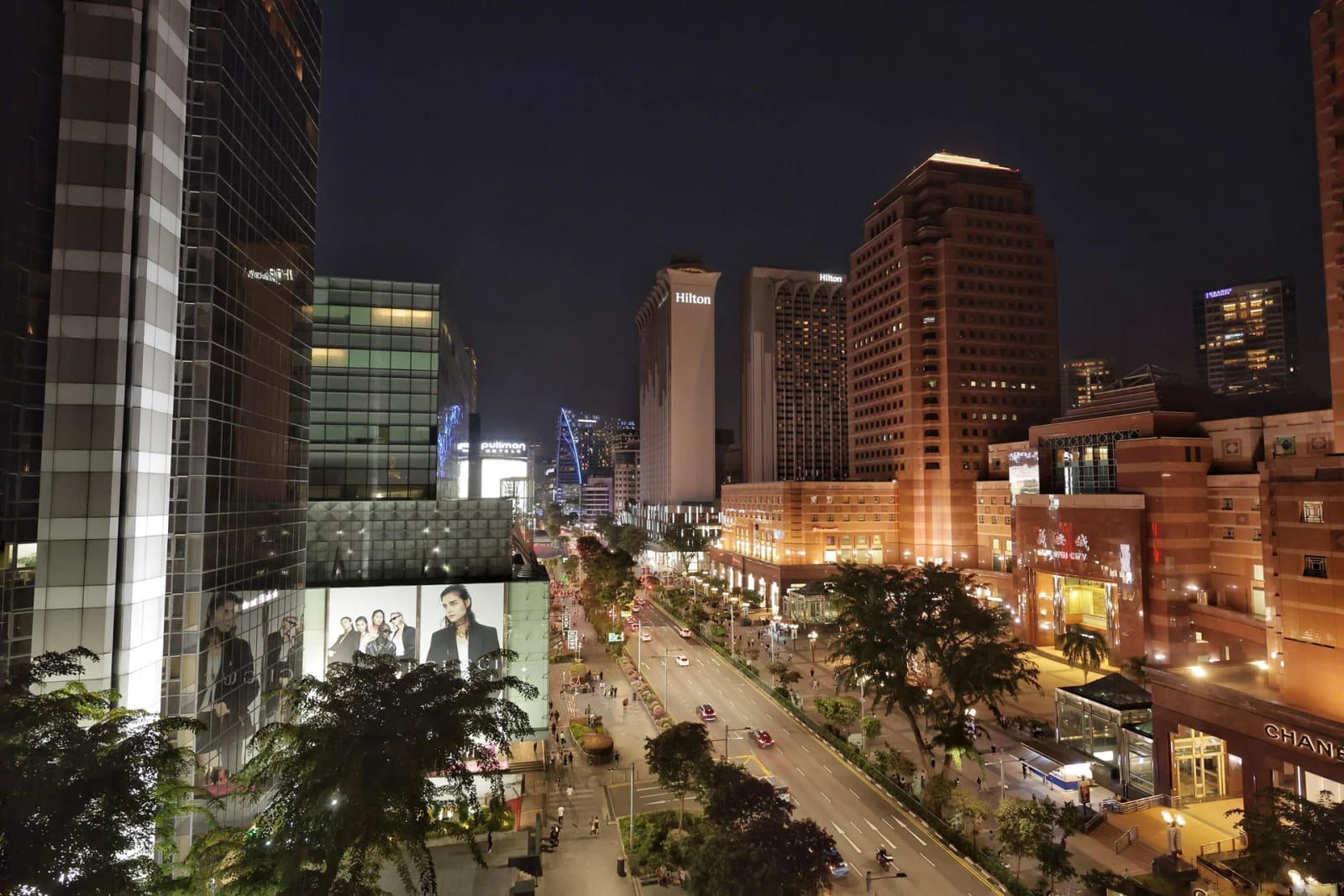
The shift places one of the Big Four accounting firms outside Singapore's traditional central business district, a zone that has long anchored the city-state's financial and professional services sectors. Orchard Road, by contrast, has built its reputation around luxury retail and tourism rather than corporate headquarters.
The Retail Belt Gets Office Tenants
Orchard Central sits at the intersection of Orchard and Cairnhill roads, a location that has historically catered to shoppers rather than office workers. The building's upper floors, however, have drawn corporate tenants as office demand tightens and rents climb in the CBD core.
Deloitte's decision reflects a calculation familiar to multinational firms operating in high-cost Asian cities: balancing prestige addresses with rental economics. Orchard Road office space typically commands lower rates than prime CBD towers, while still offering strong transport links and brand recognition. The district sits on the North-South MRT line and connects directly to Changi Airport via the city's expressway network.
Several other professional services and technology firms have made similar moves in recent quarters, though the volume remains modest compared to CBD leasing activity. Market observers note that the relocations tend to be driven by lease expiry timing and cost optimization rather than a wholesale shift in corporate location preferences.
Demand Dynamics in the CBD
The backdrop to Deloitte's move is a tightening office market in Singapore's core business district. Grade A office rents in the CBD have firmed over the past eighteen months, driven by steady absorption from financial institutions, wealth managers, and technology companies expanding their regional hubs in Singapore.
Supply constraints have contributed to upward pressure on rates. Few new office towers have delivered in the CBD since 2020, and several older buildings have been earmarked for redevelopment or conversion to mixed-use schemes. That limited pipeline has given landlords pricing power, particularly for large floor plates and modern specifications.
For tenants facing lease renewals, the cost differential between CBD and Orchard Road space has widened. Firms with flexible workplace strategies and hybrid work models have found it easier to consider alternative locations, especially when the savings can be redirected toward talent retention or technology investment.
Not a Structural Shift
Despite the headline-grabbing moves, market watchers caution against reading too much into the trend. The relocations remain isolated cases rather than evidence of a structural migration away from the CBD. Financial institutions, law firms, and family offices continue to prioritize Shenton Way, Raffles Place, and Marina Bay addresses for client signaling and talent recruitment.
Orchard Road's appeal is conditional. It works for firms with younger workforces that value retail and dining amenities, or for back-office and support functions that do not require constant face time with clients. It is less suited to businesses where a CBD address carries regulatory or reputational weight.
The district also faces practical constraints. Office inventory along Orchard Road is fragmented, with many buildings originally designed for retail use and later adapted for mixed tenancy. Floor plates tend to be smaller and less efficient than purpose-built office towers, and building management systems may not meet the sustainability or connectivity standards expected by multinational occupiers.
What Orchard Road Offers
For firms willing to trade some prestige for flexibility, Orchard Road delivers tangible benefits. The district's retail and hospitality infrastructure means abundant lunch options, hotels for visiting executives, and evening entertainment that can help with staff morale. The Central Boulevard and Somerset precincts are walkable, and the area feels less monolithic than the CBD's glass-and-steel canyons.
Landlords have responded by upgrading amenities in buildings that attract office tenants. Lobby renovations, improved lift systems, and co-working partnerships have become standard in properties courting corporate occupiers. Orchard Central itself has repositioned its upper floors to appeal to professional services tenants, offering flexible lease terms and fit-out support.
The question is whether these advantages are enough to sustain momentum. If CBD rents plateau or new supply comes online in the next development cycle, the cost arbitrage that makes Orchard Road attractive could narrow. Conversely, if hybrid work becomes entrenched and firms prioritize employee experience over client perception, the district could see more blue-chip names follow Deloitte's lead.
The Broader Asia Office Picture
Singapore's office dynamics mirror trends playing out across other Asian financial centers. In Hong Kong, some firms have relocated from Central to Kowloon East to capture lower rents and larger footprints. In Tokyo, companies are moving to newer districts like Shibuya and Shinagawa as lease renewal costs in Marunouchi and Otemachi climb. Seoul has seen technology firms cluster in Gangnam and Yeouido, bypassing the traditional Jongno core.
The common thread is flexibility. As workplace models evolve and cost discipline becomes a board-level priority, location decisions are no longer binary. Firms are willing to experiment with secondary districts if the trade-offs make financial and operational sense. Orchard Road's growing corporate roster is part of that broader recalibration, even if it does not yet signal a fundamental reshaping of Singapore's office geography.
RELATED STORIES
Singapore's Aging HDB Flats Capture Largest Share of Resale Market
Lim Hui Ying · 3 min
Hongkong Land Fund Acquires Wheelock Place in S$1.1 Billion Orchard Road Deal
Priyanka V. Rao · 3 min
Singapore's En Bloc Market Stirs as Kingsford Group Closes S$950 Million Warehouse Deal
Lim Hui Ying · 4 min
Hong Kong Commercial Property Investment Surges 129% in Q2
Cheng Wei-Lun · 3 min
Spot something wrong? Email editor@briefasia.com. We log every correction publicly.