Finance · Deals
China's CXMT Surges 466% in Shanghai Debut as AI Chip Demand Fuels Record IPO
The DRAM maker raised $8.6 billion and achieved a $487 billion market cap, but US export controls and equipment restrictions cast shadows over its ambitions to challenge Samsung and SK Hynix
KEY TAKEAWAYS
- ·ChangXin Memory Technologies shares surged 466 percent in their Shanghai debut, raising $8.6 billion in mainland China's largest IPO since 2010 and achieving a $487.74 billion market capitalization.
- ·The DRAM maker holds 8 percent of the global market and is projected to reach 11 percent by 2028, but remains far behind Samsung's 36 percent, SK Hynix's 29 percent, and Micron's 24 percent shares.
- ·US export controls restrict CXMT's access to advanced chipmaking equipment and some lawmakers seek to block American purchases of its chips over security concerns, threatening its growth trajectory.
A Blockbuster Market Entry
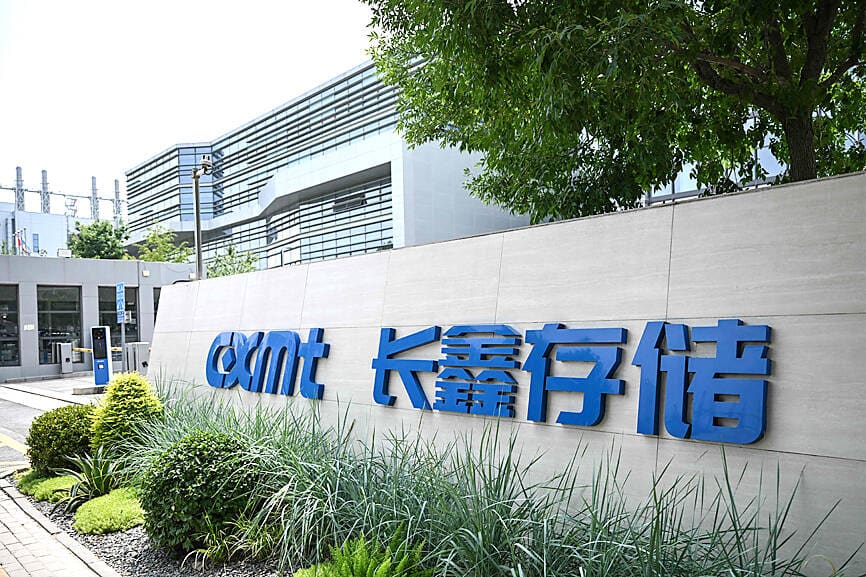
ChangXin Memory Technologies Inc (CXMT) shares jumped 466 percent on their first trading day in Shanghai, capping mainland China's largest initial public offering in more than a decade. The DRAM chipmaker priced its offering at 8.66 yuan per share on the Shanghai Stock Exchange's Science and Technology Innovation Board, raising at least $8.6 billion from investors.
The Hefei-based company now carries an estimated market capitalization of approximately 3.3 trillion yuan, equivalent to $487.74 billion. That figure makes CXMT the most valuable entity listed on a mainland Chinese exchange, though it still trails South Korean giants Samsung Electronics and SK Hynix, as well as US-based Micron Technology.
Founded in 2016 in Anhui Province, CXMT has emerged as China's largest producer of dynamic random-access memory chips. The offering represents the country's second-largest IPO after Agricultural Bank of China's $22.1 billion dual listing in Shanghai and Hong Kong in 2010.
Riding the AI Wave
The explosive debut reflects soaring global demand for memory chips driven by artificial intelligence applications. CXMT has positioned itself at the center of China's push to develop domestic semiconductor capabilities, particularly as Washington tightens export controls on advanced chip technology.
US restrictions have blocked Chinese companies from importing high-bandwidth memory chips, a specialized type of DRAM essential for AI processing. The resulting global memory chip shortage has pushed up prices for consumer electronics, from smartphones to computers.
CXMT captured approximately 8 percent of the global DRAM market by shipments last year, making it the world's fourth-largest producer, according to Counterpoint Research. Samsung Electronics dominated with 36 percent market share, followed by SK Hynix at 29 percent and Micron at roughly 24 percent. Projections suggest CXMT could reach 11 percent market share by 2028.
Equipment Bottlenecks Loom
The company's rapid growth faces significant headwinds. Trade restrictions limit CXMT's access to cutting-edge chipmaking equipment, forcing reliance on domestic Chinese suppliers whose technology lags behind industry leaders. This equipment gap constrains the company's ability to scale manufacturing capacity and develop next-generation products.
"CXMT plays a critical role in China's AI push, particularly in the face of US export controls," said Kyle Chan, a Brookings Institution fellow specializing in China technology policies. He noted that while the company represents China's best opportunity to develop advanced HBM chips for domestic AI models, supply chain bottlenecks remain a fundamental challenge.
Counterpoint analyst MS Hwang identified tool restrictions as the primary obstacle. The firm estimates CXMT would need at least 15 percent global market share to achieve long-term competitiveness, a target that requires overcoming current manufacturing limitations.
Political Headwinds
Beyond technical challenges, CXMT faces political scrutiny. Some US lawmakers have called on the Trump administration to prohibit American companies from purchasing CXMT memory chips, citing national and economic security concerns. The Pentagon has designated CXMT among Chinese companies allegedly linked to the Chinese military, a characterization Beijing has rejected.
These geopolitical tensions add uncertainty to CXMT's export prospects and its ability to integrate into global supply chains. While the company serves domestic Chinese demand, restrictions on sales to US customers could limit its growth potential and prevent it from reaching the scale needed to compete with established players.
The IPO's success demonstrates strong investor appetite for Chinese semiconductor plays despite these risks. It also underscores the strategic importance Beijing places on achieving self-sufficiency in critical technologies. Whether CXMT can translate capital and ambition into sustained technical progress remains the central question for the company and China's broader chip industry.
RELATED STORIES

From Tourism Graduate to Indonesia Electronics Distributor: Wook Eyes IPO
Cheng Wei-Lun · 3 min
China-US Bond Yield Gap Reaches Two-Decade Peak
Cheng Wei-Lun · 3 min
China's Chip Makers Split Three Ways Beneath the Revenue Growth
Tran Quoc Bao · 3 min
JCET Eyes $968 Million to Scale AI Packaging Lines
Tran Quoc Bao · 3 min
Spot something wrong? Email editor@briefasia.com. We log every correction publicly.