Finance · Markets
China-US Bond Yield Gap Reaches Two-Decade Peak
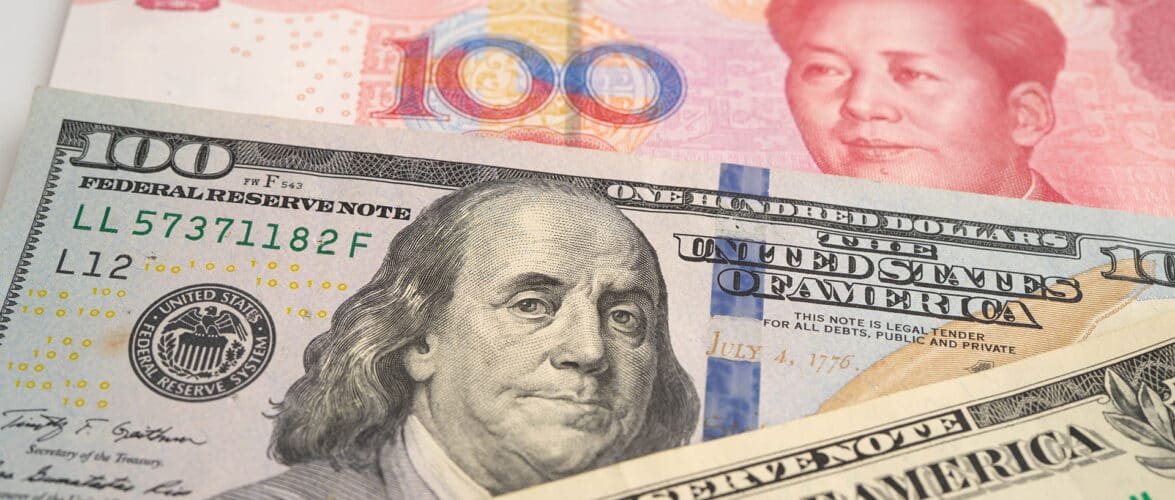
The spread between ten-year Chinese government bonds and US Treasurys briefly touched 313 basis points, reflecting deepening policy and economic divergence between Beijing and Washington.
KEY TAKEAWAYS
- ·The yield gap between ten-year Chinese government bonds and US Treasurys reached approximately 313 basis points on 2 September, the widest spread since 2006.
- ·The divergence reflects contrasting policy paths: the US Federal Reserve maintains restrictive rates amid inflation concerns, while the People's Bank of China has cut rates to support slowing growth.
- ·The record spread complicates capital flows and corporate borrowing strategies across Asia, as investors weigh yield differentials against currency risk and liquidity constraints.
Widest Spread Since 2006
The gap between yields on ten-year Chinese government bonds and their US Treasury equivalents has stretched to levels not seen in nearly two decades. According to data from Quick FactSet, the spread briefly hit approximately 313 basis points on 2 September before narrowing the following day after dovish Federal Reserve commentary lifted US bond prices.
The historic divergence reflects contrasting economic conditions and policy stances in Beijing and Washington. While US yields have climbed on persistent inflation concerns and expectations of extended high interest rates, Chinese bond yields have remained subdued amid slowing growth and cautious monetary easing by the People's Bank of China.
Divergent Policy Paths
The yield differential tells a story of two economies moving in opposite directions. US Treasury yields have remained elevated as the Federal Reserve maintains a restrictive stance, keeping its benchmark rate in a range designed to cool inflation that has proven more stubborn than initially forecast. The ten-year Treasury yield has hovered near multi-year highs, supported by robust consumer spending and a resilient labour market that have given policymakers limited room to ease.
China's bond market, by contrast, has rallied as investors seek safety amid concerns over property sector stress, weak consumer confidence, and deflationary pressures. The People's Bank of China has cut policy rates multiple times over the past year, pushing borrowing costs lower in an effort to stimulate credit demand and support growth. Ten-year Chinese government bond yields have drifted downward as a result, widening the chasm with US rates.
Capital Flow Implications
The record spread carries consequences for cross-border capital flows. Historically, a wide yield advantage in US Treasurys has incentivised Chinese investors and institutions to shift funds into dollar-denominated assets, putting pressure on the renminbi. Chinese authorities have tightened oversight of outbound investment channels in recent quarters to limit capital flight, even as they have allowed the currency to weaken in a controlled manner to support exporters.
For foreign investors holding Chinese bonds, the yield gap presents a trade-off. While Chinese government debt offers lower nominal returns, the renminbi's gradual depreciation and Beijing's capital controls add layers of complexity. Portfolio managers must weigh yield pickup against currency risk and liquidity constraints, particularly as geopolitical tensions continue to shape allocation decisions across Asia.
What Narrowed the Gap
The brief narrowing on 3 September followed remarks from Federal Reserve officials that markets interpreted as signalling potential rate cuts if economic data softened. US Treasury prices rose, pulling yields lower and temporarily compressing the spread. However, the underlying drivers of divergence remain intact: China's growth challenges and the US economy's relative strength suggest the gap will persist in the near term.
Analysts note that any sustained convergence would require either a meaningful shift in US monetary policy or a significant acceleration in Chinese growth. Neither scenario appears imminent. The Federal Reserve has indicated it will remain data-dependent, while Chinese policymakers have so far favoured measured stimulus over aggressive intervention.
Regional Repercussions
The yield chasm reverberates across Asian fixed-income markets. Sovereign bond yields in economies closely tied to China's supply chains and demand cycles have tracked Chinese rates lower, while those with stronger links to US trade and dollar funding have moved in step with Treasurys. This bifurcation complicates hedging strategies for regional banks and asset managers, who must navigate both interest rate and currency volatility.
The spread also influences corporate borrowing costs. Chinese firms issuing dollar bonds face higher rates relative to domestic alternatives, discouraging offshore fundraising. Conversely, Asian companies with access to both markets can arbitrage the gap, borrowing in renminbi at lower rates and converting proceeds into dollars when favourable.
The trajectory of the China-US yield spread will hinge on how quickly each economy's policy cycle turns. For now, the historic gap stands as a stark marker of how far the world's two largest bond markets have drifted apart.
RELATED STORIES
China Bond Yields Slide as US Treasuries Face Hawkish Fed Pressure
Cheng Wei-Lun · 3 min

China's Social Security Fund Doubles Offshore Holdings to $86 Billion
Jun-ho Seo · 3 min

From Tourism Graduate to Indonesia Electronics Distributor: Wook Eyes IPO
Cheng Wei-Lun · 3 min

ByteDance Secures $29.6 Billion Credit Facility After Bank Demand Surges
Cheng Wei-Lun · 3 min
Spot something wrong? Email editor@briefasia.com. We log every correction publicly.